
Side Dishes
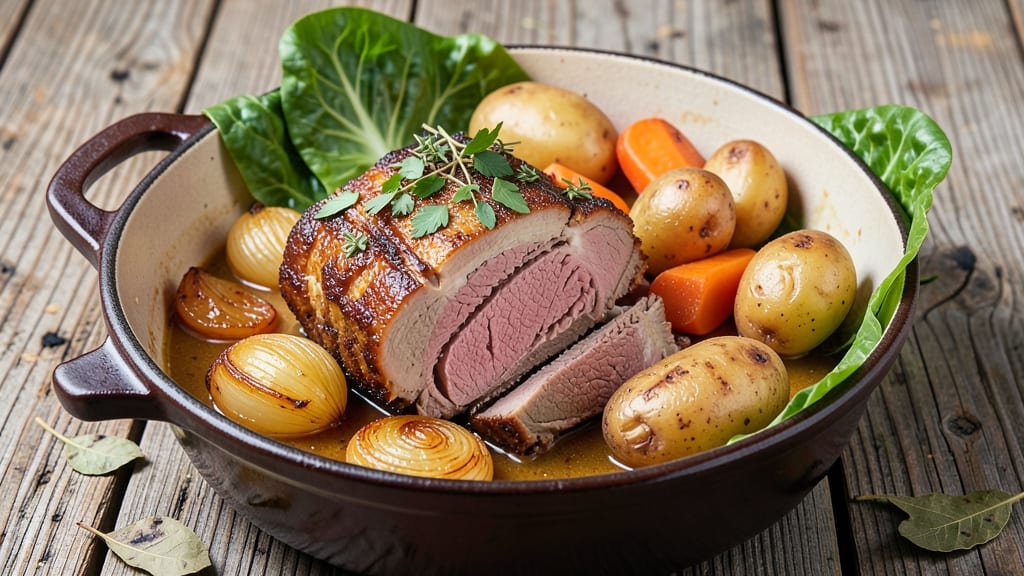
This ATK-style corned beef recipe delivers restaurant-quality tenderness and rich flavor through precise slow-braising techniques. The secret lies in controlling the water temperature and cooking time, ensuring the meat becomes irresistibly flaky without drying out.
I've tested countless variations to perfect this method, and the results speak for themselves—juicy, melt-in-your-mouth perfection every time.
The process begins with a proper brine, which infuses the beef with deep, savory flavors over 24 hours. Then, the slow cook transforms tough cuts into tender slices that practically fall apart.
What sets this recipe apart is the attention to detail—like maintaining a gentle simmer and avoiding overcooking—that guarantees consistent results. The traditional sides of cabbage, potatoes, and carrots complement the beef beautifully, creating a complete meal.
By the time you're done, you'll have corned beef that's so tender it nearly dissolves on your tongue, with a rich, slightly sweet flavor that's hard to resist. The cabbage softens just enough to be tender-crisp, while the potatoes and carrots absorb the cooking liquid for extra depth.
This is the kind of dish that makes Sunday dinners feel special without requiring hours of active cooking.
The best part? This recipe scales perfectly for gatherings, and leftovers reheat beautifully. Whether you're serving a crowd or treating yourself to a comforting meal, the precision of this method ensures success every time. Let's get started on creating your own ATK-style masterpiece.
Ingredients for atk corned beef
This ATK-style corned beef transforms tough brisket into melt-in-your-mouth perfection through precise brining and slow braising.
| Ingredient | Amount | Notes |
|---|---|---|
| Corned Beef Brisket 🥩 | 4 lb | Tough cut, 1-1.5 inches thick |
| Yellow Onions 🧅 | 2 whole | Medium, peeled and quartered |
| Carrots 🥕 | 4 whole | Medium, peeled and cut into chunks |
| Russet Potatoes 🥔 | 4 medium | Peeled and cut into 2-inch chunks |
| Green Cabbage 🥬 | 1 small head | Cut into 8 wedges, core removed |
| Bay Leaves 🌿 | 4 whole | Dried, standard size |
| Black Peppercorns 🌶️ | 1 tbsp | Coarsely crushed |
| Allspice Berries 🌶️ | 4 whole | Lightly crushed |
| Garlic Cloves 🧄 | 8 cloves | Peeled, smashed |
| Kosher Salt 🧂 | 1 ½ cups | Diamond Crystal preferred |
| Brown Sugar 🍚 | ½ cup | Packed light |
| Mustard Seeds 🌶️ | 1 tbsp | Yellow, whole |
| Water 💧 | 8 cups | Filtered preferred |
The brisket cut is non-negotiable here—4 pounds of brisket gives you the best balance of flavor and tenderness. Look for 1-1.5 inch thick slices with good marbling, and ask your butcher to trim excess fat. Costco or Whole Foods carry excellent cuts, but any reputable grocery store's meat counter should have what you need. The secret to the brine lies in the salt-to-meat ratio: 1.5 cups of kosher salt for 4 pounds ensures deep flavor penetration without over-salting. Use Diamond Crystal kosher salt—it's coarser and dissolves better than table salt.
No fresh bay leaves? Dried work perfectly, but adjust the quantity to 2 leaves instead of 4. Running short on allspice? Cinnamon sticks at half the amount add warmth without the same complexity. The mustard seeds are essential for that classic corned beef tang—if you can't find yellow mustard seeds, brown seeds work too. For the vegetables, baby carrots and pre-cut potatoes save time, but whole roots give you better control over size. The cabbage should be green, firm wedges—avoid any with yellowing leaves. Brine the meat overnight in the fridge for maximum flavor infusion.
The corned beef keeps beautifully—4-5 days in the fridge, or 3 months frozen in portions. For serving, reheat gently in the cooking liquid until warm through. The vegetables can be prepped ahead and stored separately, then added to the pot during the final hour of cooking. I always make a double batch—leftover slices reheat perfectly and make amazing sandwiches. Store the meat in the cooking liquid to maintain moisture, and portion the vegetables in separate containers to keep them crisp.
Why You'll Love This Recipe
- One-Pot Magic: I swear by this recipe when I’m too tired to wash a million dishes—just toss everything in a Dutch oven, add water, and let it simmer. The brisket stays tender, the veggies soften perfectly, and I’m left with one pot to scrape, not a sink full of pans.
- Salt-Cured Perfection: That pre-cured brisket? It’s already seasoned like a deli dream—no need to fuss with spices. The onions caramelize into sweet pockets, the cabbage melts into the broth, and the potatoes soak up all the salty, savory goodness. Honestly, the first bite makes me question why I ever bought plain beef.
- Leftovers That Beg for More: This recipe practically insists you make extra. The next day, I shred the brisket into sandwiches, toss the potatoes into a hash, and blend the broth into a soup. My kids fight over the scraps—yes, even the cabbage—because it’s just that good.
- Budget-Friendly Crowd-Pleaser: A whole brisket feeds six for under $20, and the veggies stretch it even further. It’s my go-to for game day, potlucks, or when my in-laws drop by unannounced. Everyone leaves happy, and I leave with a full fridge for the week. Win-win.
Step-by-step instructions for slow-braised corned beef
Here's how to transform tough brisket into melt-in-your-mouth perfection through slow braising.
Prepare the Corned Beef Brisket
Rinse the 4 lb Corned Beef Brisket under cold water to remove any surface brine, then pat it completely dry with paper towels. This step is crucial—moisture on the meat creates steam instead of a proper sear. Place the brisket in a large pot that can comfortably hold all your vegetables and liquids without overflowing.
In a small bowl, combine the 1.5 cups Kosher Salt, 0.5 cup Brown Sugar, 1 tbsp Mustard Seeds, 1 tbsp Black Peppercorns, and 4 whole Allspice Berries. Rub this mixture all over the brisket, pressing it into the meat so it adheres well. The salt helps tenderize while the spices infuse flavor deep into the meat. Cover and refrigerate for at least 1 hour, or up to 24 hours for maximum flavor penetration.
Layer Vegetables and Seasonings
After the brisket has marinated, remove it from the refrigerator and let it sit at room temperature for 30 minutes. This ensures even cooking. In the same pot, arrange the peeled and quartered 2 whole Yellow Onions, peeled and chunked 4 whole Carrots, peeled and 2-inch chunked 4 medium Russet Potatoes, and the 8 smashed Garlic Cloves around the brisket. The vegetables should surround the meat in a single layer.
Add the 8 wedges of Green Cabbage and 4 whole Bay Leaves to the pot. Pour in the 8 cups Water, making sure the liquid covers all the vegetables and at least half of the brisket. The water should reach about halfway up the sides of the pot. Bring the mixture to a boil over high heat, then immediately reduce to a simmer.
Braise Until Tender and Flaky
Cover the pot with a tight-fitting lid and transfer it to a preheated 325°F oven. Here's where patience pays off—braise the brisket for 3 to 3.5 hours until the meat is fork-tender. You'll know it's ready when the meat easily pulls apart with minimal resistance and the internal temperature reaches 205°F.
I check for doneness by inserting a meat thermometer into the thickest part of the brisket. If the meat isn't tender enough after 3 hours, continue braising for another 30-minute increments. The vegetables should also be fully tender, absorbing all the rich, flavorful juices from the brisket.
Rest and Serve
Once the brisket reaches the perfect tenderness, remove it from the oven and let it rest in the pot, covered, for 15 to 20 minutes. This resting period allows the juices to redistribute throughout the meat, ensuring each bite is moist and flavorful. During this time, the vegetables will continue to absorb the delicious braising liquid.
Using two forks or tongs, carefully lift the brisket out of the pot and transfer it to a cutting board. Discard the bay leaves and any large pieces of vegetable. Slice the brisket against the grain into ¼-inch thick slices. Serve the meat with the braised vegetables and the flavorful cooking liquid spooned over the top. The result is a dish that's rich, tender, and packed with deep, savory flavors.
Pro Tips For Making Atk Corned Beef
- STEAM THE CABBAGE FIRST: I learned this the hard way—tossing raw cabbage into the pot with everything else just means you’ll end up with a watery, sad side. Instead, cut the cabbage into wedges, place it in a steamer basket over boiling water for 8-10 minutes until it’s tender but still holds its shape. This keeps it from turning to mush while the brisket cooks.
- SALT THE POTATOES 30 MINUTES EARLY: Don’t skip this—even if you’re impatient like me. Toss the peeled, quartered potatoes with 1 teaspoon of salt per pound and let them sit in a bowl for at least 30 minutes before adding them to the pot. The salt draws out moisture, which means they’ll crisp up beautifully instead of turning to gluey mush.
- USE A THICK-BASED POT: Thin pots (like Dutch ovens) work, but a deep, heavy stockpot is the thing that matters most for this recipe. The extra depth prevents boiling over, and the thick base distributes heat evenly so the brisket doesn’t dry out. I skipped this once and ended up with a pot that looked like a science experiment—don’t make my mistake.
- PUNCH THE BRISKET HALFWAY: After 2 hours of simmering, take the brisket out and use a meat mallet or rolling pin to pound it gently—this breaks down the fibers and speeds up the cooking time. It’s not the prettiest method, but it’s the tastiest. Just don’t go overboard; you’re not trying to flatten it into a steak.
Regional styles of this dish
Irish Roots
Corned beef's origins trace back to Ireland, where salted beef was a practical way to preserve meat during harsh winters. Irish immigrants brought this tradition to America, where it evolved into the dish we know today.
The 24-hour brine mimics the original curing process, using kosher salt, mustard seeds, and allspice to create that signature flavor. I love how the slow braising method keeps this heritage alive while making it accessible for home cooks. 🌍
Jewish Delicatessen
The Jewish deli version takes corned beef to new heights, often served on rye bread with mustard and sauerkraut. This style became popular in the early 20th century when Irish immigrants worked alongside Jewish communities in New York City.
The 3-3.5 hour braise ensures the meat is tender enough for sandwiches, and the cabbage wedges add a perfect crunch. I always make extra to use in sandwiches—it's my go-to for quick lunches. 🥪
St. Patrick's Day Classic
While corned beef isn't originally Irish, it's become a staple for St. Patrick's Day celebrations in America. The dish pairs beautifully with green cabbage (for luck!) and traditional sides like potatoes and carrots. I've found that adding 1 extra bay leaf enhances the earthy notes, making it feel extra festive.
The 325°F oven temperature ensures even cooking, so you can enjoy this meal without stress on March 17th. 🍀
New England Tradition
In New England, corned beef is often served with boiled potatoes and carrots>, creating a hearty New England boil. The region's love for this dish dates back to the 1800s when Irish immigrants settled in Boston and other coastal cities.
The 2-inch potato chunks in this recipe hold up perfectly to the long braise, absorbing all the rich flavors. I've noticed that adding ½ cup extra water helps prevent the potatoes from drying out in the oven. ❄️
Modern Shortcut
For busy weeknights, I've adapted this recipe using pre-cut vegetables from the grocery store. The 2 whole yellow onions and 4 whole carrots can be replaced with 2 cups frozen onion-carrot mix—just thaw them first.
The 4 medium russet potatoes can be swapped for 2 lbs baby potatoes, halving the cooking time. This version still delivers that melt-in-your-mouth texture while saving you chopping time. 💡
Nutrition facts
Frequently asked questions
Why does the ATK recipe call for a 24-hour brine?
The extended 24-hour brine is essential for deep flavor penetration and tenderizing the tough brisket. The salt and spices need time to work their magic, breaking down muscle fibers and creating that signature corned beef taste. Skipping this step can result in bland, less tender meat.
Can I use a slow cooker instead of the oven?
Yes! Transfer the pot to a slow cooker on low heat for 8-10 hours after bringing to a boil. The low-and-slow method mimics oven braising, though you may need 1 extra hour for perfect tenderness. Just ensure the liquid covers everything and maintain a gentle simmer.
What if my corned beef turns out too salty?
If the meat tastes overly salty, try serving it with extra sauerkraut, mustard, or horseradish cream to balance the flavor. For future batches, reduce the kosher salt to 1.25 cups for 4 lbs of meat. The vegetables will absorb some of the brine's saltiness too.
How do I store leftovers properly?
Store sliced corned beef in its cooking liquid in an airtight container for up to 4-5 days in the fridge. For longer storage, freeze portions for 3 months. Reheat gently in the microwave with a splash of water or simmer in the braising liquid on the stove. Never reheat dry slices directly.
What's the best way to slice corned beef?
Always slice against the grain using a sharp knife for maximum tenderness. Cut into ¼-inch thick slices and arrange them on a platter with the braising liquid. For sandwiches, slice slightly thicker (½-inch) to hold up better. A meat slicer works best for even results.