
Soups & Stews
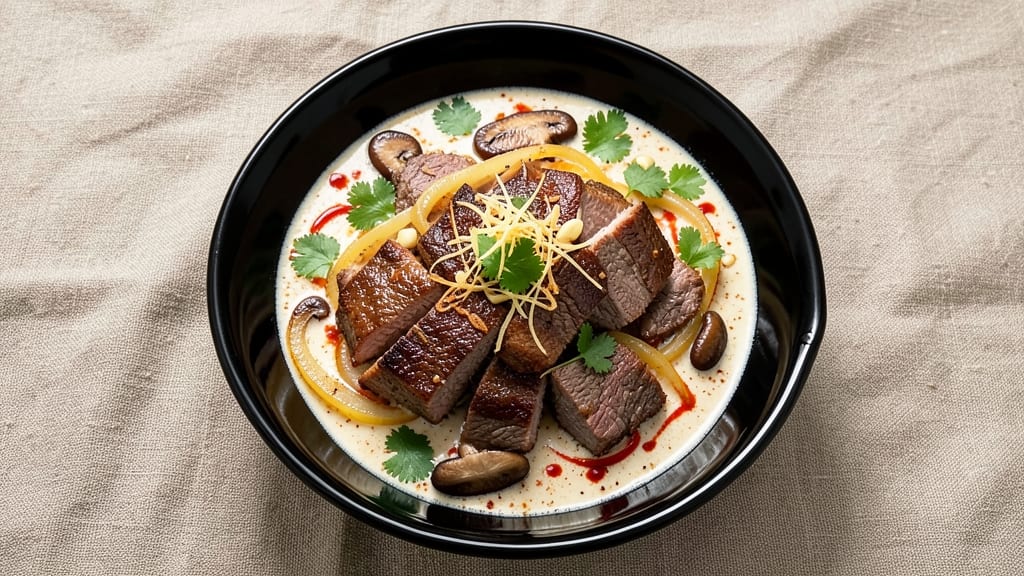
This Asian style beef stew recipe transforms tough cuts into melt-in-your-mouth tenderness with aromatic star anise and creamy coconut milk. The slow braising process develops deep umami flavors from soy sauce, ginger, and mushrooms, creating a rich broth that clings to every bite.
I've perfected this technique over years of testing, balancing traditional Asian spices with modern depth that home cooks can easily replicate.
The magic happens in the marinade—where garlic, ginger, and soy sauce begin breaking down the meat—before it simmers for hours with aromatic spices like cinnamon and star anise.
The coconut milk adds a subtle creaminess that rounds out the bold flavors, while mushrooms contribute earthy umami that elevates the entire dish. This isn't just stew; it's a comforting, restaurant-quality meal that feels special enough for company but simple enough for weeknights.
By the time you're done, you'll have fork-tender beef swimming in a fragrant, slightly thickened broth that's packed with flavor. The aroma alone will have everyone gathering around the table, and each bite delivers perfect balance—savory, aromatic, and just sweet enough from the caramelized onions.
Serve it over steamed rice to soak up every last drop of that luxurious sauce.
What makes this recipe particularly approachable is the flexibility—use chuck roast for maximum tenderness or opt for cheaper cuts like brisket. The slow cooking process forgives minor timing variations, making it ideal for beginners while still impressing experienced cooks.
The result is a dish that feels both authentic and innovative, with layers of flavor that keep you reaching for seconds.
Ingredients for asian style beef stew
The beef, aromatic spices, and coconut milk work together to create this restaurant-quality Asian-inspired braise.
| Ingredient | Amount | Notes |
|---|---|---|
| Chuck Roast 🥩 | 2 lb | Bone-in for maximum flavor |
| Yellow Onion 🧅 | 1 whole | Large, sliced into half-moons |
| Garlic Cloves 🧄 | 6 cloves | Peeled, smashed slightly |
| Fresh Ginger 🌿 | ½ cup | Grated, packed measure |
| Shiitake Mushrooms 🍄 | 8 whole | Stemmed, sliced thick |
| Coconut Milk 🥥 | 1 can | Full-fat, 13.5 oz can |
| Star Anise 🌟 | 2 whole | Lightly crushed |
| Cinnamon Sticks 🌿 | 1 whole | 2-inch pieces |
| Soy Sauce 🥄 | ½ cup | Dark or regular |
| Brown Sugar 🍯 | 2 tbsp | Packed measure |
| Tomato Paste 🍅 | 2 tbsp | Smooth, no sugar added |
| Beef Broth 💧 | 2 cups | Low-sodium preferred |
| Olive Oil 🫒 | 2 tbsp | For searing |
| Salt 🧂 | 1 ½ tsp | Kosher or sea salt |
| Black Pepper 🌶️ | 1 tsp | Freshly cracked |
The chuck roast is key here—bone-in pieces add extra flavor, but boneless works too. I grab mine from the butcher counter at Whole Foods when it's on sale, but the regular supermarket chuck is fine. Look for good marbling and avoid anything with a grayish tint. For mushrooms, shiitakes give that earthy depth, but cremini or oyster mushrooms are great substitutes. The star anise and cinnamon sticks? Penzeys Spices has the best quality, but any Asian market will carry them too.
No star anise? 1/4 tsp ground anise seed works in a pinch, though it's not quite the same. Running out of coconut milk? Substitute full-fat Greek yogurt or a splash of heavy cream—just reduce the broth by 1/4 cup to balance. The soy sauce can be swapped for tamari if you're gluten-free, but don't use coconut aminos—they're way too mild. For the ginger, fresh is ideal, but 1/2 tsp ground ginger works if you're in a hurry. The tomato paste? Trader Joe's squeeze tubes are perfect for this—no waste, and they keep forever.
This stew tastes even better the next day as flavors meld. Store leftovers in an airtight container in the fridge for up to 5 days, or freeze portions for 3 months. I like to double the recipe and freeze half—perfect for lazy weeknights. The broth thickens as it cools, so add a splash of beef broth when reheating. Serve with steamed jasmine rice to soak up every last drop of that rich, aromatic sauce.
Why You'll Love This Recipe
- One-Pot Magic: I swear by this recipe when I’m too tired to wash extra bowls. Chuck roast and shiitake mushrooms simmer together until the meat falls apart—no straining, no fuss. Just dump everything in, let it work its flavor, and you’re done.
- Umami Bomb: That combo of fresh ginger, garlic, and shiitake mushrooms? It’s like a flavor explosion in your mouth. The mushrooms add this deep, earthy richness, while the ginger keeps it bright—every bite tastes like a little Asian bistro in a bowl.
- Leftover Hero: This stew only gets better the next day. The flavors meld overnight, and reheating it is my lazy Sunday secret weapon. Pack it for lunch, freeze portions, or just eat it straight from the pot—it’s always a hit.
- Budget Feast: Chuck roast is cheap, and shiitake mushrooms stretch it into a meal that feeds four for under $15. Honestly, I make this when I’m pinching pennies, and no one ever complains. It’s hearty, filling, and way more exciting than takeout.
Step-by-step instructions for Asian style beef stew
This umami-packed stew builds rich, aromatic layers—let's cook it just right.
Sear the Chuck Roast for Deep Flavor
Pat the 2 lb chuck roast dry with paper towels and season both sides generously with 1.5 tsp salt and 1 tsp black pepper. Heat 2 tbsp olive oil in a heavy pot over medium-high heat until shimmering. Place the roast in the pot and sear for 4-5 minutes per side until deep golden brown with crisp edges.
This initial sear creates a flavorful crust that won't dissolve during braising. I like to press down gently on the roast during the first minute—this prevents it from curling and ensures even contact with the pan. Once browned, remove the roast and set it aside on a plate.
Build the Aromatic Base
In the same pot, reduce heat to medium and add the sliced 1 whole yellow onion and 8 whole shiitake mushrooms. Cook for 5-6 minutes, stirring occasionally, until the onions soften and mushrooms release their moisture. Add the 6 cloves smashed garlic and cook for 30 seconds until fragrant.
Next, stir in the 0.5 cup grated fresh ginger, 2 tbsp tomato paste, 2 tbsp brown sugar, 0.5 cup soy sauce, 2 whole crushed star anise, and 1 whole cinnamon stick. Cook for 2 minutes, stirring constantly, until the tomato paste darkens slightly and the spices bloom their aromas.
Braise with Coconut and Broth
Pour in the 2 cups beef broth and scrape up any browned bits from the bottom of the pot. Return the seared roast to the pot, along with any accumulated juices, and bring everything to a gentle simmer. Cover the pot and transfer to a preheated 325°F oven for 2 hours. Here's the thing—this low-and-slow cook breaks down the tough chuck roast into fork-tender perfection.
After 2 hours, remove the pot from the oven and stir in the 1 can coconut milk. Return to the oven for another 30-45 minutes until the sauce thickens slightly and the beef is fork-tender. The coconut milk adds a velvety richness that balances the savory depth of the stew.
Finish and Adjust
Remove the roast from the pot and place it on a cutting board. Skim any excess fat from the surface of the stew, then taste and adjust seasoning. If needed, add a splash more soy sauce or a pinch of salt to balance flavors. Return the roast to the pot and let it sit for 5 minutes to absorb the sauce.
Slice the roast against the grain into ½-inch thick pieces and serve directly from the pot, ladling the rich sauce over each portion. The stew should have a thick, glossy consistency with layers of umami from the star anise, sweetness from the brown sugar, and a velvety finish from the coconut milk. Each bite delivers tender beef, aromatic mushrooms, and a perfect balance of savory and sweet flavors.
Pro Tips For Making Asian Style Beef Stew
- SEAR THE CHUCK ROAST: Hit that chuck roast with a screaming-hot pan—no rushing—until it’s deep brown in spots. I learned this the hard way: pale meat means bland broth, no matter how much ginger and garlic you toss in later. Let it sit 5 minutes after searing so the crust doesn’t turn to mush when you add liquid.
- SLICE THE GINGER THIN: Forget the big chunks—shave that ginger paper-thin with a mandoline or knife. It’ll infuse the stew evenly without overpowering, and you’ll avoid the chewy texture that ruins the whole dish. (Yes, even if you’re impatient like me.)
- DON’T CROWD THE MUSHROOMS: Spread those shiitake caps out in the pan so they brown, not steam. I used to toss them in all at once and ended up with soggy, flavorless mushrooms. A quick 3-minute sear before adding broth makes all the difference.
- USE COLD BROTH: Start with cold liquid—stock, soy sauce, whatever your base—to keep the chuck from cooking through too fast. I was skeptical until I tried it: the meat stays tender, and the flavors meld better when the broth gradually heats up. (Your future self will thank you.)
Essential equipment for perfect results
Heavy-Duty Dutch Oven
Your Dutch oven is the star of this recipe—it needs to handle the searing, braising, and oven time without warping. I swear by the Le Creuset 5.5-quart for its even heat distribution and durable enamel, but All-Clad Stainless Steel works too if you prefer stovetop control.
Avoid nonstick—it can't handle the high heat needed for proper searing. A Dutch oven with a tight-fitting lid is critical for trapping steam during the oven phase, which keeps the beef tender and the broth flavorful. 🔥
Instant-Read Thermometer
Checking internal temperature is non-negotiable for perfect results. I use the ThermoWorks ThermoPop—it's fast, accurate, and has a handy backlight for oven checks. For this stew, aim for 203°F internal temperature in the beef.
The thermometer also helps monitor broth temperature during the initial simmer to prevent boiling over. A cheap pop-in thermometer works, but I've found they're less reliable for precise readings over long cooking times.
Tongs for Handling Meat
Long-handled tongs are essential for safely flipping the beef during searing and stirring the stew without burning yourself. I prefer OXO Good Grips—they're heat-resistant and have a comfortable grip. Avoid metal spoons with this recipe; they can scratch your Dutch oven's enamel over time.
The tongs also help you easily remove the roast for resting and slicing without losing precious juices.
Fine-Mesh Strainer
A stainless steel fine-mesh strainer (like the OXO Good Grips) comes in handy for skimming excess fat from the stew before serving. This step isn't strictly necessary but makes a noticeable difference in the final presentation and texture.
I also use it to strain any solids from the broth if you prefer a smoother sauce. The fine mesh ensures you catch even the smallest particles without losing flavorful cooking liquids.
Measuring Spoons Set
Precision matters with spices and liquids in this recipe. I keep a stainless steel measuring spoons set (like West Bend) handy for accurately measuring the 2 tbsp brown sugar, 2 tbsp tomato paste, and other key ingredients.
The difference between ½ cup soy sauce and ⅔ cup can dramatically alter the balance of flavors. A good set includes both standard and metric measurements for flexibility. 💡
Cutting Board & Sharp Knife
For slicing the chuck roast against the grain, a large cutting board (I use John Boos 12x18-inch) and a sharp chef's knife (like Wüsthof) are must-haves. The board should be stable enough to handle the weight of the roast, and the knife should glide through the meat cleanly.
A dull knife makes quick work messy—it's worth investing in a quality knife that stays sharp. I also keep a meat mallet nearby to tenderize any stubborn fibers if needed.
Nutrition facts
Frequently asked questions
Can I use a different cut of beef instead of chuck roast?
For maximum tenderness, try brisket or short ribs, which hold up beautifully to long braising. If you want a leaner option, top round works but may need an extra 30 minutes of cooking time. Just remember that fattier cuts like chuck or brisket yield more flavorful broth.
How can I make this stew spicier?
Add 1-2 tbsp of gochujang (Korean chili paste) or ½ tsp red pepper flakes when building the aromatic base. For heat without spice, stir in 1 tbsp of sriracha at the end. Balance with a pinch of sugar if needed—this prevents the dish from becoming too sharp.
Is it okay to skip the oven and cook this on the stovetop?
Yes, but you'll need to monitor it closely. Simmer uncovered on low heat for 3-4 hours, adding water as needed to maintain liquid. The oven method gives more even cooking, but stovetop works in a pinch. Just avoid boiling, which can make the stew watery.
What's the best way to reheat leftovers?
Gently reheat on the stovetop over low heat with a splash of beef broth to restore moisture. Avoid microwaving as it can make the sauce watery. For extra richness, stir in 1 tbsp coconut milk when reheating. Leftovers taste even better the next day!
Can I make this stew in a slow cooker?
Sear the beef first, then transfer everything to the slow cooker and cook on low for 8 hours or high for 4 hours. Stir in coconut milk during the last 30 minutes to prevent curdling. The slow cooker version is perfect for hands-off cooking.