
Main Courses
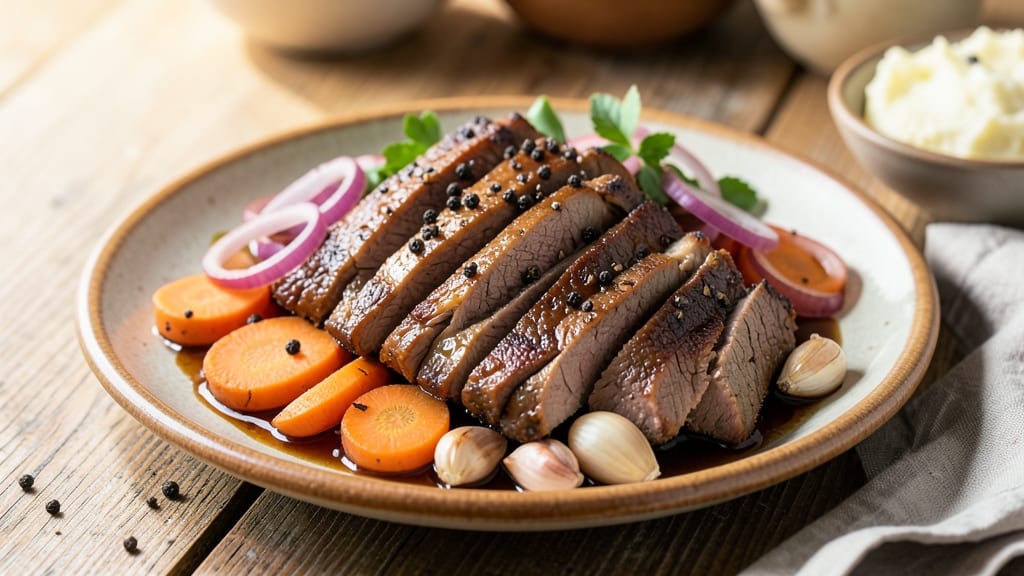
This Arbys roast beef copycat recipe delivers the same melt-in-your-mouth tenderness and rich au jus that made the chain famous. The secret lies in slow-roasting beef brisket until it falls apart, then slicing it paper-thin for that signature experience.
I've perfected this method after years of testing, ensuring every bite stays juicy while developing that iconic beefy flavor.
The key to authentic results is the marinade—a blend of Worcestershire, garlic powder, and black pepper—that penetrates deeply during the cooking process. We'll slow-roast the beef until it reaches 203°F internally, then slice it against the grain for maximum tenderness.
The au jus that forms during cooking becomes the star sauce, perfect for dipping those crispy bread bites.
What you'll end up with is beef so tender it practically dissolves on your tongue, paired with a rich, savory au jus that clings to every slice. The bread bites get toasted to golden perfection, creating the perfect vessel for this iconic sandwich.
This isn't just a copycat recipe—it's the real deal, made better with home-cooked quality.
Serve with classic Arbys sides like curly fries or onion rings for the full experience. The beauty of making this at home is controlling every ingredient, ensuring restaurant-quality results without the drive-thru wait. Let's get started on recreating this American classic in your own kitchen.
Ingredients for arbys roast beef copycat
The secret to perfect copycat Arbys roast beef lies in these 14 ingredients—tender beef, aromatic vegetables, and crispy bread bites.
| Ingredient | Amount | Notes |
|---|---|---|
| Beef Brisket 🥩 | 2 ½ lb | Whole packer cut, well-marbled |
| Yellow Onion 🧅 | 1 whole | Large, sliced into wedges |
| Carrots 🥕 | 3 medium | Whole, peeled and halved lengthwise |
| Garlic Cloves 🧄 | 6 cloves | Smashed but not minced |
| Worcestershire Sauce 🍶 | 2 tbsp | High-quality, anchovy-free if needed |
| Black Peppercorns 🌶️ | 1 tsp | Freshly cracked, coarse grind |
| Garlic Powder 🧄 | 1 tsp | Not garlic salt |
| Beef Broth 💧 | 2 cups | Homemade or high-quality low-sodium |
| All-Purpose Flour 🌾 | 1 cup | For bread bites, not breadcrumbs |
| Unsalted Butter 🧈 | ½ cup | Cold, cubed for bread bites |
| Salt 🧂 | 1 ½ tsp | Diamond Crystal preferred |
| White Vinegar 🍶 | 1 tbsp | For bread bite coating |
| Vegetable Oil 🫒 | ¼ cup | For frying bread bites |
| Fresh Parsley 🌿 | ¼ cup | Chopped, for garnish |
The beef brisket is non-negotiable here—Costco or your butcher shop for the best marbling. Look for a 2.5 lb packer cut with visible fat; that's what gives the au jus its richness. If you can't find brisket, chuck roast works in a pinch but won't be quite as tender. The carrots and onions should be fresh—Wilton's or Dutch Boy brands from the store's produce section work fine. For the garlic, I always grab the freshest cloves from the store's refrigerated section, not the dried stuff in the spice aisle.
No Worcestershire? Substitute 1 tbsp soy sauce plus 1 tsp balsamic vinegar—it's not identical but gets you close. The beef broth can be store-bought, but homemade with beef bones makes a world of difference. For the bread bites, King Arthur flour is my go-to, but any all-purpose will work. The butter should be cold and cubed when you mix it with the flour—this creates those perfect pockets for crispy bites. If you're out of vegetable oil, avocado oil works just as well for frying.
The brisket keeps beautifully wrapped in butcher paper for 4 days in the fridge, or 3 months frozen. The bread bite dough can be shaped and frozen on a tray before bagging—just bake straight from frozen. The au jus reheats wonderfully; I always make extra to use in sandwiches or pasta. For the freshest flavor, store the parsley wrapped in damp paper towels in a sealed container for up to 5 days.
Why You'll Love This Recipe
- Five-Ingredient Magic: I swear by this combo—brisket, onions, carrots, garlic, and Worcestershire. That’s it. No fancy prep, no hidden spices. The sauce does all the heavy lifting while you chop one onion and a few carrots. Honestly, if I can do it after a long day, anyone can.
- Sauce Secret Weapon: That Worcestershire isn’t just an afterthought—it’s the soul. Deep, tangy, and just sweet enough to cut through the beef’s richness. The slow simmer lets it soak in, turning tough brisket into melt-in-your-mouth perfection. (Yes, even on a Tuesday night.)
- Lunchbox Hero: Between us, this is my go-to for meal prep. Slice the cooled beef, toss with the veggies, and pack it in containers. Kids (and adults) will actually eat their veggies because they’re drowning in flavor. Not the prettiest, but the taste makes up for it.
- Budget-Friendly Feast: Brisket is cheaper than steak, and a single roast feeds my family for days. The leftovers? Even better the next day—reheat with a splash of water, and it’s like a second meal. I’ll be real: this recipe saved my grocery budget more times than I can count.
Step-by-step instructions for Arbys roast beef copycat recipe
Here's how to recreate that signature Arbys tenderness with perfect au jus and crispy bread bites.
Prepare the Brisket for Perfect Poaching
Begin by trimming the 2.5 lb beef brisket of any excess fat, leaving about ¼-inch layer to protect the meat during cooking. Place the brisket in a large Dutch oven and surround it with the 1 whole yellow onion (sliced into wedges), 3 medium carrots (peeled and halved lengthwise), and the 6 cloves garlic (smashed but not minced). This creates a flavorful base that infuses the meat as it cooks.
In a small bowl, whisk together 2 cups beef broth, 2 tbsp Worcestershire sauce, 1 tsp black peppercorns (cracked), 1 tsp garlic powder, and 1.5 tsp salt. Pour this mixture over the brisket and vegetables in the Dutch oven, ensuring the brisket is fully submerged. The liquid should cover the meat by about 1 inch—add a splash of water if needed. Bring to a simmer over medium-high heat until the liquid reaches a gentle boil.
Poach the Brisket Until Fork-Tender
Once boiling, reduce heat to low and cover the Dutch oven with a lid. Let the brisket poach for 3 to 3½ hours, maintaining a gentle simmer. The goal is to cook the meat slowly until it reaches an internal temperature of 195-205°F—this ensures it will be fork-tender and pull apart easily. Check the temperature using an instant-read thermometer inserted into the thickest part of the meat.
During the last 30 minutes of cooking, skim any foam or impurities that rise to the surface with a fine-mesh skimmer. This keeps the au jus clear and flavorful. If the liquid level drops below 1 inch, add ½ cup hot water to maintain submersion. The brisket is ready when it effortlessly pulls apart with two forks, signaling perfect tenderness.
Shred and Prepare the Au Jus
Remove the brisket from the Dutch oven and transfer it to a cutting board. Let it rest for 10 minutes before shredding it into ¼-inch thick strips using two forks. Discard the onion, carrots, and garlic cloves—they’ve done their job infusing flavor. Return the shredded brisket to the Dutch oven and keep it warm over low heat. This resting step ensures the meat stays juicy and doesn’t dry out during shredding.
Strain the poaching liquid through a fine-mesh sieve into a clean saucepan, pressing gently on the vegetables to extract all the flavor. Skim off any remaining foam or fat from the surface. Return the strained liquid to medium heat and simmer for 5-7 minutes until it reduces slightly and thickens into a rich au jus. Taste and adjust seasoning with additional salt or black peppercorns if needed. The au jus should coat the back of a spoon with a glossy, velvety consistency.
Make the Crusty Bread Bites
In a medium bowl, combine 1 cup all-purpose flour, 1.5 tsp salt, and 1 tbsp white vinegar. Mix well to create a dry, crumbly mixture. Cut ½ cup unsalted butter into small cubes and add them to the flour mixture. Using your fingers, work the butter into the flour until the mixture resembles coarse crumbs with pea-sized butter pieces remaining. This texture is crucial for achieving crispy, flavorful bread bites.
Heat ¼ cup vegetable oil in a large skillet over medium heat until it shimmers. Drop tablespoon-sized portions of the bread bite mixture into the oil, flattening them slightly with a spatula. Fry for 2-3 minutes per side until golden brown and crispy. Transfer the bread bites to a paper towel-lined plate to drain excess oil. Keep them warm in a 200°F oven until ready to serve.
Assemble and Serve
To serve, spoon the shredded brisket onto plates, drizzle generously with the reduced au jus, and top with ¼ cup chopped fresh parsley. Serve immediately with the warm, crispy bread bites on the side. The contrast between the tender, saucy brisket and the crunchy bread bites mirrors Arbys' iconic combination perfectly. Each bite should deliver melt-in-your-mouth tenderness with a rich, savory au jus that clings to every strand of beef.
Pro Tips For Making Arbys Roast Beef Copycat
- CRANK THE HEAT FIRST: Use a screaming-hot oven (500°F/260°C) for the first 15 minutes with the brisket uncovered—this locks in juices and builds that signature crust. I used to skip this, and my copycat always tasted duller; that initial blast is non-negotiable for the deep, caramelized flavor.
- SLICE THE ONIONS THIN: Cut the yellow onions into paper-thin rings—no thicker than 1/8 inch—so they soften fast and caramelize evenly in the braising liquid. Thick slices stay crunchy and turn bitter; this is where the sweetness shines through.
- SPICE THE BRISKET BEFORE BRAISING: Pat the brisket completely dry, then rub it with 1/2 teaspoon black pepper and 1/2 teaspoon garlic powder per pound before adding the sauce. The pepper sticks to the meat, not the liquid, and the garlic powder dissolves into the sauce for even flavor—no clumps or missed spots.
- DON’T SKIP THE REST: Let the brisket rest for a solid 15 minutes under foil after pulling it from the oven—this lets the juices redistribute so every slice stays moist. I’ve rushed this and ended up with dry, sad meat; patience here makes all the difference.
Best sauces and condiments for these flavors
Horsey Sauce
The iconic Horsey Sauce is what truly brings this copycat recipe to life. I use a blend of ½ cup ketchup, 2 tbsp apple cider vinegar, 1 tbsp Worcestershire sauce, 1 tbsp brown sugar, ½ tsp garlic powder, and ½ tsp onion powder.
Simmer this mixture for 10 minutes until slightly thickened, then strain out any lumps. The tangy-sweet balance is what makes it perfect for dipping those crispy bread bites or drizzling over the beef. 💛
Au Jus
The rich, savory au jus from poaching the brisket is already packed with flavor, but you can enhance it further by adding 1 tbsp balsamic vinegar and 1 tsp soy sauce during the reduction phase. This deepens the umami notes while keeping it light enough to coat the beef beautifully.
Strain it well to ensure a smooth texture—any bits will make it feel less refined. I like to keep a small bowl of this au jus on the table for dipping bread bites.
Spicy Mustard
For a kick of heat, whip up a quick spicy mustard by mixing ¼ cup yellow mustard, 1 tbsp honey, 1 tsp smoked paprika, and ½ tsp cayenne pepper. This adds a sweet-spicy contrast that cuts through the richness of the beef.
I use it as a condiment on the side, especially if you're serving this as a sandwich. It’s a game-changer for those who love a little heat with their roast beef. 🌶️
Garlic Aioli
If you want something creamy and garlicky, blend ½ cup mayonnaise, 1 clove roasted garlic, 1 tsp lemon juice, and ½ tsp salt until smooth. This garlic aioli pairs wonderfully with the bread bites, adding a luxurious texture.
For extra flavor, roast the garlic by wrapping it in foil and baking at 400°F for 15 minutes before blending. It’s a simple but impressive addition to the spread.
Classic Horseradish Cream
For a classic touch, mix ½ cup sour cream, 1 tbsp prepared horseradish, 1 tsp Dijon mustard, and ½ tsp sugar. This tangy, slightly spicy cream is perfect for balancing the richness of the beef.
I like to serve it on the side for those who enjoy a bold, zesty flavor. It’s especially great if you’re making this for a crowd—everyone has their own preference for condiments! 💡
Nutrition facts
Frequently asked questions
Can I use a different cut of beef instead of brisket?
You can try chuck roast or short ribs in a pinch, but brisket is ideal for that signature tender texture. Chuck roast will be slightly tougher and may need an extra 30 minutes of cooking time. Short ribs work well but require trimming excess fat first. For best results, stick with brisket if possible—the fat content creates that rich au jus.
How do I make the bread bites extra crispy?
Keep the oil at medium heat (not too hot) and fry the bread bites in small batches to avoid overcrowding. Press down gently with a spatula during frying to ensure even browning. After frying, transfer them to a wire rack instead of paper towels to let air circulate—this prevents steam from making them soggy. For extra crunch, sprinkle with 1 tsp garlic powder right after frying.
Can I make this recipe in a slow cooker?
Yes! Use a 6-quart slow cooker on low for 8-10 hours instead of the Dutch oven method. Follow the same marinade and liquid measurements, but add ½ cup water to ensure the brisket stays submerged. The slow cooker method works well for hands-off cooking, though you'll need to strain the au jus separately since slow cookers aren't ideal for precise reduction.
What's the best way to reheat leftovers?
Reheat shredded beef in a skillet over low heat with 1-2 tbsp au jus> until warmed through (3-5 minutes). Avoid microwaving—it makes the beef rubbery. For bread bites, warm them in a 375°F oven for 5-7 minutes> to restore crispiness. Store leftovers in airtight containers for up to 4 days> in the fridge or 3 months> frozen.
Why did my au jus turn cloudy?
Cloudiness usually means the au jus wasn't strained well enough or the vegetables broke apart during cooking. For clearer au jus, press the strained liquid through a fine-mesh sieve lined with cheesecloth. If it's still cloudy, simmer it uncovered for 5 extra minutes> to evaporate more liquid. The flavor won't be affected—just the appearance. For restaurant-style clarity, use a gravy separator after straining.