
Main Courses
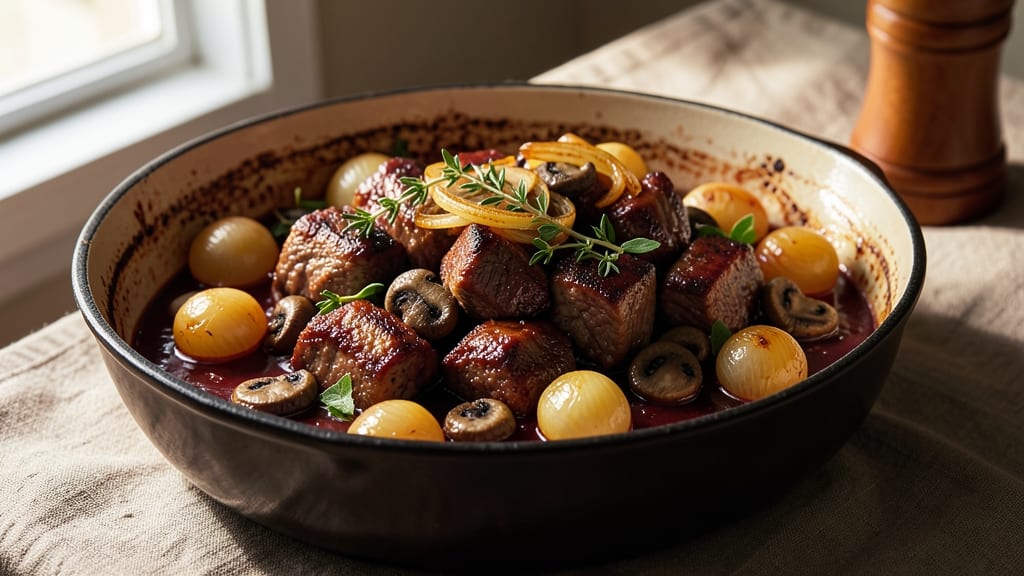
Anne Burrell’s beef bourguignon transforms tough beef chuck into melt-in-your-mouth tenderness with deep, wine-infused richness. This classic French dish relies on slow braising to develop layers of flavor—caramelized onions, earthy mushrooms, and a velvety red wine sauce that clings to every bite.
The secret lies in patience: letting the beef break down over hours while absorbing the aromatic broth.
The recipe begins with searing beef in batches to create a flavorful crust, then deglazing with red wine to dissolve those precious browned bits. Pearl onions add delicate sweetness, while mushrooms contribute an umami depth that rounds out the dish.
Aromatics like garlic and thyme infuse the sauce with complexity, ensuring each spoonful is packed with character.
By the time it’s done, you’ll have a dish that’s restaurant-quality at home—tender beef, tender vegetables, and a sauce so rich it practically melts off the fork.
Serve it with crusty bread to soak up every last drop or pair it with buttery mashed potatoes for a hearty meal that feels like a hug in a bowl.
What makes this version special is Burrell’s attention to detail: reducing the wine sauce properly, balancing acidity with sweetness, and ensuring the beef stays juicy.
The result is a dish that’s both impressive and approachable, perfect for special occasions or cozy weeknight dinners when you crave something comforting and deeply satisfying.
Ingredients for anne burrell beef bourguignon
Sixteen ingredients, three hours of braising, and a dish that feels like a French bistro masterpiece.
| Ingredient | Amount | Notes |
|---|---|---|
| Beef Chuck Roast 🥩 | 3 lb | Well-marbled, cut into 1.5-inch cubes |
| Pearl Onions 🧅 | 1 ½ lb | Whole, peeled if preferred |
| Cremini Mushrooms 🍄 | 16 oz | Wiped clean, halved if large |
| Yellow Onion 🧅 | 1 whole | Large, sliced into half-moons |
| Garlic Cloves 🧄 | 6 cloves | Smashed but not minced |
| Fresh Thyme 🌿 | 2 sprigs | Stems removed, leaves only |
| Fresh Parsley 🌿 | ¼ cup | Chopped, for garnish |
| Dry Red Wine 🍷 | 2 cups | Bold Cabernet or Merlot |
| Beef Broth 💧 | 2 cups | Low-sodium, homemade preferred |
| Tomato Paste 🍅 | 2 tbsp | Smooth, no sugar added |
| All-Purpose Flour 🌾 | 2 tbsp | For thickening sauce |
| Olive Oil 🫒 | ½ cup | Extra-virgin for searing |
| Salt 🧂 | 1 ½ tsp | Diamond Crystal preferred |
| Black Peppercorns 🌶️ | 1 tsp | Freshly cracked |
| Bay Leaves 🌿 | 2 whole | Removed before serving |
The beef chuck is non-negotiable here—look for good marbling at the butcher counter, not the pre-cut packages. Costco or Whole Foods carry the best quality, but your local butcher will know exactly what to recommend. Pearl onions should be firm and bright—skip the canned ones (they're mushy). For mushrooms, cremini or baby bella work best; wipe them clean with a damp paper towel instead of washing. Fresh thyme is worth the splurge—Penzeys or your grocery store's bulk section has the best. And that red wine? Any bold, dry red works—Cab Sauv, Merlot, whatever's open. Just avoid anything too sweet or fruity.
No red wine? Beef broth with a splash of balsamic gets you close, though the flavor won't be identical. Pearl onions too expensive? Substitute shallots or regular yellow onions—just slice them thinner. Mushrooms missing? Extra onions and carrots add umami, though nothing beats the earthiness of mushrooms. The tomato paste can be swapped for crushed tomatoes, but you'll need more (about 1 cup). And if you're short on time, pre-minced garlic works, though fresh smashed cloves develop deeper flavor. The flour for thickening? Use all-purpose or whole wheat—just don't skip it entirely.
This dish tastes even better the next day, so make it ahead if you can. Store in an airtight container in the fridge for up to 5 days, or freeze for 3 months. The sauce thickens as it cools, so add a splash of broth when reheating. For serving, garnish with fresh parsley right before eating—it brightens up the rich flavors. And that crusty bread? Buy it the day before so it's at its firmest. Leftovers reheat beautifully, though the sauce might need thinning with a splash of broth.
Why You'll Love This Recipe
- One-Pot Magic: I swear by this—just brown the beef, toss in the onions and mushrooms, then let the slow cooker (or Dutch oven) do the heavy lifting. No flipping pans, no stress.
- Deep Flavor Boom: That beef chuck roast gets tender while soaking up the wine and herbs, and the cremini mushrooms add this earthy richness. Honestly, the first bite makes you forget it’s a weeknight dinner.
- Leftovers That Win: This recipe actually improves the next day—more caramelized, more flavorful. I pack it for lunches or freeze portions; it’s my go-to for lazy mornings.
- Budget-Friendly Luxury: A chuck roast stretches for a crowd, and pearl onions (peeled in 30 seconds!) cut costs without sacrificing taste. Fancy dinner for half the price? Yes, please.
Step-by-step instructions for anne Burrell's beef bourguignon
This classic French dish transforms tough beef into melt-in-your-mouth perfection through slow braising.
Sear the Beef Chuck Roast for Deep Flavor
Pat the 3 lb Beef Chuck Roast dry with paper towels—this ensures a proper sear. Heat 0.5 cup Olive Oil in a Dutch oven over medium-high heat until shimmering. Working in batches if needed, add the beef cubes and sear for 3-4 minutes per side until deeply browned. You want that caramelized crust—it's the foundation of all that rich flavor. Transfer the seared beef to a plate and set aside.
Here's the thing—don't rush this step. If your pan gets crowded, reduce the heat slightly to prevent steaming instead of searing. Those browned bits (fond) will dissolve into the sauce later, creating depth of flavor. I like to press down gently on the beef cubes during the first minute to prevent curling, which ensures even contact with the pan.
Sauté Aromatics and Build the Sauce Base
In the same Dutch oven, add 1 whole Yellow Onion sliced into half-moons and cook for 5 minutes until softened and golden. Add the 16 oz Cremini Mushrooms (halved if large) and cook for another 6-7 minutes until they release their moisture and begin to brown. Remove the mushrooms with a slotted spoon and set aside temporarily.
To the pot, add 6 cloves Garlic Cloves (smashed but not minced) and cook for 30 seconds until fragrant. Immediately stir in 2 tbsp Tomato Paste and cook for 1 minute to deepen its flavor. Sprinkle in 2 tbsp All-Purpose Flour and stir vigorously for 2 minutes to toast the flour—this removes the raw taste and helps thicken the sauce later.
Deglaze and Simmer the Wine
Pour in the 2 cups Dry Red Wine and scrape up all those browned bits from the bottom of the pot with a wooden spoon. This deglazing step captures all that concentrated flavor. Let the wine simmer for 5-6 minutes until reduced by half—you'll see the liquid go from ruby red to a deeper, almost syrupy consistency. The alcohol will cook off, leaving behind rich wine flavors.
Here's where it gets good: add 2 cups Beef Broth, 2 sprigs Fresh Thyme, 2 whole Bay Leaves, and 1.5 tsp Salt. Bring to a gentle simmer, then return the seared beef and mushrooms to the pot. The liquid should come about halfway up the beef cubes. If it's too shallow, add a splash more broth. This is your braising liquid—it'll slowly tenderize the beef while infusing it with flavor.
Slow Braise Until Fork-Tender
Cover the Dutch oven and transfer to a preheated 325°F oven. Braise for 2.5-3 hours until the beef is fork-tender. You'll know it's done when a knife slides in easily and the beef pulls apart with minimal resistance. The sauce should have thickened slightly, coating the beef in a glossy, wine-infused reduction.
I know it's tempting to check on this frequently, but resist the urge. Every time you open the lid, you lose heat and moisture. Instead, trust the process and let that oven do its magic. The beef will develop a beautiful deep brown color and that unmistakable braised beef aroma that fills your entire kitchen.
Finish and Garnish for Restaurant-Worthy Results
Remove the beef and vegetables from the pot and strain the sauce through a fine-mesh sieve into a clean saucepan. Discard the thyme sprigs and bay leaves. Return the sauce to medium heat and simmer for 5-7 minutes until slightly thickened. If it's too thin, mix 1 tbsp All-Purpose Flour with 1 tbsp cold water to make a slurry, then whisk it into the sauce until it reaches your desired consistency.
Return the beef and vegetables to the sauce and heat through for 2 minutes. Taste and adjust seasoning with freshly cracked Black Peppercorns if needed. To serve, spoon the beef and vegetables over 1.5 lb Pearl Onions (peeled if preferred) and garnish with 0.25 cup Fresh Parsley. The onions should be tender but still hold their shape—perfect for soaking up all that delicious sauce.
Pro Tips For Making Anne Burrell Beef Bourguignon
- SEAR THE CHUCK HARD: Anne Burrell’s version relies on deep flavor from the beef, so don’t treat this like a quick weeknight dinner. Use a heavy pot—cast iron if you have it—and crank the heat until the oil shimmers. Let those chunks sit undisturbed for 3-4 minutes per side until they’re dark brown, almost black in spots. I used to rush this, and the stew always tasted flat—now I wait, and the difference is night and day.
- PEEL PEARL ONIONS RIGHT: Those pearl onions? Skip the tedious peeling if you’re short on time, but do trim off the very tips and make a shallow slit in the side of each. They’ll cook faster and look neater. If you’re feeling fancy, blanch them first in boiling water for 30 seconds to loosen the skins—just don’t overcook, or they’ll turn to mush. (Yes, I’ve done that. Twice.)
- DEGLaze LIKE IT MATTERS: After browning the beef, don’t just splash in the wine and call it a day. Scrape up every last bit of fond from the bottom of the pot with a wooden spoon—those bits are pure flavor. Let the wine reduce by half before adding the broth, and resist the urge to stir constantly. The longer it sits, the richer the sauce becomes. (Pro move: Add a splash of red wine vinegar at the end for brightness.)
- SIMMER LOW AND SLOW: This isn’t a race. After everything’s in the pot, reduce the heat to a bare simmer—you should barely see bubbles—and cover it loosely. Check it every 30 minutes, adding water or broth as needed to keep it just covering the meat. I learned this the hard way when I walked away for 20 minutes and came back to a watery, overcooked mess. The beef needs 2.5–3 hours to tenderize, and rushing it turns it to shoe leather.
Common mistakes when making your anne burrell beef bourguignon
Skipping the Sear
One of the biggest mistakes is rushing or skipping the sear entirely. Those browned bits on your beef (fond) are flavor gold—they dissolve into the sauce during deglazing. If you don’t sear properly, your dish will taste flat and one-dimensional.
I’ve made this error more than once—once when I was in a hurry and just tossed the beef in without browning. The result? A sauce that lacked depth and beef that was tough. Always take your time here—3-4 minutes per side until deeply browned. 🔥
Under-Reducing the Wine
Many home cooks pour in the wine and immediately add the broth, but that’s a missed opportunity. The wine needs to reduce by at least half—5-6 minutes of simmering—to concentrate its flavors and cook off the alcohol.
I’ve seen recipes where the sauce tasted sharp or alcoholic because the wine wasn’t reduced enough. Let it reduce until it’s syrupy and deep in color before adding the broth. This step is non-negotiable for that rich, restaurant-quality taste.
Overcrowding the Pot
If you try to cook all the beef at once in a small Dutch oven, you’ll steam the meat instead of searing it. This leads to pale, soggy beef and a watery sauce.
I learned this the hard way when I tried to sear 3 lbs of beef in my 5.5-quart Dutch oven all at once. The result? A pan full of half-seared, half-steamed beef. Work in batches if needed—2 lbs at a time—to ensure proper browning.
Your patience here will pay off in flavor.
Ignoring the Braising Time
Beef bourguignon isn’t a quick dish—it needs that 2.5-3 hour braise to become fork-tender. I’ve seen people pull it out too early because they’re impatient, and the beef is still tough.
The key is low and slow—325°F in the oven—so the connective tissue breaks down and the flavors meld together. Resist the urge to check on it constantly; every time you open the lid, you lose heat and moisture. Trust the process, and you’ll be rewarded with melt-in-your-mouth beef.
Forgetting to Strain the Sauce
Straining the sauce through a fine-mesh sieve removes the herb stems and any sediment, giving you a silky, smooth texture. Skipping this step leaves your sauce with a slightly gritty texture and muted flavor.
I once served bourguignon with the thyme sprigs still in the sauce, and while it looked rustic, it didn’t taste as refined. Take the extra 2 minutes to strain it—your guests (and your palate) will notice the difference. ✨
Overthinking Substitutions
While substitutions are helpful in a pinch, they can throw off the balance of flavors if not done carefully. For example, using white wine instead of red changes the entire profile of the dish.
I’ve tried this once, and while it wasn’t terrible, it lacked the depth and richness that red wine brings. If you’re substituting, stick to similar types—dry red wine for wine, beef broth for broth, and all-purpose flour for thickening.
When in doubt, stick to the original recipe for the best results.
Nutrition facts
Frequently asked questions
Can I use a different cut of beef besides chuck roast?
While beef chuck is ideal for its marbling and flavor, you can substitute with beef short ribs or chuck steak (cut into cubes). Avoid leaner cuts like sirloin—they won't become tender enough during braising. If using short ribs, reduce braising time to 2 hours since they're already more tender.
How do I make this recipe vegetarian?
For a vegetarian version, replace the beef with mushroom "steaks" (large portobello or shiitake mushrooms) or extra-firm tofu pressed and seared. Use vegetable broth instead of beef broth and add 1 cup lentils for protein. The wine reduction and mushrooms will still create rich, complex flavors.
Can I make this in an Instant Pot or slow cooker?
Yes! For the Instant Pot, sear the beef first, then add all ingredients and cook on high pressure for 60 minutes. For a slow cooker, follow the same steps but cook on low for 6-8 hours. The Instant Pot version will be faster but may need extra broth to prevent drying out. The slow cooker method yields slightly more tender beef.
What's the best way to reheat leftovers?
Reheat gently in a saucepan over low heat with 2-3 tablespoons of broth to prevent drying. If using the microwave, cover with a damp paper towel and heat in 30-second intervals. The sauce may thicken when cool, so add extra broth when reheating. Never reheat to a boil—this can make the beef tough.
Why does my sauce taste bitter?
Bitterness usually comes from over-reducing the wine or using too much tomato paste. For future batches, reduce the wine just until syrupy (5-6 minutes) and use 1 tbsp tomato paste instead of 2. If your sauce is already bitter, stir in 1 tsp sugar or 1 tbsp balsamic vinegar to balance the flavors. A splash of cream can also help smooth out bitterness.