
Main Courses
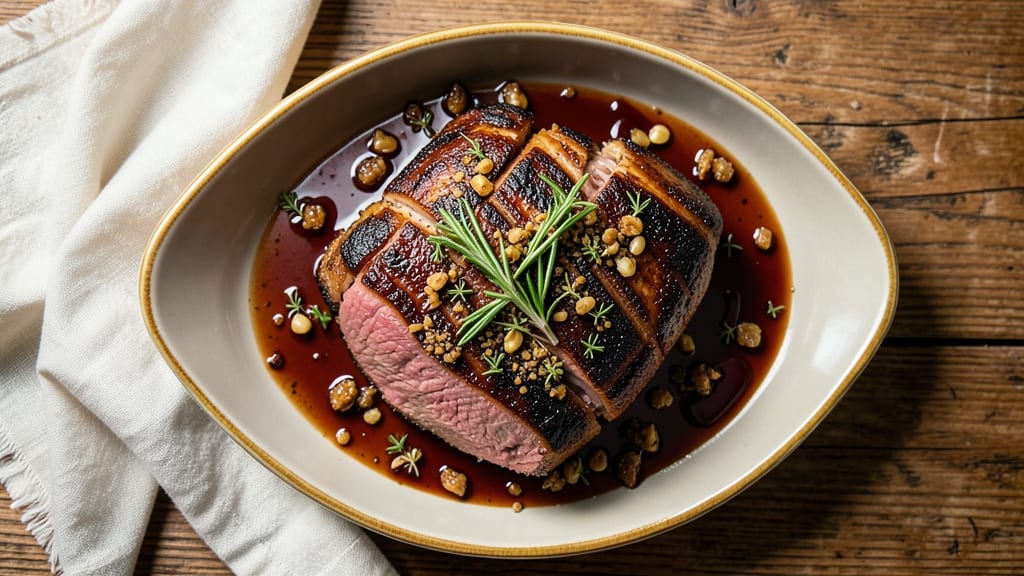
This Angus beef sirloin roast recipe delivers melt-in-your-mouth tenderness with a golden herb crust and rich pan juices that elevate any dinner table. The secret lies in precise temperature control and a flavorful crust that locks in moisture while creating a caramelized exterior.
I've perfected this method over countless holiday dinners, where it becomes the centerpiece that impresses even the most discerning guests.
The beauty of this recipe is its professional-level results with straightforward techniques. A simple herb crust made from fresh rosemary, thyme, garlic, and Dijon mustard creates depth of flavor without overpowering the beef's natural richness.
The roasting process at 375°F ensures even cooking while developing that perfect medium-rare center, with just 20-25 minutes per pound for optimal doneness.
What you'll achieve is a roast so tender it practically falls apart, with a crust that's crisp enough to stand up to fork pressure. The pan juices reduce to a glossy glaze that can be spooned over each slice, adding layers of savory depth.
This isn't just dinner—it's an experience that transforms a simple roast into a showstopping centerpiece worthy of fine dining.
The versatility of this recipe means it works equally well for family gatherings or intimate dinners. Pair it with classic sides like roasted root vegetables, creamy mashed potatoes, or a fresh green salad to complete the meal.
The herb crust can be customized with different seasonings while maintaining the same foolproof cooking method that delivers perfect results every time.
Ingredients for angus beef sirloin roast
Six ingredients transform premium Angus beef into a restaurant-worthy roast with golden crust and luxurious pan juices.
| Ingredient | Amount | Notes |
|---|---|---|
| Angus Beef Sirloin Roast 🥩 | 4 lb | Center-cut, 1.5-2 inches thick |
| Fresh Rosemary 🌿 | ¼ cup | Finely chopped, stems removed |
| Fresh Thyme 🌿 | 2 tbsp | Leaves only, stems discarded |
| Garlic Cloves 🧄 | 8 cloves | Minced, for crust and juices |
| Dijon Mustard 🍯 | 2 tbsp | High-quality, for binding |
| Extra-Virgin Olive Oil 🫒 | 3 tbsp | Cold-pressed, for crust |
| Kosher Salt 🧂 | 2 tbsp | Diamond Crystal preferred |
| Freshly Ground Black Pepper 🌶️ | 1 tbsp | Coarse grind for texture |
| Unsalted Butter 🧈 | ½ cup | Cold, cubed for basting |
| Beef Tallow or Duck Fat 🍳 | 2 tbsp | For crisp crust, optional |
| Fresh Parsley 🌿 | ⅛ cup | Chopped, for garnish |
| Red Wine 🍷 | ½ cup | Bold Cabernet Sauvignon |
| Beef Bone Broth 🍲 | 1 cup | Homemade or high-quality |
The Angus beef sirloin is non-negotiable for this recipe—look for center-cut roasts with visible marbling at specialty butchers or high-end grocers like Whole Foods or Dartmouth Farms. A 1.5-2 inch thickness ensures even cooking. For the herb crust, Penzeys Spices carries premium rosemary and thyme, but any fresh herbs from the grocery store work if they're vibrant and fragrant. The Dijon mustard should be Maille or similar—cheap brands lack the depth. Prep the crust ingredients while the beef rests at room temperature (30 minutes) for even cooking. The red wine adds complexity to the pan juices, so use something you'd drink with steak—Caymus Vineyards or Opus One if you're splurging.
No fresh rosemary? Dried rosemary at one-third the amount works, but fresh is ideal. Running low on Dijon? Whole-grain mustard thinned with water serves as a substitute. The beef tallow can be swapped for extra olive oil if unavailable, though it won't crisp as dramatically. For a red-wine-free version, use beef broth with a splash of balsamic vinegar—just reduce the liquid by half. The bone broth should be homemade if possible; Kettle & Fire or Pacific Foods brands are excellent shortcuts. Pre-mince the garlic for efficiency, but don't overdo it—4 cloves is perfect for both the crust and deglazing the pan later. The butter must be cold when added to the roast—Plugrá or Land O'Lakes work well for this purpose.
The roast develops maximum flavor after resting 15-20 minutes—use this time to reduce the pan juices with the red wine and broth. Store leftovers in an airtight container for up to 4 days, but reheat carefully: low oven (275°F) with foil prevents drying. For long-term storage, portion into freezer bags with pan juices and freeze for up to 3 months. The herb crust loses crispness when reheated, so save a portion of the crust mixture to sprinkle on top before serving. Garnish with parsley right before serving—it brightens the dish and adds a pop of color for presentation.
Why You'll Love This Recipe
- Same recipe, different vibes: slice it thin for sandwiches on a busy night or serve it whole with crusty bread for a lazy Sunday. I’ve even used leftovers for tacos—no judgment.
- Minimal Prep, Big Payoff: I swear by this roast—just sear the beef, slather on Dijon and crushed garlic, then tuck in fresh rosemary and thyme. No chopping, no fuss, and honestly, the hardest part is waiting for the oven timer to ding.
- That Crispy Edge: The secret’s in the sear and the mustard—it caramelizes into a sticky, savory crust while keeping the inside melt-in-your-mouth tender. Between us, that’s the kind of beef that makes people ask, "What cut is this?"
- Weeknight or Sunday Feast: Same recipe, different vibes: slice it thin for sandwiches on a busy night or serve it whole with crusty bread for a lazy Sunday. I’ve even used leftovers for tacos—no judgment.
Step-by-step instructions for herb-crusted Angus beef sirloin roast
Transform your roast into a restaurant-quality centerpiece with this precise technique.
Prepare the Herb Crust Mixture
In a medium bowl, combine the 0.25 cup fresh rosemary, 2 tablespoons fresh thyme, 8 cloves minced garlic, 2 tablespoons Dijon mustard, 3 tablespoons extra-virgin olive oil, 2 tablespoons kosher salt, and 1 tablespoon freshly ground black pepper. Mix thoroughly until the herbs are evenly distributed and the mixture becomes a thick, aromatic paste.
This herb blend is the secret to that signature crust - the rosemary and thyme provide earthy depth while the Dijon mustard acts as a natural binder that helps the crust adhere perfectly. The olive oil adds richness that carries the flavors throughout the cooking process.
Coat and Rest the Roast
Pat the 4 lb angus beef sirloin roast completely dry with paper towels, then rub the herb mixture evenly over all sides, pressing firmly to ensure adhesion. Place the roast on a wire rack set over a rimmed baking sheet and refrigerate uncovered for at least 2 hours (or up to overnight).
The resting period serves two crucial purposes: it allows the herb crust to fully adhere to the meat and lets the salt penetrate deeply, creating that perfect balance of seasoning throughout. This step is non-negotiable for achieving that coveted crust and juicy interior.
Sear for Maximum Flavor Development
Remove the roast from the refrigerator 30 minutes before cooking to bring it to room temperature. Preheat your oven to 425°F with a rack positioned in the lower third. Heat a large oven-safe skillet over high heat and add 2 tablespoons beef tallow or duck fat (if using) and 0.5 cup cubed unsalted butter.
When the butter foams and the tallow begins to sizzle, carefully place the roast in the skillet, fat-side down. Sear for 4-5 minutes until a deep golden crust forms. Flip and sear the other side for another 4-5 minutes. The high heat creates a flavorful crust through the Maillard reaction while the rendered fat bastes the meat.
Roast to Perfect Doneness
Transfer the skillet to the preheated oven and roast for 20-25 minutes until the internal temperature reaches 125°F for medium-rare (use a meat thermometer for accuracy). During the last 10 minutes of roasting, add 0.5 cup red wine and 1 cup beef bone broth to the skillet, basting the roast occasionally with the pan juices.
The wine and broth create a flavorful reduction that bastes the meat continuously, ensuring maximum moisture retention. The roast is done when it reaches 125°F internally - this temperature ensures a perfectly pink center with juices that flow freely when sliced. Remove from oven and tent loosely with foil to rest for 15-20 minutes before slicing.
Create Pan Sauce and Serve
After resting, place the skillet back on the stovetop over medium heat. Spoon any accumulated juices from the roast into the skillet and scrape up any browned bits from the bottom. Simmer for 3-4 minutes until the sauce thickens slightly. Stir in 0.125 cup chopped fresh parsley just before serving.
The pan sauce captures all the concentrated flavors from the roasting process, creating a luxurious accompaniment that ties all the elements together. Serve the roast sliced against the grain with the pan sauce spooned over each portion, accompanied by roasted vegetables or a fresh herb salad.
Pro Tips For Making Angus Beef Sirloin Roast
- SEAR FIRST, THEN REST: The roast won’t brown properly if you salt it right before searing—it’ll just steam instead of develop that crust. Pat it dry, salt it generously (about 1 teaspoon per pound), and let it sit uncovered in the fridge for at least 30 minutes. I learned this the hard way after my first attempt looked like a sad, pale brick.
- CHOP GARLIC COARSELY: You don’t need minced garlic here—it’ll turn bitter and overpower the dish. Roughly chop 3-4 cloves (skin on) and smash them with the flat side of your knife. The flavor will still infuse beautifully, and you’ll avoid that cloying, overcooked garlic taste that ruins a good roast.
- DON’T SKIP THE MUSTARD LAYER: Slather that Dijon mustard thickly over the seared roast before adding herbs—it’s the glue that makes the crust stick. Skip it, and your rosemary and thyme will just fall off like confetti. (Yes, even if you’re impatient like me.)
- USE A MEAT THERMOMETER: Angus sirloin is forgiving, but medium-rare (130°F internal) is where it shines—any hotter, and it’ll dry out faster than your patience. Start checking 10 minutes before your estimated time, and pull it before it hits your target. The residual heat will carry it the rest of the way. (Your future self will thank you.)
Essential equipment for great angus beef sirloin roast
Precision Thermometer
Invest in a meat thermometer with instant-read capability—I recommend the ThermoWorks Smoke or Thermoworks Thermapen—to monitor internal temperatures accurately. These tools help you achieve that perfect medium-rare center at 125°F without overcooking. A good thermometer is non-negotiable for roasting beef, as visual cues alone can be misleading. 🌡️
Oven-Safe Skillet
Use a heavy-duty, oven-safe skillet like a Cast Iron Skillet from Lodge or a Stainless Steel Skillet from All-Clad. The skillet must handle high heat for searing and then transition seamlessly to the oven for roasting.
A 12-inch diameter skillet works perfectly for a 4 lb roast, providing enough surface area for even searing and basting.
Wire Rack and Baking Sheet
Place your roast on a wire rack set over a rimmed baking sheet to ensure even air circulation around the meat. This prevents steam buildup, which can make the crust soggy.
I use a Viking brand wire rack—it’s sturdy and fits most baking sheets. The rack elevates the roast, allowing fat to drip away for a crispier crust.
High-Quality Knife
A sharp chef’s knife (like a Wüsthof or Shun) is essential for slicing the roast against the grain after cooking. A dull knife crushes the meat fibers, leading to tough slices.
I also keep a boning knife on hand for trimming excess fat before roasting. Investing in a Whetstone sharpening stone ensures your knives stay razor-sharp for years.
Tongs for Basting
Use heat-resistant tongs (I prefer OXO Good Grips) to baste the roast with pan juices during the last 10 minutes of roasting. Long-handled tongs keep your hands safe from the hot skillet while ensuring even basting.
The tongs also help flip the roast easily during searing without losing control of the skillet.
Optional: Sous Vide Circulator
For even more precision, a sous vide circulator like the Anova Nano can help maintain a consistent temperature during the roasting process. While not required, it ensures the roast stays within a ±1°F range, which is ideal for achieving perfect doneness.
This is especially useful if you’re cooking for a large group or want to experiment with different internal temperatures. 💡
Nutrition facts
Frequently asked questions
What's the best way to trim excess fat from an angus beef sirloin roast?
Use a sharp boning knife to carefully trim any visible fat cap while leaving about ¼-inch of fat for flavor and moisture. Always trim just before cooking to prevent drying out the meat. For a cleaner presentation, leave the fat on but trim it closer after roasting.
Can I make this recipe with a smaller roast?
Yes, but adjust the cooking time proportionally. For a 2 lb roast, reduce oven time to 15-18 minutes after searing. The herb crust recipe scales perfectly—just halve all ingredients. The key is maintaining the same 375°F temperature for even cooking.
Why does my crust keep falling off?
This usually happens when the roast isn't properly dried before applying the crust or if the herb mixture isn't pressed firmly onto the meat. Pat the roast completely dry with paper towels and press the crust on with your fingers—think of it like making a crust for a pie!
What's the best way to reheat leftovers?
Slice the roast and reheat portions in a skillet over medium-low heat with a splash of beef broth until warmed through (2-3 minutes). For larger pieces, wrap in foil and bake at 275°F for 10-15 minutes). Never microwave—it makes the meat tough.
How can I make this recipe ahead of time?
Prepare the herb crust and coat the roast up to 2 days ahead, then refrigerate uncovered. Cook as directed, but increase oven time by 5-10 minutes since cold meat takes longer. For the pan sauce, make it fresh—it's the star of the dish!