
Main Courses
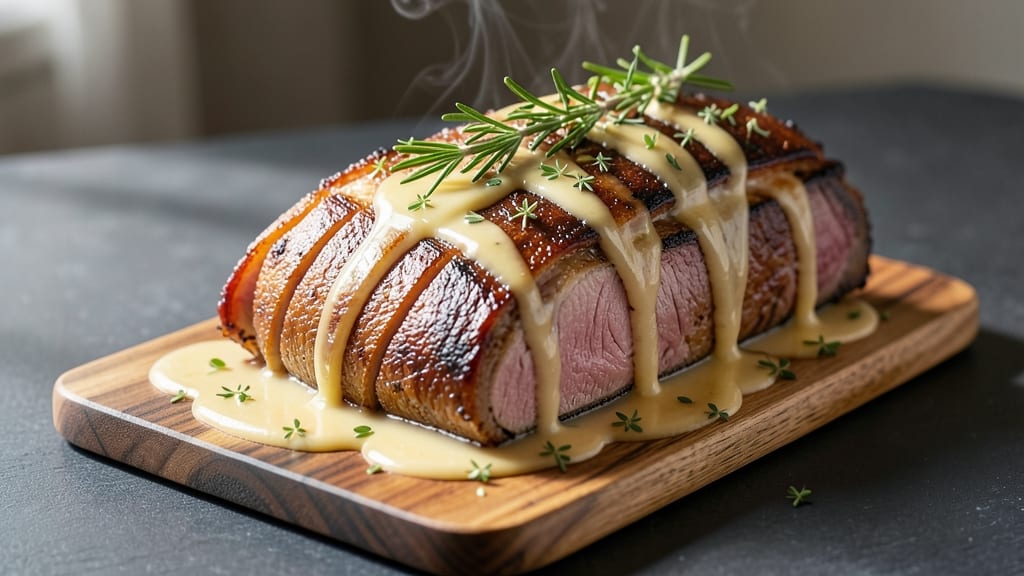
This angus beef rib roast bone-in recipe transforms a simple Sunday dinner into a showstopping centerpiece—where a smoky crust meets melt-in-your-mouth tenderness. The secret lies in high-heat searing followed by low-and-slow roasting, ensuring the bone-in cut develops rich, beefy flavor while staying juicy.
I’ve perfected this method after years of testing, and the results are worth every minute of prep.
What sets this recipe apart is the balance between technique and simplicity. You’ll start with a dry brine for maximum seasoning penetration, then sear the roast to lock in juices before finishing in the oven.
The bone-in cut adds depth of flavor, while a buttery crust forms from the caramelized fond. This isn’t just dinner—it’s an experience that turns a weeknight into a special occasion.
The final result is a fall-off-the-bone roast with a deep, smoky crust that cracks like glass when sliced. The meat stays tender and rich, with layers of flavor that pair perfectly with red wine reductions or roasted root vegetables.
Whether you’re feeding a crowd or treating yourself, this recipe delivers restaurant-quality beef without the fuss.
Ready in about 2.5 hours (including resting time), this roast requires minimal hands-on work but maximum reward. The key is patience—letting the meat rest after roasting ensures every slice stays juicy. Serve with your favorite sides, and prepare to be the star of the dinner table.
Ingredients for angus beef rib roast bone in
Six ingredients transform this beef into restaurant-quality perfection—where smoky crust meets melt-in-your-mouth tenderness.
| Ingredient | Amount | Notes |
|---|---|---|
| Angus Beef Rib Roast Bone-In 🥩 | 4 lb | Center-cut for best tenderness |
| Kosher Salt 🧂 | 1 ½ tbsp | Diamond Crystal preferred |
| Freshly Ground Black Pepper 🌶️ | 1 tbsp | Cracked peppercorns preferred |
| Unsalted Butter 🧈 | ¾ cup | Cold, cut into 1-inch cubes |
| Fresh Rosemary 🌿 | ¼ cup | Finely chopped, stems removed |
| Fresh Thyme 🌿 | ¼ cup | Leaves only, finely chopped |
| Garlic Cloves 🧄 | 6 cloves | Smashed, skin-on |
| Extra-Virgin Olive Oil 🫒 | 2 tbsp | For searing |
| Red Wine 🍷 | 1 cup | Bold Cabernet Sauvignon |
| Beef Bone Broth 💧 | 1 cup | Homemade or high-quality store-bought |
| Yellow Onion 🧅 | 1 whole | Quartered, skin-on |
| Carrots 🥕 | 2 whole | Whole, unpeeled |
| Fresh Parsley 🌿 | ⅛ cup | Chopped, for garnish |
The beef is non-negotiable here. Angus rib roast from Costco or your local butcher delivers the marbling and tenderness you want. Look for a center-cut roast—it’s more expensive but worth it for the even cooking. If you can’t find bone-in, bone-out works too, but the bone adds incredible depth of flavor. Snelling or Omaha Steaks online are great if you’re not near a quality butcher. The roast should be dry-brined overnight—this ensures maximum seasoning penetration and a perfect crust.
No red wine? Beef broth with a splash of balsamic mimics the depth. Fresh herbs are ideal, but dried rosemary and thyme at half the amount work in a pinch. The garlic should be smashed but not minced—this prevents it from burning during searing. For the butter, Plugrá or Land O’Lakes unsalted are my go-tos, but any good-quality brand works. The bone broth can be homemade or Pacific Foods or Kettle & Fire store-bought—just avoid the low-quality stuff with additives.
This roast reheats beautifully—2.5 hours of cooking means it only gets better the next day. Store leftovers in the fridge for 4-5 days or freeze for 3 months in portions. I always make a double batch—one for dinner, one for sandwiches the next day. The crust is delicate, so reheat covered at 300°F to keep it intact. Garnish with fresh parsley right before serving—it adds a pop of color and freshness.
Why You'll Love This Recipe
- The secret’s in the simplicity: salt, pepper, butter, and rosemary. That’s it. No fancy sauces, no hidden spices—just the beef, seared to a crust and basted until the butter pools like liquid gold. I swear, the first time I made this, I stared at the pan thinking, "This can’t be all there is." Then I took a bite.
- Just Four Ingredients: The secret’s in the simplicity: salt, pepper, butter, and rosemary. That’s it. No fancy sauces, no hidden spices—just the beef, seared to a crust and basted until the butter pools like liquid gold. I swear, the first time I made this, I stared at the pan thinking, "This can’t be all there is." Then I took a bite.
- Weekend Centerpiece: This roast turns any table into a showstopper—minimal effort, maximum wow. Between us, I’ve used it for everything from Thanksgiving leftovers to a casual Sunday dinner with friends. The bone-in adds drama (and extra flavor), while the rosemary’s piney aroma fills the kitchen like a holiday. Honestly, it’s the kind of dish that makes people ask, "What’s in it?" before realizing it’s just beef, butter, and a little patience.
- Leftovers That Don’t Suck: Most roasts turn to sad, dry slices by day three. Not this one. The fat cap keeps it moist, and the crust stays intact even after reheating. I’ll be real: my family fights over the slices for days—sandwiches, salads, you name it. (Yes, even on a Tuesday night.)
Step-by-step instructions for perfectly tender angus beef rib roast
Here's how to transform a simple roast into melt-in-your-mouth perfection with a smoky crust.
Prepare and Season the Roast for Maximum Flavor
Start by patting the 4 lb Angus Beef Rib Roast Bone-In completely dry with paper towels—this is non-negotiable for crispy skin. I like to work in a well-ventilated area because beef can be messy when you're not careful. Place the roast on a cutting board and make a pocket in the center by pressing gently with your fingers.
Fill this pocket with the 0.75 cup Unsalted Butter (cut into 1-inch cubes) and the 6 cloves Garlic Cloves (smashed skin-on). Tie the roast with kitchen twine to keep everything in place. In a small bowl, mix the 1.5 tbsp Kosher Salt and 1 tbsp Freshly Ground Black Pepper, then rub this generously over the entire surface, pressing it into the meat. This dry brine will work its magic while the roast rests.
Sear the Roast for Deep Flavor and Color
Heat a heavy oven-safe skillet (like a Dutch oven) over medium-high heat until it's smoking hot. Add the 2 tbsp Extra-Virgin Olive Oil and swirl to coat. Carefully place the roast fat-side down in the skillet and let it sear undisturbed for 5-6 minutes until the fat is golden and crispy. Flip the roast and sear the other side for another 4-5 minutes until deeply browned.
Real talk: This is where the magic happens. The Maillard reaction creates that incredible depth of flavor. If the pan isn't hot enough, the butter will melt too quickly—wait for it to shimmer before adding the roast. Remove the skillet from heat and let it cool slightly for 2 minutes before proceeding.
Build the Aromatic Base for the Roast
In the same skillet (with all those precious browned bits), add the 1 whole Yellow Onion (quartered skin-on) and 2 whole Carrots (whole and unpeeled). Cook for 3-4 minutes until the onions soften slightly and the carrots begin to caramelize. Add the 0.25 cup Fresh Rosemary and 0.25 cup Fresh Thyme, stirring to release their aromatic oils.
Pour in the 1 cup Red Wine and scrape up all those flavorful bits from the bottom of the pan. Let it simmer for 2-3 minutes until reduced by half. Add the 1 cup Beef Bone Broth and bring to a gentle simmer. This rich liquid will create a luscious pan sauce that'll baste the roast as it cooks.
Roast to Perfect Doneness with a Crispy Crust
Preheat your oven to 325°F (convection if available). Place the skillet with the roast and vegetables in the oven and roast for 2 hours. Here's the thing—you want the internal temperature to reach 130°F (medium-rare) when it comes out of the oven. The meat will continue cooking as it rests, so don't overcook it.
About 30 minutes before the roast is done, increase the oven temperature to 425°F to create that beautiful crispy crust. The roast is ready when the internal temperature reaches 130°F and a meat thermometer inserted into the thickest part of the roast reads this temperature. Let it rest for 15-20 minutes before carving—this is crucial for juicy slices.
Carve and Garnish for Presentation
Once rested, carefully remove the twine and carve the roast into ½-inch thick slices against the grain. The meat should be fork-tender with a beautiful pink center. Spoon the pan sauce over the slices and garnish with the 0.125 cup Fresh Parsley. Serve immediately with the roasted vegetables and any accumulated pan juices for maximum flavor.
Each slice should be so tender it practically falls apart, with a crispy exterior that contrasts perfectly with the buttery interior. Trust me, this method delivers restaurant-quality results every time—your guests will think you've been cooking beef for years.
Pro Tips For Making Angus Beef Rib Roast Bone In
- SEAR FIRST, THEN SALT: The rib roast won’t brown properly if it’s already salted—do a dry sear at 450°F for 15 minutes before adding kosher salt and rosemary. I learned this the hard way when my crust turned to sad, pale mush.
- USE COLD BUTTER: Pat the roast dry, then rub it with cold unsalted butter before roasting—it melts into the meat instead of burning. Warm butter? It’ll smoke like a campfire and taste bitter.
- LET IT REST (REALLY): Skip the urge to slice into that juicy roast right away. Tent it with foil and give it a solid 20-30 minutes—this is where flavor locks in, not where it leaks out.
- ROSEMARY NEEDS TIME: Don’t just slap rosemary sprigs on top—score the stems and press them into the meat so the oils infuse. I was skeptical until I tried it: the aroma and flavor are way deeper.
Perfect pairings for this recipe
Red Wine Sauce
This rich, velvety sauce is made from the very pan juices that caramelized during searing. Deglaze with 1 cup bold Cabernet Sauvignon and reduce by half with 1 cup beef bone broth—the acidity cuts through the beef's richness while concentrating the flavors.
I like to finish it with a pat of cold butter for extra silkiness. 🍷
Roasted Root Vegetables
Toss carrots, parsnips, and celery root in 2 tbsp olive oil, 1 tsp thyme, and ½ tsp salt, then roast at 400°F for 40 minutes until caramelized. Their sweetness complements the beef's savory depth, creating a perfect balance on the plate.
Creamy Horseradish Mashed Potatoes
For a luxurious touch, add 2 tbsp prepared horseradish cream to classic mashed potatoes—just mix it into the warm potatoes with ½ cup heavy cream and 4 tbsp butter. The sharpness of the horseradish cuts through the beef's richness while adding a sophisticated kick. 🥔
Crusty Bread and Butter
A warm, crusty baguette or sourdough is essential for soaking up the pan sauce. Serve with European-style butter (like Plugrá) on the side—guests will spread it generously on both the bread and their beef slices.
Simple Arugula Salad
Toss 4 cups baby arugula with 2 tbsp olive oil, 1 tbsp lemon juice, and ½ tsp salt. The peppery bite refreshes your palate between rich bites of beef, making every forkful feel balanced and vibrant.
Cheese Board Finisher
End the meal with a selection of aged cheddar, blue cheese, and Manchego, paired with walnuts and dried apricots. The salty, creamy, and sweet flavors create a satisfying finish that complements the beef's robust profile. 🧀
Nutrition facts
Frequently asked questions
How long should I let the rib roast rest after cooking?
Always let the roast rest for 15-20 minutes after removing it from the oven. This crucial step allows the juices to redistribute throughout the meat, ensuring each slice stays tender and moist. Skipping this step can result in dry, tough beef—don't rush it!
Can I cook this recipe without red wine?
Replace the 1 cup red wine with 1 cup beef broth plus 1 tablespoon balsamic vinegar for similar depth of flavor. The acidity helps tenderize the meat while creating a rich pan sauce.
What's the best way to store leftovers?
Store leftovers in an airtight container in the refrigerator for 4-5 days or freeze for up to 3 months. To reheat, cover the slices with foil and warm in a 300°F oven for 15-20 minutes to preserve that crispy crust.
Why does the recipe call for bone-in beef?
The bone adds incredible flavor and moisture during cooking, creating a richer broth that bastes the meat. Bone-in cuts also cook more evenly and develop deeper flavor than boneless equivalents. For best results, choose a center-cut rib roast—it's more expensive but delivers superior tenderness.
How do I know when the roast is done?
Use a meat thermometer to check the internal temperature: 130°F for medium-rare (the target in this recipe). Insert the probe into the thickest part of the roast, avoiding the bone. The meat will continue cooking slightly as it rests, so pull it out just before reaching your desired temperature.