
Main Courses
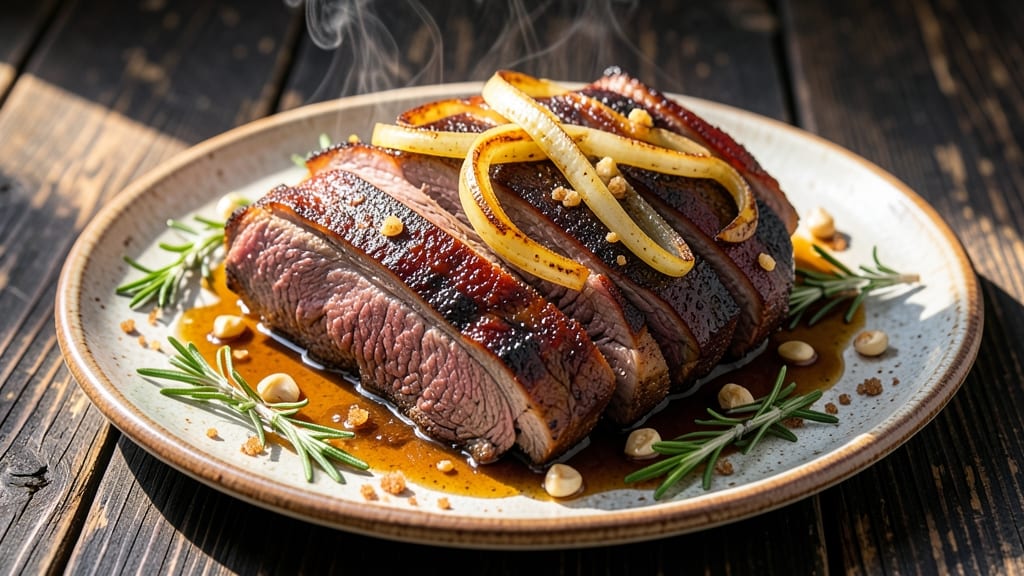
This amazing beef brisket recipe transforms tough cuts into fall-apart tenderness that’ll have your whole table begging for seconds. The secret? A slow cook that develops deep, smoky flavors while keeping the meat juicy and rich—no fancy equipment required.
I’ve perfected this over years of trial and error, and it never fails to impress, even skeptics.
What makes this recipe special is the balance of time and technique: a 12-hour cook (mostly hands-off) followed by a quick sear for that perfect bark. We’ll use a simple but powerful dry rub that clings to the meat, creating layers of flavor without overpowering the beef’s natural richness.
The key is patience—letting the collagen break down slowly turns tough brisket into something so tender, it melts in your mouth.
By the end, you’ll have a brisket so flavorful and tender, it’s hard to believe it’s homemade. The crust will be dark and crackly, the meat will pull apart with just a fork, and the aroma will fill your kitchen like a BBQ competition.
Serve it sliced thin over toasted buns with pickles and coleslaw for the full experience—this isn’t just dinner, it’s an event.
Whether you’re feeding a crowd or treating yourself to a Sunday project, this brisket delivers restaurant-quality results without the fuss. Let’s get started—your taste buds will thank you.
Ingredients for amazing beef brisket
Here’s what you need to turn a simple brisket into a showstopper—no shortcuts, just pure flavor.
| Ingredient | Amount | Notes |
|---|---|---|
| Beef Brisket 🥩 | 4 lb | Whole packer cut, fat cap on |
| Yellow Onion 🧅 | 1 whole | Cut into wedges, skin on |
| Garlic Cloves 🧄 | 6 cloves | Smashed but not minced |
| Beef Broth 💧 | 2 cups | Low-sodium preferred |
| Apple Cider Vinegar 🍎 | ¼ cup | For tenderizing |
| Brown Sugar 🍬 | ½ cup | Light or dark |
| Smoked Paprika 🌶️ | 2 tbsp | For deep smokiness |
| Ground Black Pepper 🌶️ | 1 tbsp | Freshly cracked |
| Kosher Salt 🧂 | 1 tbsp | Diamond Crystal preferred |
| Mustard Powder 🧂 | 1 tbsp | Adds tangy depth |
| Bay Leaves 🌿 | 2 whole | Fresh if available |
| Olive Oil 🫒 | 2 tbsp | For searing |
| Beef Tallow or Bacon Fat 🍖 | ¼ cup | For bark development |
The brisket is non-negotiable—look for a 4-pound packer cut with a good fat cap (that’s where the flavor hides). I always grab mine from Costco or Whole Foods—they carry the best quality. If you’re buying whole, trim the fat to about 1/4-inch thickness so it renders nicely. The fat cap stays on for moisture, but too much can make the bark greasy. Butcher shops will even cut it for you if you ask nicely. For the rub, Penzeys spices are my go-to—they’ve got the best smoked paprika around, but regular grocery store brands work too if you’re on a budget.
No smoked paprika? Chimichurri or chipotle powder adds smokiness in a pinch, but it’s not the same. Running short on time? Instant pot brisket works with this rub—just add 1 cup of broth and cook on high pressure for 60 minutes. The vinegar is key for tenderizing, but if you’re in a hurry, lemon juice at half the amount does the trick. Fresh garlic is ideal, but jarred works if you’ve got it. Just make sure it’s not that sad, rubbery stuff. The brown sugar caramelizes during cooking, so don’t skip it—it’s what makes the bark sticky and delicious.
This brisket tastes even better the next day, so plan ahead. Store leftovers in the fridge for up to 5 days, wrapped tightly in foil. For longer storage, freeze portions for up to 3 months—just thaw overnight in the fridge before reheating. I like to slice it thin against the grain and serve it on toasted buns with pickles and coleslaw. The juices soak into the bread, making every bite even more flavorful. If you’ve got extra, freeze it in portions for quick sandwiches later.
Why You'll Love This Recipe
- One-Pot Magic: I swear by this recipe—just dump everything in one pot, walk away, and let the apple cider vinegar work its tangy, tenderizing magic. No flipping, no fussing, just hands-off perfection.
- Deep Flavor Boom: That beef broth and garlic? Oh, it’s a flavor bomb. The vinegar cuts through the richness while the onions caramelize into sweet, sticky goodness—like a slow-cooked hug in a bowl.
- Budget-Friendly Feast: A whole brisket for less than $15? Yes, please. It stretches across meals, feeds a crowd, and still feels like a splurge—without the restaurant price tag. (My wallet thanks me every time.)
Step-by-step instructions for smoky, spice-kissed beef brisket
Here's how to transform a tough cut into melt-in-your-mouth perfection with just 12 hours of patience.
Prepare the Brisket for Maximum Flavor
Start by trimming the fat cap of the 4 lb beef brisket down to about ¼-inch thickness using a sharp boning knife. Leave the fat on the edges to protect the meat during cooking. Pat the entire surface dry with paper towels—this step is crucial for developing that beautiful bark later.
In a small bowl, combine the 2 tbsp smoked paprika, 1 tbsp kosher salt, 1 tbsp ground black pepper, and 1 tbsp mustard powder. Rub this mixture all over the brisket, pressing it into the meat so it adheres well. Place the seasoned brisket on a wire rack set over a baking sheet and refrigerate uncovered for at least 4 hours or overnight. This drying and seasoning process ensures deep flavor penetration and that coveted crispy exterior.
Build the Flavor Base in the Dutch Oven
Heat the 2 tbsp olive oil in a heavy Dutch oven over medium heat. Add the 1 whole yellow onion cut into wedges (skin on) and cook for 8-10 minutes until the onions are soft and beginning to caramelize. Remove the onions and set aside.
In the same pot, add the 0.25 cup beef tallow or bacon fat and melt it over medium heat. Add the 6 smashed garlic cloves and cook for 30 seconds until fragrant. Immediately add the 0.5 cup brown sugar and stir for 1 minute until it begins to melt and caramelize slightly. This creates a sweet foundation for your brisket that balances the smoky flavors.
Sear the Brisket for Deep Flavor
Increase the heat to medium-high and carefully add the seasoned brisket fat-side down. Let it sear undisturbed for 5 minutes until a deep golden crust forms. Flip the brisket and sear the other side for another 5 minutes. The goal is to develop that rich, caramelized bark that will hold up during the long cook.
Remove the brisket from the Dutch oven and set it aside. Add the 0.25 cup apple cider vinegar to the pot and scrape up all the browned bits from the bottom. Return the onions to the pot along with the 2 cups beef broth and the 2 whole bay leaves. Bring to a gentle simmer, then return the brisket to the pot, fat-side up.
Slow Cook to Perfection
Cover the Dutch oven with a tight-fitting lid and transfer it to a preheated 300°F oven. Cook for 8 hours, maintaining the temperature as closely as possible. After 8 hours, check the internal temperature using a meat thermometer—it should read 195-200°F. If it's not there yet, continue cooking for another 30-60 minutes.
Here's the thing—this long cook time transforms the tough brisket into tender, pull-apart perfection. The collagen breaks down, creating that silky texture we're after. The slow cooking also allows all those beautiful flavors to meld together, resulting in that amazing, complex taste that makes this brisket worth the wait.
Rest and Slice for Maximum Juiciness
Once the brisket reaches the proper temperature, remove it from the oven and transfer it to a cutting board. Tent loosely with aluminum foil and let it rest for at least 1 hour—this resting period is absolutely critical. It allows the juices to redistribute throughout the meat, ensuring each slice is moist and flavorful.
After resting, slice the brisket against the grain into ¼-inch thick slices. The grain direction will be visible as lines running through the meat. Serve immediately with the pan juices spooned over the top. Each bite should deliver that perfect balance of smoky, spice-kissed tenderness that makes this brisket truly amazing.
Pro Tips For Making Amazing Beef Brisket
- Trim the Fat Cap: Leave that thick white layer on the brisket—it baste the meat and adds flavor as it renders. I used to cut it off, thinking it was "extra," but now I save it for crispy bits or render it into the onions for depth.
- Caramelize Onions First: Cook the onions until they’re deep golden, not just soft—about 20 minutes on medium-low. I learned this the hard way: pale onions make pale brisket. The sugar in caramelized onions balances the vinegar’s sharpness later.
- Don’t Crowd the Pan: If searing, work in batches—overloaded pans steam the meat instead of browning. I’ve ruined a brisket by rushing this, and the difference in texture is night and day. Patience here means better crust.
- Deglaze with Vinegar Early: Add the apple cider vinegar after searing, not just at the end. The acid cuts through the fond (those browned bits) while you’re building the sauce, making it richer. I used to toss it in last-minute, and the sauce was always flat.
Regional styles of amazing beef brisket
Texas BBQ Style
This is the classic approach you’d find at any Texas pitmaster’s competition entry. The key here is the Texas Crutch—after the brisket hits 165°F internal temperature, wrap it tightly in butcher paper (not foil) and return it to the smoker.
This helps push through the stall phase where evaporation slows cooking. Texas-style brisket often includes a white sauce made with mayonnaise, vinegar, and spices—perfect for dipping those tender slices. 🌶️
Carolina Mustard Cut
In the Carolinas, they take brisket in a completely different direction by slicing it into thin strips and serving it as pulled pork. The rub here is sweeter—expect ½ cup brown sugar and 1 tbsp cayenne for heat.
The magic happens when you finish the brisket with a vinegar-based mustard glaze (mix ½ cup yellow mustard with ¼ cup apple cider vinegar). This style is perfect for sandwiches or serving over cornbread.
Kansas City Sweet & Smoky
Kansas City is all about that sweet and smoky balance, often using a rub with ½ cup brown sugar and 1 tbsp smoked paprika. The secret weapon here is the sprinkle of cornmeal on the bark before finishing—it creates a crispy, almost crackly crust.
Serve it with baked beans and pickled jalapeños for the full KC experience. This style is ideal if you love caramelized flavors with a touch of heat. 🔥
Central Texas "No Sauce" Approach
Some of the most respected Texas pitmasters swear by the "no sauce" method, letting the bark and meat speak for themselves. The rub here is simpler—just 1 tbsp smoked paprika, 1 tbsp coarse salt, and 1 tbsp black pepper.
The brisket is smoked low and slow until it’s probe-tender, then sliced thick and served with just a side of white bread and pickled onions. This purist style is all about the meat’s natural flavor. ✨
East Coast Smoked Brisket
On the East Coast, brisket often gets a more herb-forward twist, incorporating 1 tbsp dried thyme and 1 tbsp rosemary into the rub. The cooking method might include a wood-fired oven finish at the end to add a charred crust.
Serve it with apple sauce and roasted root vegetables for a cozy, autumnal meal. This style is perfect if you love a mix of smoky and herbal notes. 💫
Nutrition facts
Frequently asked questions
Can I cook brisket in an oven instead of a smoker?
This recipe uses a Dutch oven in the oven for that deep, smoky flavor without needing a smoker. The key is maintaining a consistent 300°F temperature for 8 hours—use an oven thermometer to ensure accuracy. For extra smokiness, add a few wood chips soaked in water to the pan during cooking.
How do I know when the brisket is done?
Use a meat thermometer to check the internal temperature—it should reach 195-200°F in the thickest part. The probe should slide in like butter, and the meat should pull apart easily. If it's not there after 8 hours, add 30-60 minutes more. Never rely on time alone!
Why does my brisket turn out dry?
Overcooking or skipping the 1-hour rest are the most common mistakes. Brisket needs that time to reabsorb juices! Also, avoid cutting into it too soon—wait until it's fully rested. For extra moisture, add ½ cup beef broth to the pan during the last 30 minutes of cooking.
Can I use a different cut of beef instead?
This recipe is designed specifically for brisket because of its unique texture and fat distribution. Chuck roast or short ribs could work in a pinch, but they won't have the same melt-in-your-mouth tenderness. If you're set on another cut, adjust the cook time to 4-5 hours for chuck and 3-4 hours for ribs.
How should I store leftovers?
Wrap cooled brisket tightly in foil or plastic wrap and refrigerate for up to 5 days. For longer storage, freeze portions for 3 months. To reheat, warm slices in a skillet with a splash of beef broth over low heat—never microwave, as it makes the meat tough.