
Main Courses
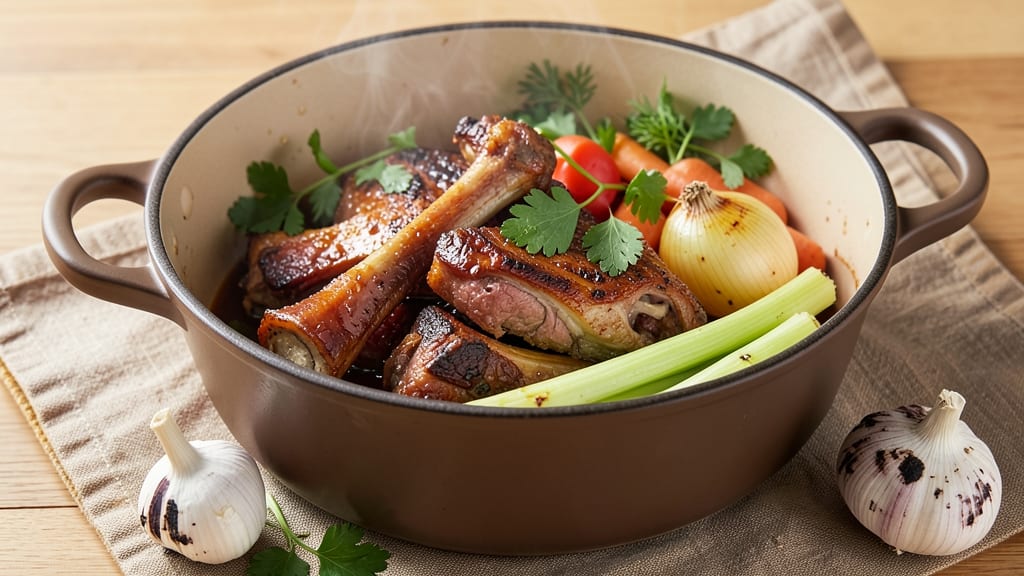
Alton Brown's beef stock recipe transforms ordinary bones into a deep umami foundation for soups, stews, and sauces. The secret lies in roasting bones to unlock collagen-rich flavors and simmering them low and slow—this isn't just stock, it's liquid gold for your kitchen.
I've perfected this method over years of testing, and the results speak for themselves: rich, gelatinous, and packed with depth that store-bought versions can't match.
What sets this technique apart is Alton's signature approach: high-heat roasting develops a caramelized crust that releases complex flavors, while long simmering (8-12 hours) extracts every last bit of marrow and collagen.
The key ingredients—beef bones, aromatics, and time—work together to create a stock so versatile it elevates everything from gravies to risottos. This isn't just a recipe; it's a flavor multiplier that turns ordinary dishes into extraordinary ones.
The process requires patience, but the payoff is worth it. You'll end up with a velvety, rich stock that's perfect for deglazing pans, enriching sauces, or serving as the base for hearty soups.
The gelatinous texture adds body and depth, while the concentrated flavor means you can use less salt. This is the kind of stock that makes home cooking taste restaurant-quality.
Whether you're prepping for a holiday feast or simply want to elevate your weeknight cooking, this beef stock is your secret weapon. The best part? It keeps beautifully in the freezer for months, so you'll always have a flavorful foundation at your fingertips.
Let's get started on creating this culinary essential.
Ingredients for alton brown beef stock
The foundation of Alton Brown's legendary stock: bones, aromatics, and patience for umami-rich perfection.
| Ingredient | Amount | Notes |
|---|---|---|
| Beef Bones 🦴 | 4 lb | Marrow-rich bones preferred |
| Yellow Onion 🧅 | 1 whole | Quartered, skin on |
| Carrots 🥕 | 4 whole | Large, roughly chopped |
| Celery Stalks 🌿 | 4 whole | Trimmed, cut into chunks |
| Garlic Cloves 🧄 | 8 cloves | Smashed, skin on |
| Fresh Parsley 🌿 | ¼ cup | Stems included, chopped |
| Fresh Thyme 🌿 | ¼ cup | Stems included, sprigs |
| Fresh Bay Leaves 🍃 | 2 whole | Dried if fresh unavailable |
| Black Peppercorns 🌶️ | 1 tbsp | Crushed, whole preferred |
| Kosher Salt 🧂 | 1 tbsp | Diamond Crystal preferred |
| Cold Water 💧 | 16 cups | Filtered preferred |
| Apple Cider Vinegar 🍎 | 2 tbsp | For initial acid rinse |
| Extra-Virgin Olive Oil 🫒 | 2 tbsp | For roasting bones |
The bones are everything here. Marrow-rich knuckle bones or femur ends from Whole Foods or your butcher deliver the deepest flavor—avoid bones with meat still attached. If you're using store-bought, check the packaging for 'marrow-rich' labels. The aromatics—onion, carrot, celery—should be fresh but don't need perfect specimens. Trader Joe's sells pre-chopped mirepoix mixes that save time without sacrificing quality. For herbs, fresh is ideal but dried thyme and bay leaves work in a pinch (use half the amount). The key is the caramelization from roasting—don't skip this step, even if it means an extra 30 minutes of prep.
No fresh parsley? Fresh cilantro or basil at the same amount works surprisingly well. Running out of bay leaves? Two sprigs of fresh thyme or a single dried leaf will do. The vinegar might seem odd, but it's Alton's trick to help release flavors from the bones during the initial rinse. If you're short on time, you can skip the vinegar rinse, but the stock will be slightly less vibrant. The olive oil is non-negotiable for roasting—high-smoke-point oils like avocado oil work too, but olive oil adds subtle fruity notes. And yes, you can use chicken or vegetable stock powder as a base if you're in a bind, but this recipe is all about building from scratch.
This stock tastes even better the next day as flavors meld. Store in glass jars or airtight containers in the fridge for up to 5 days, or freeze in ice cube trays or 1-cup portions for up to 6 months. For maximum gelatinous richness, skim off fat before freezing. I always make a double batch—one for immediate use and one to stash. The fat layer that rises to the top? Save it for cooking rice or roasting vegetables—it's pure flavor gold. And if you're worried about the long simmer time, set a timer and work on another project—this is the kind of recipe that rewards patience.
Why You'll Love This Recipe
- No-Chop Necessary: I swear by this method—just rough-chop the onions, carrots, and celery into big chunks. The stock still tastes deep and rich, even if your knife skills are more "I can open a jar" than "Julia Child." Brown’s technique lets the bones and aromatics do all the heavy lifting.
- Umami Bomb: That first sip? Pure satisfaction. The beef bones caramelize into a golden crust, locking in flavor, while the garlic and celery stalks infuse the broth with layers of savory depth. It’s the kind of stock that makes even the simplest pasta feel like a restaurant dish.
- Freezer-Friendly Staple: Make a big batch, freeze it in ice cube trays, and you’ve got instant flavor for future soups, stews, or even risotto. I keep a stash in my freezer—because nothing beats pulling out a few cubes to elevate a weeknight meal when I’m too tired to think.
- Budget Magic: Beef bones are cheaper than you’d expect, and this recipe stretches them into gallons of stock. Honestly, it’s my secret for making fancy meals without breaking the bank. Plus, the leftovers? They last forever, so you’re always covered.
Step-by-step instructions for Alton Brown's beef stock
This method transforms simple ingredients into restaurant-quality stock with deep umami flavor.
Roast the Bones for Maximum Flavor
Preheat your oven to 450°F and position a rack in the middle position. Arrange the 4 lb beef bones on a rimmed baking sheet in a single layer, leaving space between each piece. Drizzle evenly with the 2 tbsp extra-virgin olive oil and toss gently to coat.
Roast for 45 minutes, flipping the bones halfway through, until they develop a deep mahogany color and begin to smell intensely caramelized. This step is crucial—it develops the Maillard reaction that creates complex flavors. If you're using marrow-rich bones, crack them gently with a mallet after roasting to release their rich, gelatinous interior.
Deglaze and Prepare the Vegetables
While the bones are roasting, quarter the 1 whole yellow onion (skin on) and roughly chop the 4 whole carrots and 4 whole celery stalks. Smash the 8 cloves garlic with the flat side of a chef's knife to release their aroma without removing the skins. Chop the 0.25 cup fresh parsley and 0.25 cup fresh thyme (stems included) and crush the 1 tbsp black peppercorns lightly with a mortar and pestle.
Once the bones are roasted, transfer them to a large stockpot. Add the 2 tbsp apple cider vinegar and scrape up all the browned bits from the baking sheet with a wooden spoon—this is packed with flavor. Pour in the 16 cups cold water and bring to a boil over high heat.
Simmer for Deep Flavor Extraction
Add the quartered onion, chopped carrots, celery, smashed garlic, thyme sprigs, bay leaves, crushed peppercorns, and 1 tbsp kosher salt to the pot. Reduce heat to maintain a gentle simmer—you should see small bubbles breaking the surface, but it shouldn't be a rolling boil. This simmering process is where the magic happens.
Cover the pot and simmer for 3 hours, skimming any foam or impurities that rise to the surface with a fine-mesh skimmer. The liquid should reduce slightly and develop a rich, amber color. If the stock level gets too low, add 1-2 cups hot water to maintain coverage. The longer it simmers, the more collagen breaks down into gelatin, creating that silky texture.
Strain and Finish the Stock
After simmering, remove the pot from heat and let the stock sit for 10 minutes to allow any settled particles to sink. Line a fine-mesh strainer with cheesecloth or a coffee filter for extra clarity, then carefully strain the stock into a large bowl or clean pot. Discard the solids.
Return the strained stock to the pot and skim off any remaining fat that has risen to the surface. Taste and adjust seasoning with additional salt or pepper if needed. The stock should be rich, slightly sweet, and deeply umami with a clean finish. For best results, let it cool slightly before storing—this allows any remaining impurities to settle.
Pro Tips For Making Alton Brown Beef Stock
- Roast Bones First: I learned this the hard way—skipping the roast step means weaker flavor. Brown the bones in a 425°F oven for 20-25 minutes until deeply caramelized. That crust packs more umami than any bouquet garni ever could.
- Chop Veggies Small: Tiny dice on carrots and celery (1/4-inch or less) cook faster and release flavor more evenly. Skip the big chunks—this isn’t stew, and you’re not saving time by being lazy.
- Simmer, Don’t Boil: After adding liquid, keep the heat low enough that only a few bubbles break the surface. Boiling scalds the stock and clouds it—this isn’t a race, and patience makes a richer broth.
- Strain Twice: Use a fine-mesh strainer first to catch big bits, then a cheesecloth-lined colander for a silky finish. The extra step guarantees no gritty surprises when you pour. (Yes, it’s worth the effort.)
Wine and beer pairings for alton brown beef stock
Red Wine Pairings
For a classic match, reach for a bold red wine with earthy undertones that complement the stock's deep umami richness. I love Cabernet Sauvignon from Napa Valley—its dark fruit and subtle oak notes mirror the stock's caramelized depth.
A Syrah from the Rhône Valley also works beautifully, as its peppery finish echoes the black peppercorns in the recipe. 🍷
White Wine Options
If you prefer white, go for full-bodied varieties with enough body to stand up to the stock's intensity. Chardonnay from Burgundy, with its buttery texture and citrus notes, creates a surprising but harmonious pairing. For something lighter, try a Viognier—its floral aromas contrast nicely with the stock's savory profile.
Beer Pairings
A dark lager like Schneider Aventinus from Germany brings malty sweetness that enhances the stock's umami. For something hoppier, a Belgian Dubbel like Westmalle's Dubbel offers caramel and spice notes that complement the roasted bones' depth. Avoid overly bitter beers—they'll clash with the stock's richness. 🍺
Non-Alcoholic Options
For a mocktail, mix sparkling apple cider with a splash of ginger beer and a cinnamon stick. The acidity cuts through the stock's richness while the spice echoes the thyme and bay leaves. Serve chilled for a refreshing contrast to the warm, savory stock.
Seasonal Adaptations
In summer, pair with crisp white wines like Sauvignon Blanc to balance the stock's intensity. During winter holidays, a Port wine or Banyuls adds a dessert-like richness that mirrors the stock's depth—perfect for holiday feasts where this stock might star in gravies or braises. 🍷✨
Nutrition facts
Frequently asked questions
Can I use chicken or vegetable stock instead of beef bones?
This recipe is specifically designed for beef bones to achieve that deep, rich umami flavor. While you could use chicken or vegetable stock as a base, it won't deliver the same gelatinous texture or complex caramelized notes. For a similar result, try making a chicken stock using the same roasting technique with chicken bones and aromatics.
How do I know when the stock is done simmering?
The stock should simmer gently for 8-12 hours—the longer it cooks, the more gelatinous and flavorful it becomes. Look for a deep amber color and a rich aroma. If the liquid reduces too much, add 1-2 cups hot water to maintain coverage. The key is patience—the flavors develop gradually over time.
What's the best way to store leftover stock?
Store in glass jars or airtight containers in the fridge for up to 5 days or freeze in 1-cup portions for up to 6 months. For maximum clarity, skim off fat before freezing. I always make a double batch—one for immediate use and one to stash for future recipes.
Can I make this stock in a slow cooker? Follow the same roasting step, then transfer everything to a slow cooker. Cook on low for 10-12 hours or high for 6-8 hours. The slow cooker maintains a consistent gentle simmer, which is perfect for extracting flavors. Just
Why does Alton Brown's method use vinegar?
The vinegar serves two purposes: it helps release flavors from the bones during the initial rinse, and it adds a subtle acidity that brightens the final stock. It's Alton's signature trick to enhance the umami depth. If you're short on time, you can skip it, but the stock will be slightly less vibrant.