
Main Courses
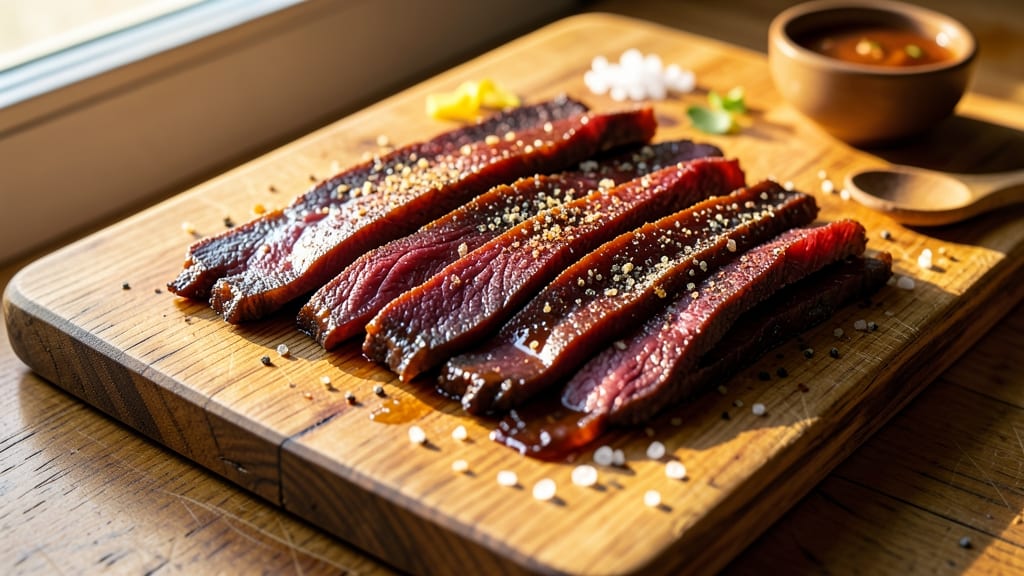
Transforming grass-fed beef into all-natural beef jerky delivers that perfect balance of smoky depth and sweet heat without artificial preservatives. This recipe focuses on a precise smoky-sweet spice blend that penetrates every slice, ensuring long-lasting crunch and restaurant-quality flavor.
The key lies in proper slicing, curing, and dehydrating—whether you use an oven, dehydrator, or smoker—each method yields a result that’s both satisfying and safe.
What sets this jerky apart is the all-natural approach: no nitrates, no additives, just high-quality beef and a carefully balanced spice mix of brown sugar, smoked paprika, garlic powder, and cayenne.
The curing process locks in moisture while developing that signature tang, and the slow dehydration transforms the slices into chewy, flavorful strips that keep for weeks. It’s the kind of jerky that makes snacking feel like a gourmet experience.
By following these steps, you’ll achieve jerky with a perfectly crisp exterior and a tender, moist interior—no rubbery texture here. The smoky-sweet spice blend ensures every bite is packed with flavor, while the natural curing process guarantees safety and longevity.
Whether you’re stocking your pantry, prepping for camping trips, or simply craving a healthier snack, this recipe delivers.
Ready to make jerky that rivals store-bought? The process is straightforward, but the results are anything but ordinary. Let’s get started—your taste buds (and snack stash) will thank you.
Ingredients for all natural beef jerky
High-quality beef and a bold spice blend create restaurant-style jerky without preservatives.
| Ingredient | Amount | Notes |
|---|---|---|
| Grass-Fed Beef Top Round Roast 🥩 | 2 lb | Thinly sliced against grain, 1/4-inch thick |
| Kosher Salt 🧂 | 2 tbsp | Diamond Crystal preferred, non-iodized |
| Brown Sugar 🍯 | ½ cup | Light or dark, packed measurement |
| Smoked Paprika 🌶️ | 3 tbsp | High-quality, no fillers |
| Garlic Powder 🧄 | 1 tbsp | Freshly ground preferred |
| Ground Black Pepper 🌶️ | 1 tbsp | Freshly cracked for best flavor |
| Cayenne Pepper 🔥 | 1 tsp | Adjust for desired heat level |
| Ground Coriander 🌿 | 1 tbsp | Toasted for deeper flavor |
| Worcestershire Sauce 🍶 | 2 tbsp | Anchovy-free version for strict natural |
| Apple Cider Vinegar 🍎 | ¼ cup | Raw, unfiltered preferred |
| Soy Sauce 🍜 | 2 tbsp | Organic, gluten-free if needed |
| Beef Tenderizer 🍖 | 1 tbsp | Papain-based, optional for texture |
| Deionized Water 💧 | ½ cup | Distilled or filtered for clarity |
The beef is everything here. Top round roast delivers lean but flavorful slices—avoid anything with excessive fat. Look for grass-fed at Whole Foods or your local butcher shop; the marbling should be minimal but present. Slice against the grain for that signature chewy texture. For the spice blend, Penzeys or bulk bins at natural grocery stores give you the freshest, most potent spices. Smoked paprika is non-negotiable—it's what gives that authentic jerky flavor. If you can't find grass-fed, organic conventional is the next best thing, but avoid anything with added water or fillers.
No Worcestershire sauce? Anchovy-free versions work just as well, or sub with extra soy sauce and a splash of balsamic vinegar. Short on brown sugar? Maple syrup at half the amount adds depth without altering texture. The apple cider vinegar can be swapped for white vinegar in a pinch, but raw vinegar has more complexity. For the tenderizer, if you can't find papain-based, skip it entirely—the jerky will still cure, just might be slightly tougher. The curing mixture needs to be sterile, so always use filtered or distilled water. Don't rush this step—let the beef soak for at least 12 hours, ideally overnight, for maximum flavor penetration.
Store your finished jerky in an airtight container with parchment paper between layers to prevent sticking. Keeps for 2-3 weeks at room temperature, or 3-4 months in the freezer. For maximum freshness, portion into resealable bags and vacuum-seal if possible. The flavor actually improves over time—unlike store-bought, this jerky doesn't dry out or lose moisture. If you notice any slices getting too soft, just dehydrate them again for 10-15 minutes to restore crispness. This makes perfect gifts too—just package in pretty jars with a ribbon.
Why You'll Love This Recipe
- No-Fuss Prep: I swear, slicing the beef thin and mixing the spices takes less time than ordering takeout. The brown sugar and smoked paprika cling to the meat like a dream—no fancy marinating, just rub and go.
- Deep Umami Magic: Honestly, the garlic powder and kosher salt combo transforms that lean beef into something dangerously addictive. That caramelized crust? It’s what turns jerky from snack to obsession.
- Snack Attack Ready: Between us, this jerky is my secret weapon for road trips, gym bags, or when I’m too tired to cook. It keeps for weeks in the fridge, so I always have a protein-packed backup.
- Budget-Friendly Protein: Grass-fed beef might sound fancy, but a single roast stretches into pounds of jerky—way cheaper than pre-packaged versions. Plus, the spices cost pennies, so your wallet stays happy.
Step-by-step instructions for all-natural beef jerky
Here's how to transform lean beef into perfectly balanced, smoky-sweet jerky with a satisfying crunch.
Prepare the Beef for Optimal Texture
Start by slicing the 2 lb grass-fed beef top round roast against the grain into ¼-inch thick strips. The grain direction is easy to spot—you'll see long muscle fibers running through the meat. Cutting against these fibers creates shorter strands that chew more tenderly. I like to use a sharp boning knife for clean, even slices.
Arrange the sliced beef on a plate and refrigerate uncovered for 30 minutes to dry the surface slightly. This step is crucial—it helps the marinade adhere better and promotes even drying during the cooking process. Pat any excess moisture with paper towels before proceeding.
Create the Flavor-Packed Marinade
In a large bowl, combine the 0.5 cup brown sugar, 3 tbsp smoked paprika, 1 tbsp garlic powder, 1 tbsp ground black pepper, 1 tsp cayenne pepper, and 1 tbsp ground coriander. Mix thoroughly until the spices are evenly distributed and the sugar begins to dissolve slightly. This dry blend forms the backbone of your flavor profile.
In a separate bowl, whisk together the 2 tbsp Worcestershire sauce, 0.25 cup apple cider vinegar, 2 tbsp soy sauce, 1 tbsp beef tenderizer, and 0.5 cup deionized water. The vinegar helps tenderize the meat while adding tangy depth. Pour this liquid mixture over the dry spices and stir until you have a thick, syrupy marinade that clings to the back of a spoon.
Coat and Cure the Beef
Add the chilled beef slices to the marinade bowl and turn them until every strip is completely coated. I like to use my hands for this step—it ensures maximum contact between the meat and marinade. Transfer everything to a resealable plastic bag and massage the mixture gently for 2-3 minutes to work the marinade into all the crevices.
Seal the bag and refrigerate for 12-24 hours, turning occasionally. This curing time allows the beef tenderizer to work its magic, breaking down connective tissues while the spices penetrate deeply. The longer it marinates, the more intense the flavor—but don't exceed 24 hours or the meat may become too soft.
Dry and Cook for Perfect Texture
Preheat your dehydrator to 160°F or your oven to 175°F with the door slightly ajar for 10 minutes to allow moisture to escape. Arrange the marinated beef strips in a single layer on dehydrator trays or a wire rack placed over a baking sheet. Leave about ½ inch between each strip for proper air circulation.
Cook for 4-6 hours, checking periodically. The jerky is done when it's dry to the touch but still slightly pliable. It should snap when bent but not crumble. If using an oven, prop the door open with a wooden spoon to allow moisture to escape. The key is slow, even drying—rushing this step leads to chewy jerky.
Cool and Store for Maximum Freshness
Remove the jerky from the dehydrator or oven and let it cool completely on a wire rack. This cooling phase helps set the texture and prevents condensation from forming in your storage container. Once fully cooled, transfer to an airtight container or resealable bag.
For best results, store in the refrigerator where it will keep for 2-3 weeks or freeze for up to 6 months. The flavors will continue to meld and develop over time, making this jerky even more delicious with each passing day. Enjoy your homemade, all-natural beef jerky with that perfect balance of smoky, sweet, and savory flavors.
Pro Tips For Making All Natural Beef Jerky
- Freeze the Meat First: Grass-fed beef stays tougher when raw—freeze it solid overnight, then slice against the grain while frozen. This keeps the fibers clean and prevents stretching, so your jerky stays tender after drying. (Yes, it’s a pain to thaw later, but trust me on this.)
- Salt the Night Before: Spread the beef slices in a single layer on a tray, sprinkle with kosher salt, and refrigerate uncovered for 12 hours. This draws out moisture, so your jerky dries faster and develops that deep, concentrated flavor. I used to skip this and ended up with jerky that tasted like it needed more seasoning—don’t make my mistake.
- Use a Meat Thermometer: Dry your jerky at 165°F (74°C) until the internal temp hits 145°F (63°C). Too low, and you risk bacteria; too high, and it turns into leather. I learned this after a batch of jerky that was technically safe but tasted like it had been through a war.
- Mix Dry Rub Early: Combine smoked paprika, garlic powder, and brown sugar in a bowl before applying it to the meat. This ensures even coating—no clumpy bits or missed spots. I was lazy once and mixed it directly on the slices, and half my jerky ended up tasting like dessert. (Not a good look.)
Health benefits of this dish
Protein Powerhouse
This all-natural beef jerky packs a serious protein punch—each 1-ounce serving delivers about 10-12 grams of complete protein, perfect for muscle repair, energy, and satiety. Unlike processed store-bought versions, this homemade jerky uses lean grass-fed beef that's naturally rich in protein without the additives.
The curing process preserves this protein while enhancing flavor, making it an ideal post-workout snack or hiking fuel. 💪
Lean and Clean
With just 2 pounds of top round roast (a lean cut with minimal fat), this recipe creates jerky that's naturally low in saturated fat while maintaining high protein content.
The apple cider vinegar and soy sauce in the marinade add umami without excess calories, while the brown sugar provides natural sweetness without refined sugars. This makes it a guilt-free snack option that fits into balanced diets.
Natural Energy Boost
The combination of garlic powder and coriander in the spice blend provides natural energy-boosting properties. Garlic contains allicin, which supports cardiovascular health, while coriander aids digestion and helps regulate blood sugar.
The smoked paprika adds antioxidants that combat inflammation, making this jerky not just delicious but also beneficial for your body's daily needs. 🌿
No Artificial Preservatives
Unlike commercial jerky loaded with sodium nitrates and artificial preservatives, this recipe relies on natural curing agents like apple cider vinegar and soy sauce. These ingredients help preserve the jerky while maintaining its nutritional integrity.
The absence of artificial additives means you're getting pure protein and flavor without the potential health risks associated with processed meats. Your pantry will thank you!
Portable Nutrition
Perfect for on-the-go nutrition, this jerky provides a convenient way to pack protein-rich meals without refrigeration. The 12-24 hour curing process ensures safety while maintaining texture, making it ideal for camping trips, gym bags, or office lunches.
Each piece offers a balanced macronutrient profile that keeps you full and energized throughout the day. Plus, the natural sweetness from brown sugar makes it taste great without added sugars.
Digestive Benefits
The beef tenderizer (papain-based) used in the marinade aids digestion by breaking down proteins into more easily digestible forms. Combined with the natural enzymes in the apple cider vinegar, this jerky is gentler on your stomach than many processed alternatives.
The spices like coriander and garlic also promote gut health, making this a snack that supports your digestive system as well as your taste buds. 💡
Nutrition facts
Frequently asked questions
Can I use regular beef instead of grass-fed for this recipe?
Yes, but you may notice a difference in flavor and texture. Grass-fed beef has a cleaner taste and leaner profile, but organic conventional beef works well too. Avoid pre-marinated or enhanced meats—they often contain additives that defeat the purpose of an all-natural recipe. For best results, choose a lean cut like top round or sirloin with minimal fat.
How do I know when my jerky is fully dehydrated?
Your jerky is done when it's dry to the touch but still slightly pliable—it should snap when bent but not crumble. For a foolproof test, press a piece between your fingers: if it feels firm and doesn't leave moisture on your skin, it's ready. Over-dehydrating can make it tough, so check every 30 minutes after 3 hours of cooking.
What's the best way to store homemade jerky?
Store in an airtight container with parchment paper between layers to prevent sticking. It keeps for 2-3 weeks at room temperature or 3-4 months in the freezer. For maximum freshness, portion into resealable bags and vacuum-seal if possible. The flavors actually improve over time—unlike store-bought, this jerky won't dry out or lose moisture.
Can I make this jerky without a dehydrator?
Use your oven set to 175°F with the door slightly propped open. Place beef strips on a wire rack over a baking sheet for even airflow. Cook for 4-6 hours, checking periodically. For extra smokiness, add wood chips (like hickory or apple) to the oven tray during cooking.
Why did my jerky turn out too chewy?
Chewy jerky usually means it wasn't dried long enough or had too much moisture. Next time, extend drying time by 1-2 hours and ensure your beef slices are ¼-inch thick or less. Also verify your dehydrator/oven temperature is accurate—use a thermometer if needed. Pat slices dry before marinating to remove excess surface moisture.