
Soups & Stews
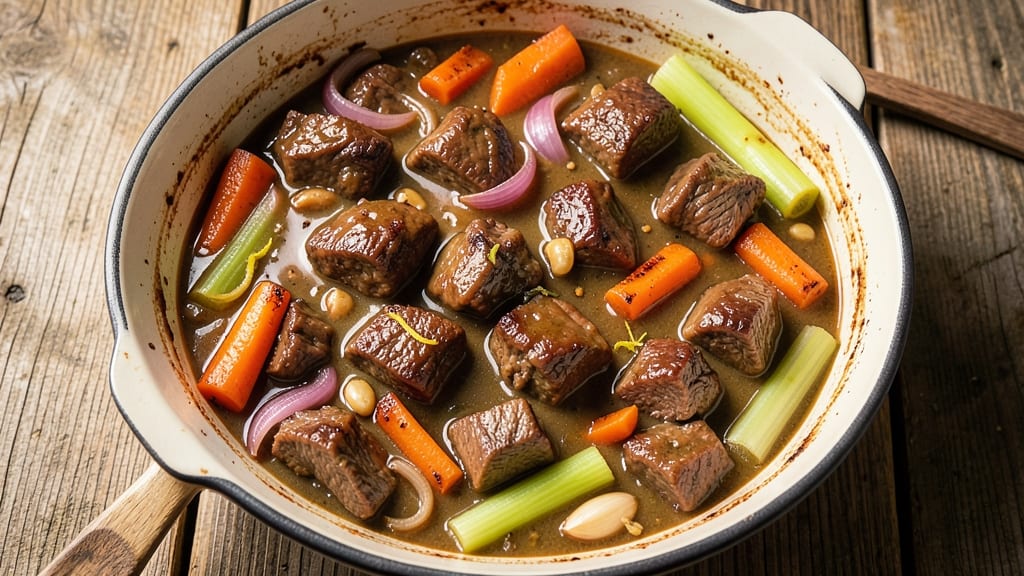
This A1 beef stew recipe delivers deep, caramelized flavors that transform tough cuts into melt-in-your-mouth perfection. The secret lies in slow-braising beef with aromatic vegetables and A1 sauce until the broth reduces to a rich, velvety consistency.
I developed this version after years of experimenting with slow-cooked beef dishes—balancing sweet, smoky, and savory notes for a stew that feels like a hearty hug in a bowl.
What sets this recipe apart is the two-stage browning technique—first searing the beef for deep flavor, then caramelizing onions and root vegetables until they're golden and sweet. The A1 sauce adds that signature molasses-like richness, while bay leaves and thyme infuse the broth with subtle complexity.
This method ensures every spoonful is packed with tender beef, tender vegetables, and a sauce that clings to every bite.
By the time you're ready to serve, you'll have a deeply flavorful stew with fork-tender beef, caramelized roots, and a glossy sauce that coats every ingredient. The aroma alone will have everyone gathering around the table, and the first bite delivers on that promise of comfort food done right.
This is the kind of dish that tastes even better the next day—perfect for meal prep or feeding a crowd.
The beauty of this recipe is its versatility—serve it with crusty bread for dipping, over buttered egg noodles, or alongside roasted potatoes. The slow-cooked method means you can prepare it ahead and let the flavors deepen over time. Let's get started on creating this restaurant-quality beef stew at home.
Ingredients for a1 beef stew
Sixteen ingredients transform tough beef into velvety, caramelized stew perfection.
| Ingredient | Amount | Notes |
|---|---|---|
| Chuck Roast Beef 🥩 | 3 lb | Well-marbled, cut into 1.5-inch cubes |
| Yellow Onions 🧅 | 2 whole | Sliced into 1/2-inch rounds |
| Carrots 🥕 | 4 whole | Peeled, cut into 2-inch chunks |
| Celery Stalks 🌿 | 4 whole | Cut into 1-inch pieces |
| Garlic Cloves 🧄 | 6 cloves | Smashed, not minced |
| A1 Steak Sauce 🍯 | ½ cup | Original recipe, not imitation |
| Beef Broth 💧 | 4 cups | Low-sodium preferred |
| Tomato Paste 🍅 | 2 tbsp | Smooth, not chunky |
| Dried Thyme 🌿 | 1 tsp | Or 1 tbsp fresh |
| Bay Leaves 🌿 | 2 whole | Fresh preferred |
| Black Peppercorns 🌶️ | 1 tsp | Freshly cracked |
| Olive Oil 🫒 | ½ cup | Extra-virgin for browning |
| All-Purpose Flour 🌾 | 2 tbsp | For thickening |
| Salt 🧂 | 1 ½ tsp | Kosher or sea salt |
The beef is non-negotiable—chuck roast with good marbling is key for tenderness. Costco or Whole Foods butcher counters carry excellent cuts, or ask your local butcher to trim excess fat. For the aromatic vegetables, organic carrots and celery from the grocery store's produce section add natural sweetness without pesticides. The onions should be yellow, not red or white, as they caramelize more deeply. If using pre-cut vegetables, rinse them thoroughly to remove any excess moisture that could dilute the stew's richness.
No A1 sauce? Substitute with equal parts molasses and Worcestershire sauce, though the flavor won't be identical. Fresh thyme is ideal, but dried works at one-third the amount—just make sure it's labeled as culinary thyme, not ornamental. For a deeper umami kick, add 1 tsp soy sauce to the broth. The tomato paste can be replaced with 1/4 cup crushed tomatoes, though it will make the stew slightly more acidic. If you're short on time, pre-minced garlic from a jar works, but fresh smashed cloves develop more complex flavors during the slow cook.
This stew tastes even better the next day as flavors meld. Store leftovers in an airtight container in the fridge for up to 5 days, or freeze for 3 months. For meal prep, portion into individual containers—perfect for lunches or quick dinners. The sauce thickens as it cools, so add a splash of broth if it seems too stiff when reheating. Serve with crusty bread to soak up every last bit of that molasses-rich sauce.
Why You'll Love This Recipe
- One-Pot Magic: I swear by this recipe because it’s literally dump-and-simmer. Chuck roast, onions, carrots, celery—just toss them in a pot with A1 sauce, water, and a splash of vinegar. No fancy techniques, no stress. The only chopping is the veggies, and even that’s forgivable.
- A1 Secret Weapon: That rich, smoky A1 sauce transforms tough chuck roast into melt-in-your-mouth perfection. The onions caramelize just enough to deepen the flavor, while the garlic and celery add a bright, earthy punch. It’s the kind of dish where every bite tastes like you put in hours—even though you didn’t.
- Budget-Friendly Feast: Chuck roast is cheap, carrots and celery last forever, and a bottle of A1 sauce goes a long way. You’re feeding a crowd for less than takeout, and no one will guess it’s a budget meal. Honestly, my wallet thanks me every time I make this.
Step-by-step instructions for A1 beef stew
This method delivers melt-in-your-mouth beef and caramelized vegetables through precise timing and technique.
Sear the Beef for Maximum Flavor
Heat the 0.5 cup olive oil in a large Dutch oven over medium-high heat until shimmering. Working in batches, add the 3 lb chuck roast beef cut into 1.5-inch cubes, spreading them in a single layer. Don't overcrowd the pan—this prevents proper browning. Let each piece sear for 3-4 minutes per side until deeply browned with a crust forming.
Here's the thing—this initial sear builds the stew's foundation. The Maillard reaction creates complex flavors that infuse into the broth. If the beef releases easily from the pan, it's ready. Transfer the browned beef to a plate as you work through batches. The residual browned bits (fond) will dissolve into the broth later, deepening the flavor.
Develop the Vegetable Base
Return the Dutch oven to medium heat and add the sliced 2 whole yellow onions, 4 whole carrots cut into 2-inch chunks, and 4 whole celery stalks cut into 1-inch pieces. Cook for 8-10 minutes, stirring occasionally, until the vegetables soften slightly and begin to caramelize at the edges. This process takes patience—don't rush it.
After 5 minutes, add the 6 cloves smashed garlic cloves and the 2 tbsp tomato paste, stirring to coat everything evenly. Cook for another 2 minutes until the raw garlic smell disappears and the mixture takes on a rich, caramelized hue. This step forms the aromatic backbone of your stew, so don't skip it. If the vegetables stick, add a splash of beef broth to deglaze.
Build the Rich Broth Foundation
Sprinkle the 2 tbsp all-purpose flour over the vegetable mixture and stir vigorously for 1-2 minutes to cook off the raw flour taste. Slowly pour in the 4 cups beef broth, scraping up any browned bits from the bottom of the pot. Add the 1.5 tsp salt, 1 tsp dried thyme, 2 whole bay leaves, and 1 tsp black peppercorns, then bring to a gentle simmer.
Return the seared beef to the pot, along with any accumulated juices. Here's where the magic happens: simmer uncovered for 1 hour 30 minutes at a gentle bubble. The liquid should reduce slightly, coating the beef and vegetables. Stir occasionally to prevent sticking, and if the liquid reduces too much, add a splash of water or broth to maintain a light simmer.
Finish with A1 Steak Sauce
After the initial braising, stir in the 0.5 cup A1 steak sauce, distributing it evenly throughout the stew. The sauce adds a sweet, tangy depth that balances the savory beef. Return to a simmer and cook uncovered for another 30-45 minutes until the beef is fork-tender and easily pulls apart. The stew should have thickened slightly, with a glossy sheen from the reduced broth.
Taste and adjust seasoning if needed—this is your final chance to balance flavors. The beef should be rich and tender, the vegetables caramelized but still holding their shape, and the sauce coating everything beautifully. Real talk: if the stew tastes slightly thin at this point, remove the bay leaves and simmer uncovered for another 10-15 minutes to reduce further.
Rest and Serve
Remove the stew from heat and let it rest for 15 minutes before serving. This resting period allows the flavors to meld and the juices to redistribute throughout the beef. Skim off any excess fat that has risen to the surface if desired—though I often leave it for extra richness.
Serve the stew hot, ladling the beef and vegetables with their flavorful broth. The result should be a hearty, aromatic dish where each bite delivers tender beef, sweet caramelized roots, and that signature A1 depth. The vegetables should be tender but still hold their texture, and the broth should coat the back of a spoon with every bite. Enjoy immediately while the flavors are at their peak.
Pro Tips For Making A1 Beef Stew
- Sear the Chuck Hard: I used to think a quick sear was enough, but this stew needs a proper crust—high heat, 3-4 minutes per side until deep brown. That’s what builds flavor. Use a heavy pot and don’t move it around; let it develop color first.
- Cut Celery and Onions Evenly: Unevenly chopped veggies cook at different rates, leaving some rubbery. Aim for ½-inch pieces—consistent size means everything softens together. (Yes, even if it looks boring, it tastes better.)
- Deglaze with A1 Sauce Early: Skip the water first—after searing, pour in the A1 sauce right away and scrape up those browned bits. That’s where half the flavor hides. Add broth later, but don’t dilute it too soon.
- Don’t Rush the Low Simmer: Chuck needs time—at least 2.5 hours on low heat, covered. I learned this the hard way: rushing turns it tough. Check occasionally, but resist the urge to peek too often—steam escapes with every lift.
Pro cooking tips for this dish
Two-Stage Browning
This is where the magic starts—browning the beef in batches ensures maximum flavor development. Use a large Dutch oven (I love my Lodge 5.5-quart) and medium-high heat to create that deep, caramelized crust.
Work in 2-3 batches so the beef isn't crowded, and let each piece sear for 3-4 minutes per side until golden brown. The key here is patience—rushing this step means less flavor in your stew. 🔥
Caramelize Vegetables
Don't skip the 8-10 minute caramelization of onions, carrots, and celery—this builds sweetness that balances the rich beef. After 5 minutes, add the tomato paste and smashed garlic to deepen the flavor profile.
If the vegetables stick, deglaze with a splash of beef broth to lift those flavorful browned bits from the bottom of the pot. This step is non-negotiable for depth of flavor.
Flour Slurry Technique
Instead of dumping flour all at once, sprinkle it over the vegetables and stir vigorously for 1-2 minutes to cook off the raw taste. Then slowly pour in the beef broth while scraping up those flavorful browned bits (fond).
This creates a natural roux that thickens the stew beautifully without lumps. Trust me, this makes all the difference in texture.
Low-and-Slow Braising
The 1 hour 30 minutes simmer at a gentle bubble is crucial for tender beef. Maintain a light simmer—not a rolling boil—to prevent the beef from toughening. If the liquid reduces too much, add a splash of broth or water to maintain moisture.
The goal is fork-tender beef with a rich, velvety sauce that coats everything perfectly.
A1 Sauce Timing
Add the A1 steak sauce only after the initial braising—30-45 minutes before the end. This ensures the sauce's sweet, tangy flavors meld with the beef and vegetables rather than cooking off.
Stir it in well and simmer uncovered to let the alcohol evaporate and the flavors concentrate. This is what gives your stew that signature molasses-like richness.
Resting Before Serving
Never skip the 15-minute rest before serving! This allows the juices to redistribute throughout the beef, making each bite more flavorful. While resting, skim off any excess fat if you prefer a leaner stew, though I often leave it for that extra richness.
Serve with crusty bread or buttered egg noodles to soak up every last drop of that delicious sauce. ✨
Nutrition facts
Frequently asked questions
Can I substitute A1 steak sauce with something else?
For a similar sweet-savory depth, mix 1/3 cup molasses with 1/3 cup Worcestershire sauce and 1 tablespoon soy sauce. This combo mimics A1's caramelized richness, though the flavor won't be identical. For a smokier alternative, try 1/4 cup barbecue sauce (preferably sweet and tangy) plus 1 teaspoon smoked paprika. Always add these substitutes in the final 30 minutes of cooking.
How do I make this stew in a slow cooker?
Brown the beef and vegetables as directed, then transfer everything to a 6-quart slow cooker. Add the remaining ingredients (including A1 sauce) and cook on LOW for 7-8 hours or HIGH for 4-5 hours. The slow cooker's gentle heat ensures tender beef without monitoring. For extra richness, finish with 15 minutes on HIGH before serving to slightly thicken the sauce.
Why did my stew turn out too thin?
This usually happens when the broth doesn't reduce enough. To fix it, remove the beef and vegetables, then simmer the broth uncovered for 10-15 minutes to thicken. For future batches, reduce heat to a gentle simmer (not a boil) and stir occasionally. If using a slow cooker, cook on HIGH for the last hour to concentrate flavors. A simple 1 tbsp cornstarch slurry can also help thicken thin stews.
Can I use a different cut of beef?
While chuck roast is ideal for its marbling and tenderness, you can substitute with brisket (cut into 1-inch cubes) or stew meat. Avoid lean cuts like sirloin—they won't become tender. For tougher cuts, increase cooking time by 30-45 minutes. Never use ground beef, as it lacks the texture and flavor needed for a proper stew. If using brisket, trim excess fat to 1/4-inch for a cleaner result.
How long will leftovers keep in the fridge?
This stew tastes even better the next day! Store leftovers in an airtight container in the fridge for up to 5 days. The flavors deepen as the sauce continues to meld. To reheat, warm on the stovetop over medium-low heat until bubbling, stirring occasionally. If the stew seems too thick after refrigeration, add 1-2 tablespoons beef broth while reheating. Freeze for up to 3 months for future meals.