
Main Courses
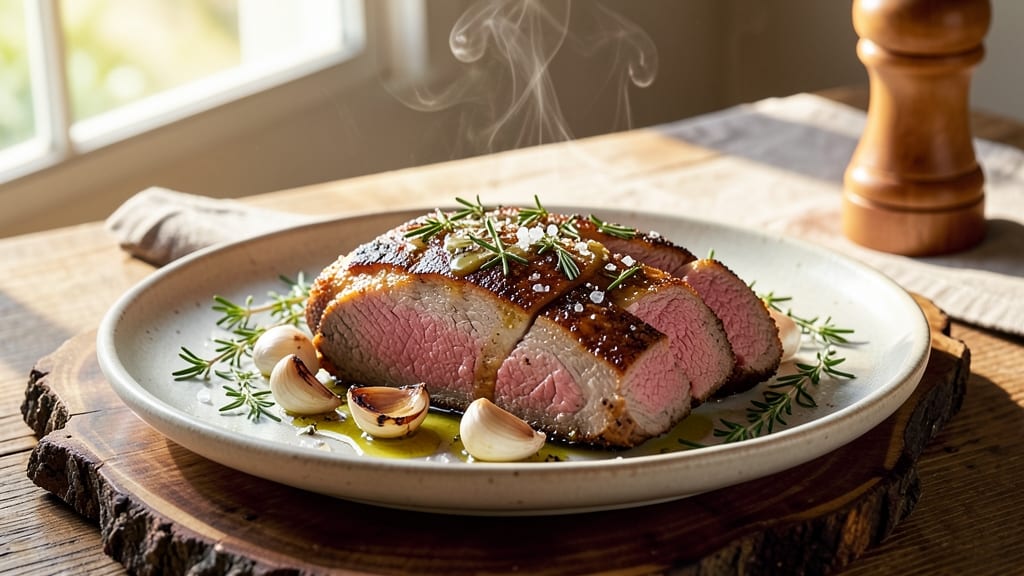
This 6lb beef tenderloin recipe delivers restaurant-quality results with a foolproof herb-crusted roast and rich pan jus that transforms a simple cut into a showstopper. The secret lies in precise temperature control and a simple yet flavorful crust that locks in juices while creating a golden, aromatic exterior.
I’ve perfected this method over years of holiday feasts, ensuring every slice is tender, flavorful, and worthy of the center of the table.
The process begins with a dry brine and herb crust that infuses the beef with deep, savory notes while keeping it moist. Reverse searing guarantees a perfect internal temperature—125°F for medium-rare—followed by a quick sear in a hot pan to develop that coveted crust.
The pan jus, made from the rendered beef drippings, adds a luxurious touch that elevates the dish from good to extraordinary.
What you’ll achieve is a juicy, melt-in-your-mouth tenderloin with a crust that’s crisp yet tender, paired with a velvety jus that ties every bite together. The technique is straightforward but demands attention to detail—no guesswork, just guaranteed results.
This isn’t just a recipe; it’s a method that turns a special occasion into a memorable experience.
Serve with classic sides like roasted garlic mashed potatoes or a crisp green salad, and pair with a bold red wine like Cabernet Sauvignon to complement the rich, herbaceous flavors.
The leftovers reheat beautifully, making this the ultimate dish for feeding a crowd or treating yourself to a luxurious meal. Let’s get started on creating your perfect roast.
Ingredients for 6lb beef tenderloin
Here’s your game-changing lineup for a showstopping 6lb beef tenderloin—where restaurant magic meets your kitchen.
| Ingredient | Amount | Notes |
|---|---|---|
| Beef Tenderloin 🥩 | 6 lb | Center-cut, trimmed of silver skin |
| Kosher Salt 🧂 | 1 ½ tbsp | Diamond Crystal preferred, coarse grain |
| Fresh Thyme Leaves 🌿 | ½ cup | Finely chopped, stems removed |
| Fresh Rosemary Leaves 🌿 | ¼ cup | Finely chopped, needle-like leaves only |
| Garlic Cloves 🧄 | 8 cloves | Minced into fine paste |
| Extra-Virgin Olive Oil 🫒 | ¼ cup | High-quality, fruity variety |
| Black Peppercorns 🌶️ | 1 ½ tbsp | Freshly cracked, coarse grind |
| Fresh Parsley Leaves 🌿 | ¼ cup | Finely chopped, for garnish |
| Unsalted Butter 🧈 | ½ cup | Cold, cubed for basting |
| Beef Stock 🍲 | 1 cup | High-quality, homemade preferred |
| Dry Red Wine 🍷 | ½ cup | Bold Cabernet Sauvignon, dry |
| All-Purpose Flour 🌾 | 1 tbsp | For thickening jus |
| Fresh Sage Leaves 🌿 | ⅛ cup | Finely chopped, aromatic |
The beef tenderloin is your star, so source it from a trusted butcher—they’ll trim it perfectly and ensure the best marbling. Costco or Whole Foods are my go-tos for a consistent cut, but any high-quality grocer will do. Look for center-cut with minimal silver skin—this ensures maximum tenderness. The herbs? Fresh is non-negotiable—dried just won’t cut it. I grab mine from the farmers market when in season, but the grocery store’s fresh section works too. Rosemary and thyme should smell vibrant, not wilted, and parsley should be bright green. Pro tip: Toast the whole spices (like peppercorns) for 30 seconds in a dry pan to deepen their flavor—trust me, it’s worth the extra minute.
No fresh herbs? Dried thyme and rosemary at half the amount will work in a pinch, but the flavor won’t be the same. Short on red wine? Swap for beef stock plus a splash of balsamic vinegar—it adds depth without overpowering. Olive oil matters here: avoid the cheap stuff—look for extra-virgin with fruity notes (like California or Italian varieties). The butter should be cold and cubed for basting—don’t skip this step, as it adds richness to the crust. Flour is just for thickening the jus, so any all-purpose brand will do, but King Arthur is my go-to for consistency.
This roast reheats like a dream—better the next day, honestly—so plan ahead. Store leftovers in the fridge for up to 4 days or freeze for 3 months (portion into individual servings for easy reheating). The pan jus can be reheated gently on the stove, just bring it to a simmer and reduce slightly. Garnish with fresh parsley right before serving to keep it vibrant. Serve at room temperature for the best texture—slice against the grain for those melt-in-your-mouth results.
Why You'll Love This Recipe
- No-Fuss Prep: I swear by this—just a quick rub of salt, crushed garlic, and a handful of thyme and rosemary. No fancy marinades, no stressing over timing. The tenderloin’s natural richness does most of the work.
- Crispy-Creamy Magic: That rosemary and garlic crust? It’s ridiculously good—crispy on the edges, juicy inside, with herbs that smell like a holiday dinner. The salt makes every bite sing without overpowering.
- Leftovers That Win: Slice it thin for sandwiches the next day or shred it into pasta. My kids fight over the cold slices for lunch, and I secretly love that it’s the meal I can make once and eat three times.
- Weeknight Hero: I’ve fed 10 people with this, and it’s still my go-to for birthdays or when my in-laws visit. The big cut cooks fast, and the leftovers? Even better reheated. No one ever leaves hungry.
Step-by-step instructions for herb-crusted beef tenderloin roast
This method transforms a simple roast into a showstopping centerpiece with irresistible herb crust and velvety pan sauce.
Prepare the Herb Crust and Season the Meat
In a food processor, combine the 0.5 cup fresh thyme leaves, 0.25 cup fresh rosemary leaves, 8 cloves garlic cloves, 1.5 tbsp kosher salt, and 1.5 tbsp black peppercorns. Pulse until finely chopped but not pasty—you want texture, not a smooth paste. With the processor running, slowly drizzle in the 0.25 cup extra-virgin olive oil until fully incorporated. This creates our aromatic herb crust.
Pat the 6 lb beef tenderloin completely dry with paper towels—this is non-negotiable for crisp crust development. Rub the herb mixture all over the meat, pressing firmly so it adheres. Let it sit at room temperature for 30 minutes while you preheat your oven to 450°F. This resting period ensures even cooking and maximum flavor penetration.
Sear the Tenderloin for Maximum Flavor
Heat a heavy oven-safe skillet (like cast iron) over high heat until smoking hot. Add the tenderloin and sear on all sides for 2-3 minutes per side until deep golden brown. The crust should be firmly attached—if it releases easily, press down gently with a spatula. This searing locks in juices and builds that irresistible crust.
Transfer the skillet to the preheated oven and roast for 15 minutes. Immediately after removing it from the oven, brush all sides generously with melted 0.5 cup unsalted butter using a pastry brush. Return to the oven for another 15 minutes. This butter basting creates a glossy finish and adds rich flavor.
Cook to Perfect Medium-Rare Doneness
Reduce oven temperature to 375°F and continue roasting for 15-20 minutes until the internal temperature reaches 125°F for medium-rare (use a meat thermometer inserted into the thickest part). The total cooking time should be about 40-45 minutes from start to finish. Here's the thing—this cut is so forgiving that even if you go slightly past medium-rare, it'll still be tender.
When the meat reaches temperature, transfer it to a cutting board and tent loosely with foil. Let it rest for 20-30 minutes before carving. This resting period is absolutely critical—it allows juices to redistribute throughout the meat, ensuring each slice is moist and flavorful. Resist the urge to cut into it early; patience here makes all the difference.
Create the Pan Jus Magic
While the meat rests, place the skillet with all those beautiful browned bits over medium-high heat. Add the 0.5 cup dry red wine and scrape up any stuck-on fond with a wooden spoon. Let it simmer for 2-3 minutes until reduced by half. Pour in the 1 cup beef stock and bring to a gentle simmer.
In a small bowl, whisk together the 1 tbsp all-purpose flour and 0.125 cup fresh sage leaves. Sprinkle this mixture over the simmering liquid and whisk vigorously to combine. Cook for 3-4 minutes until the sauce thickens enough to coat the back of a spoon. Season with additional salt if needed. This sauce should be rich, velvety, and packed with herb flavor—it's the perfect complement to your tenderloin.
Carve and Serve with Herb Garnish
Slice the tenderloin against the grain into 1-inch thick medallions. The grain runs lengthwise, so cutting perpendicular to this direction ensures each bite is tender. Arrange the slices on a warm platter and ladle the pan jus generously over the top. Garnish with the 0.25 cup fresh parsley leaves for a pop of color and freshness.
Serve immediately with your favorite sides—roasted vegetables, creamy mashed potatoes, or a crisp green salad. Each bite should deliver perfectly tender meat with that incredible herb crust, followed by the rich, flavorful jus. This is the kind of dish that makes your guests ask for seconds before they've even finished their first plate.
Pro Tips For Making 6lb Beef Tenderloin
- USE A MEAT THERMOMETER: I learned this the hard way—guessing doneness with a 6lb tenderloin leads to disaster. Bury the probe in the thickest part (not touching bone) and pull it at 125°F for medium-rare—yes, even for a big roast, this is the sweet spot. The carryover will push it to 130°F, and the center will still be juicy, not dry.
- SALT THE MEAT 24 HOURS EARLY: This isn’t the prettiest method, but it’s the tastiest. Sprinkle 2 tablespoons kosher salt all over the tenderloin and let it sit uncovered in the fridge. The salt breaks down proteins, so the crust forms faster and deeper—no more dry edges when you sear. (Yes, even if you’re impatient like me.)
- SEAR IN BATCHES—DON’T CROWD: I was skeptical until I tried it: A 6lb roast won’t fit in one hot pan without steaming. Sear half the roast at a time in a screaming-hot skillet (2 tablespoons oil, 3 minutes per side) before moving to the oven. The crust builds better when the pan isn’t overloaded, and you won’t end up with a sad, greasy mess.
- GARLIC BUTTER SLASHES THE WORK: Skip the fuss of mincing garlic—just smash 4 cloves with the flat side of your knife, then mix with 4 tablespoons softened butter, thyme, and rosemary. Slather this under the foil during the last 20 minutes of roasting. The garlic softens into a luscious sauce that clings to the meat, and you avoid the mess of chopped herbs burning. (Your future self will thank you.)
Best sauces and condiments for 6lb beef tenderloin
Classic Red Wine Jus
The rich, velvety pan jus from this recipe is already a showstopper, but you can elevate it further by adding 1 tsp Dijon mustard and 1 tsp balsamic vinegar to the simmering sauce.
This adds depth and a subtle tang that cuts through the richness. I like to finish with a pinch of freshly cracked black pepper right before serving to keep the flavors vibrant. 🍷
Herb Butter Sauce
For a lighter but equally flavorful option, whip together ½ cup softened butter with 2 tbsp finely chopped fresh parsley, 1 tbsp minced garlic, and 1 tsp lemon zest. Dollop this herb butter sauce over each slice of tenderloin just before serving.
The bright citrus notes balance the richness perfectly, and it adds a restaurant-quality touch that’s surprisingly easy to make. 🌿
Creamy Horseradish Sauce
If you prefer a kick of heat, blend ½ cup sour cream with 1 tbsp prepared horseradish, 1 tsp lemon juice, and a pinch of salt. This sauce adds a creamy contrast to the tenderloin’s richness while bringing a sharp, spicy note.
Serve it on the side for those who love a little zing with their meat. The horseradish also pairs beautifully with the herb crust’s earthy flavors. 🌶️
Balsamic Glaze Drizzle
For a sweet-and-sour twist, reduce ¼ cup balsamic vinegar in a small saucepan until it thickens to a syrupy consistency. Drizzle this glaze over the sliced tenderloin just before serving. The caramelized sweetness complements the herb crust and adds a sophisticated touch that’s perfect for special occasions.
I often pair this with a Cabernet Sauvignon for a wine-and-food experience that feels truly luxurious. 🍇
Garlic Aioli
Mix ½ cup mayonnaise with 2 minced garlic cloves, 1 tbsp lemon juice, and ½ tsp salt for a creamy, garlicky sauce that’s perfect for dipping or drizzling.
The aioli’s smooth texture contrasts beautifully with the tenderloin’s crisp crust, and the garlic enhances the herb flavors already in the dish. This sauce is especially great for those who love a mix of creamy and savory elements. 🧄
Whiskey-Infused Gravy
For a bold, smoky twist, deglaze the pan with ½ cup bourbon or whiskey instead of red wine. After reducing, proceed with the beef stock and flour as directed. The whiskey adds a deep, caramelized note that pairs exceptionally well with the herb crust.
This gravy is rich and complex, making it ideal for hearty meals or holiday gatherings. 🥃
Nutrition facts
Frequently asked questions
How long should I let the 6lb beef tenderloin rest before carving?
Always let it rest for 20-30 minutes before slicing. This crucial step allows juices to redistribute, preventing dry slices. The herb crust will stay intact while the meat becomes even more tender. Pro tip: Tent loosely with foil to keep it warm during resting.
Can I cook this recipe without a meat thermometer?
While not ideal, you can estimate doneness by touch: medium-rare feels slightly soft in the center (like pressing your thumb on your palm). For a 6lb tenderloin, total cooking time should be 40-45 minutes at the temperatures listed. Cut into a small section to check—juices should run clear, not red or pink.
What's the best way to reheat leftovers?
Slice the tenderloin into individual portions and reheat in a 350°F oven for 10-15 minutes with a splash of beef stock. For the pan jus, gently warm on the stove over low heat—never boil, or it will break. Leftovers stay delicious for 4 days refrigerated or 3 months frozen.
How do I adjust this recipe for a smaller tenderloin?
For a 3-4lb tenderloin, reduce all ingredients by half (including the herb crust and jus components). The cooking time stays similar, but check the internal temperature at 125°F for medium-rare. The herb mixture should still coat the meat completely. A smaller roast cooks slightly faster, so watch closely after 30 minutes.
What's the secret to getting a perfect herb crust?
The key is completely drying the meat before seasoning and using high heat for searing. Pat with paper towels, then press the herb mixture firmly into the surface. The crust forms during the 450°F oven sear—don't skip this step! For extra crispiness, broil for 1-2 minutes at the end (watch closely to avoid burning).