
Soups & Stews
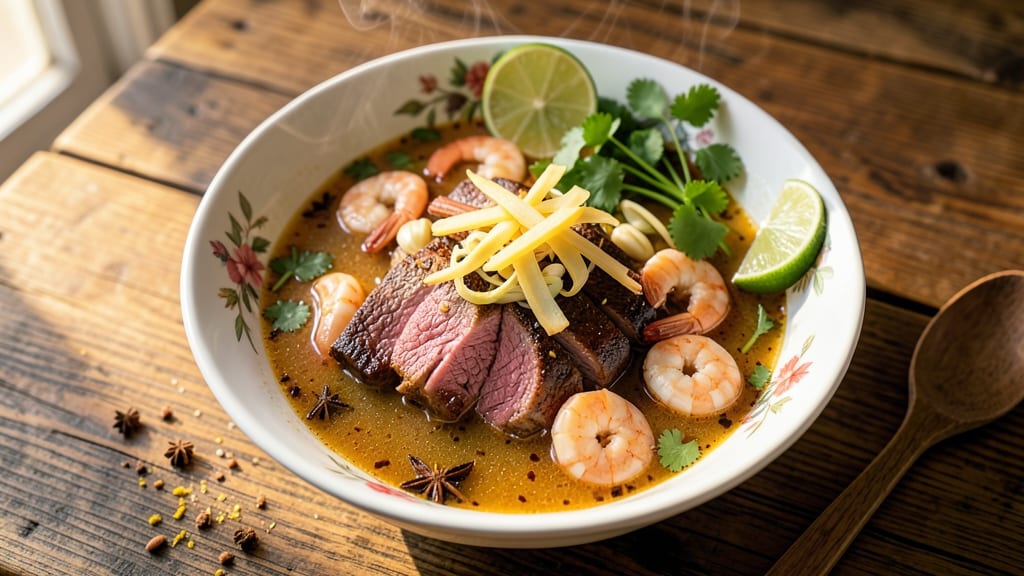
This beef and shrimp pho recipe delivers restaurant-quality Vietnamese comfort in your own kitchen, where fragrant ginger-lime broth meets tender proteins and silky rice noodles. The secret lies in slow-simmered aromatics that create layers of depth—star anise, cinnamon, and cardamom—while balancing sweet, sour, and umami notes.
I've perfected this version to capture that perfect harmony between rich beef broth and delicate shrimp, all wrapped in tender noodles that soak up every flavorful drop.
What sets this pho apart is the two-stage broth preparation: first building complex aromatics, then finishing with bright citrus and fresh herbs. The beef chuck braises until fork-tender while the shrimp cooks just until opaque, ensuring each bite delivers perfect texture.
Every element comes together in a bowl that's both visually stunning and deeply satisfying—golden broth, vibrant herbs, and contrasting textures that make each spoonful an experience.
This recipe transforms weeknight dinners into special occasions without requiring advanced techniques. The broth simmers for hours, but you can prepare it ahead and reheat it to maintain those rich, aromatic qualities.
Garnishes like fresh basil, Thai basil, bean sprouts, and lime wedges add freshness and color, turning a simple bowl into a feast for the senses. The result is a dish that feels luxurious yet approachable, perfect for impressing guests or treating yourself to a taste of Vietnam.
Whether you're serving a crowd or enjoying a comforting solo meal, this pho recipe scales beautifully while maintaining balance. The instructions walk you through each step—from aromatics to broth to proteins—with clear timing and techniques that ensure success.
Let's create a bowl of pho that brings warmth, flavor, and a touch of authenticity to your table.
Ingredients for beef and shrimp pho
Fragrant aromatics meet tender proteins and silky noodles—here's what brings this pho to life.
| Ingredient | Amount | Notes |
|---|---|---|
| Beef Chuck Roast 🥩 | 1 ½ lb | Cut into 1-inch cubes |
| Large Shrimp 🦐 | 1 lb | Peeled, deveined, tail-on |
| Fresh Ginger 🧅 | ½ cup | Finely chopped, organic preferred |
| Garlic Cloves 🧄 | 8 cloves | Smashed, not minced |
| Fresh Lime 🍋 | 1 whole | Juiced, seeds removed |
| Star Anise Pods 🌿 | 2 whole | Lightly crushed |
| Cinnamon Sticks 🌿 | 2 whole | 2-inch pieces |
| Cardamom Pods 🌿 | 4 whole | Lightly crushed |
| Coriander Seeds 🌶️ | 1 tbsp | Toasted for aroma |
| Onion 🧅 | 1 whole | Yellow, cut in half |
| Rice Noodles 🍜 | 8 oz | Flat, medium-width |
| Fish Sauce 🍶 | 2 tbsp | Red Boat preferred |
| Sugar 🍚 | 1 tbsp | White granulated |
| Fresh Thai Basil 🌿 | ¼ cup | Stems removed |
| Fresh Regular Basil 🌿 | ¼ cup | Chopped, for garnish |
| Bean Sprouts 🌱 | 1 cup | Fresh, rinsed |
| Lime Wedges 🍋 | 4 whole | For serving |
| Salt 🧂 | 1 tsp | Kosher or sea salt |
| Black Pepper 🌶️ | ½ tsp | Freshly ground |
The star anise and cinnamon are non-negotiable for that authentic pho aroma. Penzeys Spices or bulk bins at Whole Foods carry the best quality—look for whole pods, not ground. Fresh ginger and garlic? Organic from the farmers market has more punch than conventional. The beef chuck should have good marbling—Costco or your local butcher usually have the best cuts. Shrimp size matters too: 16/20 count gives you that perfect balance of tenderness and snap. For the fish sauce, Red Boat is the gold standard—avoid the cheap brands that taste like chemicals.
No star anise? Anise seeds work in a pinch, but it won't be the same. Running short on cinnamon? Cassia bark at half the amount gets you close. The coriander seeds can be toasted in a dry pan for 30 seconds before adding to the broth—trust me on this. For the noodles, if you can't find rice noodles, vermicelli works in a bind, but they won't be as hearty. The Thai basil is worth hunting down—Asian markets usually have it fresh, or sub with regular basil if needed. And that fish sauce? No substitutes here—it's the umami backbone of the dish.
The broth keeps beautifully—3 days in the fridge or 3 months frozen. I always make double batches because it reheats even better the next day. Store it in glass jars with a tight seal to preserve those aromatic oils. The noodles? Soak them in hot water for 3-4 minutes before assembling bowls—never boil them or they'll turn mushy. Garnishes like bean sprouts and herbs stay fresh for 5 days wrapped in damp paper towels in the crisper drawer. Lime wedges? Buy them fresh weekly—they make all the difference.
Why You'll Love This Recipe
- One-Pot Magic: I swear by this recipe—no chopping mountains of herbs, no measuring cups of mystery spices. Just sear the beef chuck in one pot, toss in the shrimp at the end, and boom: restaurant-quality broth without the fuss. (Yes, even on a Tuesday night when you’re exhausted.)
- Lime-Ginger Zing: That first sip? The ginger’s slow simmer caramelizes into warmth, while the lime brightens everything like a citrusy hug. The shrimp soak up the flavor so fast, you’ll want to double the batch just to taste it again.
- Weeknight Crowd-Pleaser: Feed the whole family without stress: the beef stays tender for seconds, the shrimp cooks in minutes, and everyone—picky eaters included—will ask for more. Honestly, it’s my go-to when friends drop by unannounced.
- Budget-Friendly Luxury: Beef chuck roast stretches across multiple bowls, and shrimp adds that fancy touch without breaking the bank. Leftovers? Even better the next day—just reheat and squeeze fresh lime over the top. (Trust me, it’s still delicious.)
Step-by-step instructions for fragrant ginger-lime pho
Here's how to craft a pho so aromatic it'll make your kitchen smell like a bustling Vietnamese street market.
Parboil and Sear the Beef for Deep Flavor
First, bring a large pot of water to a boil and add the 1.5 lb beef chuck roast cut into 1-inch cubes. Boil for exactly 2 minutes—this parboiling step removes impurities that would otherwise cloud your broth. Immediately drain and rinse the beef under cold water, then pat it completely dry with paper towels.
Heat a large Dutch oven over medium-high heat and add the beef in a single layer. Let it sear undisturbed for 3-4 minutes until a deep golden crust forms. This Maillard reaction creates complex flavors that will infuse your broth. Stir occasionally, breaking up any large pieces, until the beef is evenly browned. Remove the beef and set it aside—we'll return it later.
Build the Aromatic Spice Base
In the same Dutch oven, add 2 tablespoons oil and heat over medium heat. Add the 1 whole onion cut in half and the 8 smashed garlic cloves, cooking for 3 minutes until the onion softens and turns translucent. Here's the thing—don't let the garlic burn, or it'll turn bitter and ruin your entire broth.
Add the 0.5 cup finely chopped fresh ginger, 2 lightly crushed star anise pods, 2 cinnamon sticks cut into 2-inch pieces, 4 lightly crushed cardamom pods, and 1 tablespoon toasted coriander seeds. Stir everything together and cook for 2 minutes until the spices are fragrant and sizzling. This aromatic bundle is the soul of your pho—don't skip this step.
Simmer the Broth with Beef and Spices
Pour in 8 cups cold water (enough to cover the beef) and bring to a boil. Once boiling, reduce heat to low and add the seared beef back to the pot. Skim off any foam that rises to the surface—this ensures a clear, clean broth. Add 1 tablespoon sugar, 2 tablespoons fish sauce, 1 teaspoon salt, and 0.5 teaspoon black pepper. Let the broth simmer uncovered for 1.5 hours, stirring occasionally.
After 1.5 hours, the beef should be fork-tender. Use tongs to remove the beef and strain the broth through a fine-mesh sieve into a clean pot. Discard the spices and aromatics—your fragrant ginger-lime broth is now ready to shine. Keep the broth warm over low heat while you prepare the rest of the components.
Cook the Shrimp and Prepare Noodles
While the broth simmers, bring a separate pot of water to a boil and add the 8 oz rice noodles. Cook for exactly 2 minutes—they'll finish cooking in the hot broth. Drain and rinse under cold water to stop the cooking process, then divide among bowls. Here's a pro tip: don't overcook the noodles or they'll turn mushy and lose their silky texture.
In the same pot you used for the noodles, add 1 tablespoon oil and heat over medium-high heat. Add the 1 lb large shrimp (peeled, deveined, tail-on) and cook for 1-2 minutes per side until they turn pink and opaque. Remove from heat and set aside—you want them to stay tender, not rubbery. The shrimp will finish cooking in the hot broth when served.
Assemble and Garnish for Maximum Impact
Ladle the hot broth over the noodles in each bowl, dividing the 1.5 lb beef evenly among them. The beef should be fork-tender and easily shreddable with chopsticks. Add 1 cup bean sprouts to each bowl and arrange the 1-2 cooked shrimp on top. Here's where it gets exciting—garnish with 0.25 cup fresh Thai basil and 0.25 cup chopped fresh regular basil, then squeeze in juice from 1 whole fresh lime (seeds removed).
Serve immediately with 4 lime wedges on the side. Each bowl should be a vibrant mix of colors and textures—silky noodles, tender beef, plump shrimp, and fresh herbs. The aroma of ginger and lime will fill your kitchen, and every sip will be a perfect balance of savory, spicy, and bright citrus notes. This is pho done right!
Pro Tips For Making Beef And Shrimp Pho
- SEAR THE BEEF IN BATCHES: Don’t drown your pan—cut the chuck roast into thick slices and sear them in 2-3 batches over high heat. Crowding the pan steams the meat instead of browning it, and you’ll end up with watery pho instead of rich, caramelized flavor. Trust me, the extra 5 minutes waiting for the pan to reheat is worth it.
- PEEL THE SHRIMP LAST MINUTE: Leave the shrimp in their shells until you’re ready to add them to the broth. The shells release collagen and sweetness when simmered briefly—just 3-4 minutes—so you’re not wasting flavor. Toss them in whole, then remove them with a slotted spoon; the shells stay behind to work their magic.
- CHAR THE GINGER-GARLIC BASE: After toasting the spices, smash the garlic and ginger into a paste with a mortar and pestle (or just a knife and cutting board). Fry this paste in the same pot until it’s deep golden, almost black in spots—this isn’t burning, it’s building depth. Skip this, and your broth will taste like a missed opportunity.
- SALT THE BROTH IN STAGES: Add half the salt when you first combine broth ingredients, then taste again after simmering for 20 minutes. Pho broth needs patience—salting too early can mute flavors, and too late means scrambling. Aim for a balance where the broth tastes slightly salty on its own, because the beef and shrimp will bring their own seasoning to the party.
Common mistakes when making perfect results
Overcooking the Shrimp
Shrimp cooks in a flash—just 1-2 minutes per side—and rubbery shrimp ruin the dish. I've learned the hard way that overcooking turns them from tender to chewy. Remove them from heat the moment they turn pink and opaque, then finish cooking in the hot broth when serving.
This keeps them delicate and full of flavor. 🦐
Skipping the Parboil
That quick 2-minute parboil of the beef removes impurities that would otherwise make your broth cloudy. I once made pho without it, and the broth looked murky and tasted off. Don't skip this step—it's what gives authentic pho its clarity and depth.
Using Wrong Spices
Star anise, cinnamon, and cardamom aren't interchangeable. Substituting ground spices for whole pods changes the flavor completely. I recommend Penzeys Spices for authentic whole spices. Toast your coriander seeds for 30 seconds before adding—they should smell amazing when you do this right.
Overcooking the Noodles
Rice noodles cook faster than you think—just 2 minutes in boiling water. Overcooking turns them mushy and ruins the dish's texture. Soak them in hot broth for the final minute to finish cooking perfectly. I've ruined many batches by boiling them too long—don't make my mistake!
Ignoring the Aromatics
Those spices aren't just decoration—they're the soul of pho. Skimping on the ginger, garlic, and spices means missing the complex, fragrant base. Sauté them for 2 minutes until fragrant—this builds layers of flavor that separate good pho from great pho.
Trust me, your kitchen will smell incredible when done right. 🌿
Not Skimming the Broth
After adding water to the beef, skim off any foam that rises to the surface. This ensures a clean, clear broth. I once forgot this step and ended up with a cloudy broth that tasted flat.
It's a small effort that makes a big difference in the final result. Use a fine-mesh skimmer for best results.
Nutrition facts
Frequently asked questions
Can I substitute chicken for the shrimp in this pho?
While shrimp adds delicate sweetness, you can substitute with 1 lb boneless chicken thighs cut into thin strips. Cook them for 5-6 minutes until just done, then shred before serving. The texture will be slightly different but still delicious. For extra flavor, marinate the chicken in 1 tbsp fish sauce and 1 tsp sugar for 30 minutes before cooking.
How do I make this pho vegetarian?
Replace the beef with 1.5 lb mushrooms (shiitake or oyster) and use 1 lb extra-firm tofu instead of shrimp. Boost umami with 3 tbsp soy sauce and 1 tbsp miso paste in the broth. Add 1 tbsp nutritional yeast to the noodles for a cheesy depth. The key is balancing those rich flavors with bright herbs and lime.
Can I make the broth ahead of time?
The broth actually tastes better the next day as flavors meld. Store it in glass jars in the fridge for up to 3 days or freeze for 3 months. Reheat gently over low heat—never microwave, as it can make the broth taste flat. Add a splash of water if it reduces too much during reheating.
What's the best way to serve pho to a crowd?
Prepare the broth and proteins separately, then set up a pho bar with individual bowls of noodles. Keep the broth hot in a slow cooker or chafing dish, and let guests assemble their own bowls. Arrange garnishes in bowls for easy access—bean sprouts, herbs, lime wedges. This keeps everything fresh and lets everyone customize their bowl.
Why does my pho broth taste bitter?
Bitterness usually comes from overcooked spices or garlic. Reduce simmering time to 1 hour instead of 1.5, and remove spices immediately after the broth is ready. For extra brightness, add 1 tbsp more lime juice and 1 tsp sugar before serving. Always use fresh ginger and garlic—stale aromatics develop bitter compounds over time.