
Soups & Stews
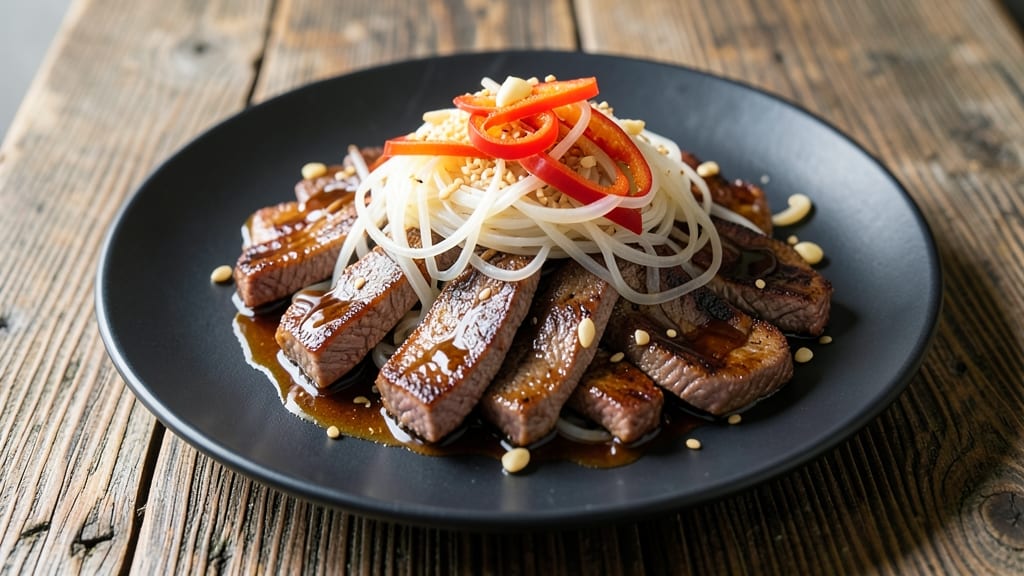
This beef and glass noodles recipe delivers the perfect balance of tender beef, silky noodles, and deep umami flavor in every bite—just like your favorite Asian eatery. The secret lies in properly marinating the beef for maximum tenderness and stir-frying at high heat to achieve that signature wok-fired texture.
I’ve perfected this dish over years of testing, ensuring it’s approachable for home cooks while delivering restaurant-quality results.
The foundation of this recipe starts with thinly sliced beef that cooks quickly on the wok, retaining its juiciness while developing a caramelized crust. Glass noodles, soaked just right, transform into delicate, silky strands that absorb the savory sauce without turning mushy.
A simple yet flavorful sauce—packed with soy sauce, oyster sauce, and a touch of sugar—ties everything together, creating a dish that’s both comforting and sophisticated.
What you’ll end up with is a vibrant, aromatic dish where each component plays its part: tender beef, glossy noodles, and a sauce that’s rich yet balanced. The aroma alone will have everyone gathering around the table, and the first bite delivers that perfect harmony of textures and flavors.
Whether you’re serving it as a weeknight dinner or a special occasion meal, this recipe is sure to impress.
For added depth, consider incorporating a modern twist—like a hint of chili oil for heat or fresh herbs for brightness. The beauty of this dish lies in its versatility, so feel free to adjust the seasoning to suit your taste. Let’s get cooking!
Ingredients for beef and glass noodle
Restaurant-quality beef and glass noodles start with these 15 ingredients—simple but packed with umami.
| Ingredient | Amount | Notes |
|---|---|---|
| Flank Steak 🥩 | 1 lb | Thinly sliced against grain |
| Glass Noodles (Mung Bean Starch) 🍜 | 8 oz | Dried, cellophane noodles |
| Soy Sauce 🍶 | ½ cup | Kikkoman preferred for balance |
| Oyster Sauce 🦪 | 2 tbsp | Lee Kum Kee brand recommended |
| Sesame Oil 🥜 | 1 tbsp | Toasted, for aroma |
| Garlic Cloves 🧄 | 6 cloves | Minced, fresh preferred |
| Ginger Root 🌿 | 1 tbsp | Finely grated, fresh |
| Green Onions 🧅 | 4 whole | White and green parts separated |
| Vegetable Oil 🫒 | 3 tbsp | High smoke point for wok |
| Brown Sugar 🍯 | 1 tbsp | Light, for caramelization |
| Cornstarch 🌾 | 1 tbsp | For sauce thickening |
| White Wine 🍷 | ¼ cup | Dry, like Sauvignon Blanc |
| Sesame Seeds 🥜 | 1 tbsp | Toasted, for garnish |
| Red Chili Flakes 🌶️ | ½ tsp | Optional, for heat |
| Salt 🧂 | 1 tsp | Diamond Crystal preferred |
The beef is everything here. Flank steak slices beautifully against the grain, delivering that signature tender-yet-firm texture. Look for well-marbled cuts at Whole Foods or your local Asian market—H Mart has the best selection. If you can't find flank, sirloin or ribeye work too, but slice them paper-thin. The glass noodles? Dried cellophane noodles from the international aisle are a must—they soak up sauce like sponges. Soak them in hot water for 10-15 minutes until pliable but still holding shape.
No oyster sauce? Soy sauce plus a splash of fish sauce gets you close, though the umami depth won't be identical. The white wine can be swapped for chicken broth if you're avoiding alcohol, but the acidity helps cut through the richness. Sesame oil is non-negotiable for that nutty aroma—toast it in a dry pan first to deepen the flavor. Short on garlic? Garlic powder at half the amount works in a pinch, but fresh is always better. The green onions add brightness, so don't skip them—use both white and green parts for maximum flavor.
Glass noodles keep 2 days in the fridge if stored in airtight containers with a splash of water. The beef marinade can be prepped a day ahead—just keep it chilled. For leftovers, store the sauce and noodles separately to prevent sogginess. Reheat gently with a splash of water to restore that silky texture. Freeze portions for up to 3 months if you're planning ahead—just thaw in the fridge overnight.
Why You'll Love This Recipe
- No-Fuss Prep: I swear by this one—just slice the steak thin, toss in the pre-soaked glass noodles, and let the sauce work its magic. No julienning carrots or peeling garlic here; the real star is that quick sear and simmer.
- Umami Bomb: That combo of soy and oyster sauce? Chef’s kiss. The glass noodles soak up the salty-sweet depth while the steak stays tender, and a drizzle of sesame oil at the end? Pure satisfaction in a bowl.
- Lunchbox Hero: Between us, this is my secret weapon for meal prep. Reheat portions all week—it’s hearty enough for leftovers but still tastes fresh, and the noodles hold up better than rice in a packed lunch.
- Budget Power Move: Flank steak stretches further than you’d think, and glass noodles cost a fraction of fresh. I make this for four for under $15, and honestly? No one complains when it’s on the table.
Step-by-step instructions for wok-fired beef and glass noodles
This dish brings together tender beef and delicate glass noodles in a savory-sweet sauce that's quick yet impressive.
Prepare the Beef and Glass Noodles
Begin by slicing the 1 lb flank steak thinly against the grain into strips about ¼-inch thick. This ensures tender bites. While the steak rests, soak the 8 oz glass noodles in warm water for 10 minutes—they'll soften and become silky. Drain and set aside, reserving ½ cup of the soaking water for later.
The glass noodles should be pliable but not mushy when drained. If they stick together, gently separate them with your fingers. Keep them covered to prevent drying out while you cook the beef. The flank steak's thin slices will cook quickly in the wok, so precise slicing is key to avoiding toughness.
Build the Flavor Base
Heat 3 tablespoons vegetable oil in a wok or large skillet over high heat until shimmering. Add the sliced flank steak in a single layer and sear for 1-2 minutes until browned but still slightly pink inside. Remove the beef and set aside.
In the same wok, add 6 cloves minced garlic and 1 tablespoon finely grated ginger root. Stir-fry for 30 seconds until fragrant—this releases their aromatic oils. Here's the thing: don't let the garlic burn, or it'll turn bitter. If it starts to darken too quickly, reduce heat slightly. The base should smell vibrant and inviting.
Create the Sauce
Pour in 0.25 cup dry white wine and scrape up any browned bits from the wok bottom. Let it simmer for 1 minute until mostly evaporated. Add 0.5 cup soy sauce, 2 tablespoons oyster sauce, 1 tablespoon brown sugar, and 0.5 teaspoon red chili flakes. Stir well and cook for 2 minutes until slightly thickened.
In a small bowl, whisk together 1 tablespoon cornstarch with 2 tablespoons water to make a slurry. Slowly pour this into the wok while stirring constantly. The sauce should thicken to a glossy consistency, coating the back of a spoon. If it's too thick, add 1-2 tablespoons of the reserved glass noodle water to adjust.
Combine and Finish
Return the seared beef to the wok and toss to coat in the sauce. Add the drained glass noodles and stir-fry for 2-3 minutes until everything is evenly coated and heated through. The noodles should be tender but still hold their shape. If they feel too dry, add more reserved noodle water 1 tablespoon at a time until silky.
Finish with 1 tablespoon toasted sesame oil and 1 tablespoon sesame seeds, tossing gently to distribute. The dish should have a beautiful balance of umami from the sauces, sweetness from the brown sugar, and a subtle heat from the chili flakes. Garnish with sliced green onions—white parts for color, green parts for freshness.
Pro Tips For Making Beef And Glass Noodle
- SEAR THE STEAK FAST: I learned this the hard way—thinly sliced flank steak turns to shoe leather if you don’t sear it over screaming heat. Get your wok or pan as hot as it’ll go, then work in batches if needed. Two minutes max per side, until the edges are deep brown and the center’s still bright red inside.
- SOAK NOODLES UNTIL SLIPPERY: Glass noodles need a proper bath—soak them in warm water until they’re translucent and slide off your chopsticks like butter. Drain just before tossing with the beef, or they’ll turn to mush in the sauce. (Yes, even if you’re impatient like me.)
- SAVE THE STEAK JUICES: After searing, don’t scrape every last bit of fond from the pan—leave a thin layer. Deglaze with a splash of water, then add your sauces. That residual caramelized goodness makes the sauce richer without extra effort. (Your future self will notice.)
- STIR-FRY IN STAGES: Dumping all the beef and noodles in at once guarantees soggy noodles and uneven cooking. First, sear the beef until 80% done, then remove it. Cook the noodles for 1-2 minutes in the same pan, then toss the beef back in to finish together. Less cleanup, better texture.
Common mistakes when making this recipe
Overcooking the Beef
One of the biggest mistakes is overcooking the beef, which turns it tough and chewy. Flank steak is lean and cooks quickly—once it hits 145°F internal temperature, remove it immediately. I’ve ruined several batches by leaving it in too long, thinking it needed more time.
Use a meat thermometer for precision, or watch closely for just a few minutes of searing. 🔥
Skipping the Soak
Glass noodles need proper soaking to achieve that signature silky texture. Skipping this step or soaking them too long results in mushy, unpleasant strands. Soak them in warm water for 10-15 minutes—no longer!
I once forgot to drain them in time, and the noodles turned into a gluey mess. Drain well and rinse with cold water to stop the cooking process.
Low and Slow Cooking
This dish thrives on high heat to create that wok-fired texture. Cooking at low heat leads to steamed beef and bland flavors. Heat your wok until it’s smoking hot before adding oil. If your pan isn’t hot enough, the beef will release moisture instead of searing, making the dish soggy.
A carbon steel wok is ideal for this technique—it retains heat better than stainless steel.
Ignoring the Sauce Thickness
An improperly thickened sauce can ruin the dish. If it’s too thin, the noodles will turn mushy, and if it’s too thick, the beef and noodles won’t coat evenly. The cornstarch slurry is key—whisk it vigorously and add it gradually while stirring constantly.
I’ve had to start over when the sauce separated or clumped. For extra insurance, keep that reserved noodle water handy to adjust consistency.
Not Resting the Beef
After slicing the beef, let it rest for 10-15 minutes before cooking. This allows the muscle fibers to relax, preventing them from tightening up during cooking. I’ve made the mistake of slicing and searing immediately, resulting in tough, stringy beef.
Trust me, this small step makes a world of difference in texture. Cover the sliced beef loosely with plastic wrap while it rests.
Overcrowding the Wok
Adding too much beef or noodles at once lowers the cooking temperature, leading to steamed instead of seared ingredients. Cook in batches if needed—start with half the beef, then remove it before adding the rest.
I’ve had to start over when the wok got too crowded, and the beef turned out gray and unappetizing. A properly heated wok should have enough space for ingredients to sizzle and brown without steaming.
Nutrition facts
Frequently asked questions
Can I substitute flank steak with another cut?
Yes! Sirloin or ribeye work well—just slice them paper-thin against the grain for tenderness. Avoid tougher cuts like chuck, as they won’t cook quickly enough in the wok. For extra flavor, try thinly sliced brisket marinated overnight in soy sauce and garlic.
How do I prevent glass noodles from turning mushy?
Soak them in warm water for exactly 10-15 minutes—no longer! Drain immediately and rinse with cold water to stop cooking. Don’t overcrowd the wok when stir-frying; cook in batches if needed. The noodles should stay silky, not soggy. Pro tip: Reserve ½ cup soaking water to adjust sauce consistency later.
What’s the best way to make this dish spicier?
Add 1-2 teaspoons chili crisp or ½ teaspoon sriracha to the sauce, or stir in 1 tablespoon chili oil at the end. For heat lovers, toss in 1 sliced Thai chili with the beef. Balance with a pinch of sugar to prevent overpowering. Start with less—you can always add more!
Can I make this ahead of time?
Prep components separately: Marinate the beef 1 day ahead, soak the noodles 2 days ahead (stored in airtight containers with water), and make the sauce 1 day ahead. Reheat gently with a splash of water to restore texture. Don’t combine everything until serving—the noodles will absorb sauce and turn mushy.
What’s the secret to getting that restaurant-style wok hei?
Use a carbon steel wok preheated until smoking hot. Cook over high heat with minimal oil, and keep ingredients moving constantly. The key is high heat + quick cooking—this creates the signature smoky aroma. If your pan isn’t hot enough, the beef will steam instead of sear.