
Soups & Stews
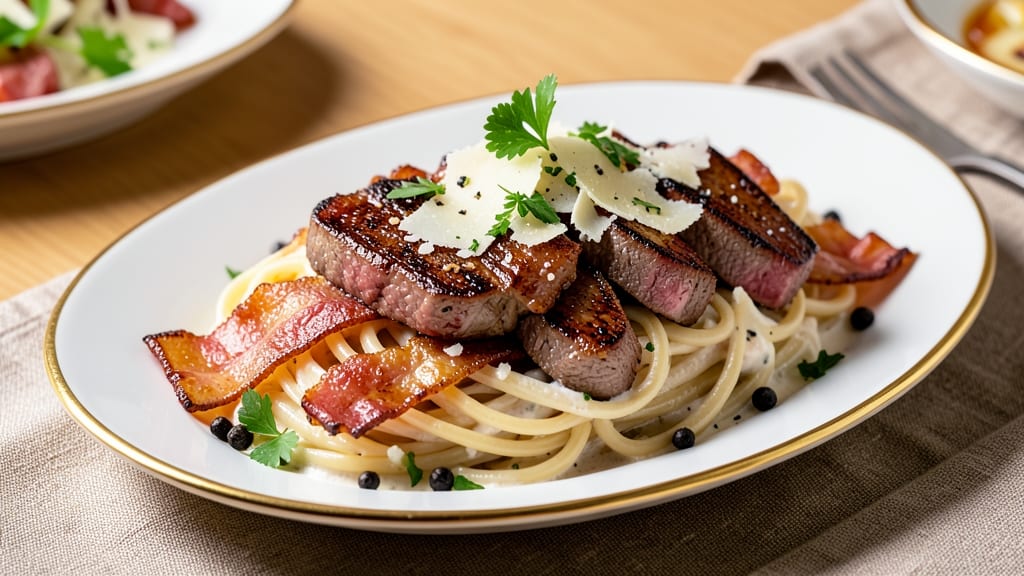
This beef bacon carbonara recipe delivers the ultimate Italian comfort food experience—crispy pancetta, tender beef, and a silky egg-cheese sauce all coming together in one skillet. The secret lies in proper technique: searing the beef and bacon until golden, then creating that perfect stovetop emulsion with eggs and cheese. I've perfected this method after years of testing, ensuring every bite is rich, creamy, and packed with flavor without being overly heavy.
What sets this recipe apart is the balance of textures and flavors—crispy pancetta and beef contrast beautifully with the velvety carbonara sauce, while a touch of black pepper and nutmeg adds depth.
The key is working quickly once the pasta hits the water and removing it just before it's fully al dente, so it finishes cooking in the skillet with the sauce. This method guarantees perfectly cooked pasta every time, with no risk of a gummy or broken sauce.
The result is a dish that's restaurant-quality but achievable at home, with layers of savory, salty, and umami flavors in each forkful. The sauce clings to the pasta, creating that signature carbonara texture where every bite is creamy yet still has a slight bite from the pancetta.
Serve immediately with a sprinkle of fresh parsley and extra black pepper for that final touch of sophistication.
This recipe works beautifully as a weeknight dinner or an impressive meal for guests—just be prepared to have seconds. The one-skillet method makes cleanup effortless, and the leftovers reheat surprisingly well if you can resist eating them all at once. Let's get cooking!
Ingredients for beef bacon carbonara
Crispy pancetta and tender beef meet silky eggs and cheese in this one-skillet masterpiece.
| Ingredient | Amount | Notes |
|---|---|---|
| Pancetta 🥓 | 6 oz | Diced into 1/4-inch pieces |
| Beef Tenderloin 🥩 | 1 lb | Cut into 1-inch cubes |
| Spaghetti 🍝 | 12 oz | Dry weight, broken in half |
| Large Eggs 🥚 | 3 whole | Room temperature, beaten |
| Pecorino Romano Cheese 🧀 | 1 cup | Freshly grated, coarse |
| Parmesan Cheese 🧀 | ½ cup | Freshly grated, coarse |
| Unsalted Butter 🧈 | 2 tbsp | Cold, cubed |
| Fresh Black Peppercorns 🌶️ | 1 tsp | Coarsely cracked |
| Ground Nutmeg 🌿 | ¼ tsp | Freshly grated |
| Kosher Salt 🧂 | 1 ½ tsp | Adjust to taste |
| Fresh Parsley 🌿 | ¼ cup | Chopped, for garnish |
| Extra-Virgin Olive Oil 🫒 | 1 tbsp | For finishing |
The pancetta is non-negotiable here—look for thick-cut slices at Whole Foods or your local butcher shop for the best texture. If you can't find pancetta, guanciale is the authentic Italian alternative, but thick-cut bacon works in a pinch (just pat it dry first). The beef tenderloin should be center-cut for tenderness; avoid anything with visible fat streaks unless you want extra richness. For the pasta, De Cecco or Barilla brands are my go-to—they hold up best to the carbonara method. The cheeses matter too: Pecorino Romano has that sharp bite, while Parmesan adds creaminess. Buy them pre-grated if you're short on time, but freshly grated is worth the extra minute.
No pancetta? Thick-cut bacon is your best bet—just don't use the pre-sliced kind. Running out of Pecorino? Asiago or Grana Padano work well, though the flavor will be slightly milder. Eggs are non-negotiable for that signature silkiness, but if you're concerned about salmonella, use pasteurized eggs. The nutmeg is subtle but essential—freshly grated makes all the difference. For the pasta, if you can't find spaghetti, linguine or fettuccine will work, but the wider noodles can make the sauce seem too thin. The key is working quickly: once the pasta hits the water, it should only take 2 minutes less than package instructions to cook al dente—it finishes in the skillet.
This dish is all about timing—serve immediately for that perfect crispy-creamy contrast. If you must reheat, add a splash of pasta water to loosen the sauce. Leftovers keep for 2 days in the fridge, but the texture changes dramatically, so it's best enjoyed fresh. For meal prep, make the pancetta and beef ahead, then cook them fresh when ready to serve. The cheese sauce can be made separately and stored for 1 day in the fridge—just reheat gently with a splash of water. Garnish with fresh parsley and a drizzle of high-quality olive oil for that final touch of sophistication.
Why You'll Love This Recipe
- Same recipe, different vibes: weeknight dinner with a side salad or weekend splurge with crusty bread. The leftovers reheat like a dream—just toss with a splash of pasta water. (Yes, even on a Tuesday night.)
- No Chopping Nightmare: I swear, the pancetta and beef tenderloin are pre-sliced or quick to dice—no knife marathons here. The pancetta renders down in minutes, and the beef tenderloin? Just sear it, then slice thin. Honestly, I’ve made this on days I forgot to prep anything.
- Rich, Salty, Creamy Magic: That crispy pancetta meets tender beef in a sauce so good it’ll make you close your eyes. The eggs and Pecorino Romano turn it into a velvety, cheesy hug—no cream needed, just pure flavor. Between us, this is the carbonara I’ll fight my partner over.
- Weeknight to Weekend: Same recipe, different vibes: weeknight dinner with a side salad or weekend splurge with crusty bread. The leftovers reheat like a dream—just toss with a splash of pasta water. (Yes, even on a Tuesday night.)
Step-by-step instructions for beef bacon carbonara
Master this rich, crispy carbonara with beef tenderloin and pancetta in a single skillet.
Cook the Pancetta Until Crispy
Heat a large skillet over medium heat and add the 6 oz diced pancetta. Cook undisturbed for 8-10 minutes, stirring only once or twice, until the pancetta is deep golden brown and crispy. The fat should render out and pool at the bottom of the pan—this is your flavor foundation.
Here's the thing—don't rush this step. If you move the pancetta too often, it'll steam instead of crisp. You'll know it's ready when the edges curl slightly and the fat takes on a golden hue. Remove the pancetta with a slotted spoon and set aside, leaving the rendered fat in the pan. This fat is non-negotiable for flavor.
Sear the Beef Tenderloin
Increase heat to medium-high and add the 1 lb beef tenderloin cubes to the same skillet with the pancetta fat. Cook for 3-4 minutes per side until the beef is deep brown and cooked to medium-rare (internal temperature 130°F). The beef should develop a nice crust while remaining tender inside.
I like to press down gently on the beef cubes during the first minute—this prevents them from curling and ensures even contact with the pan. Once browned, remove the beef and set aside with the pancetta. The residual heat in the pan will help build your sauce.
Prepare the Cheese and Egg Mixture
In a medium bowl, whisk together the 3 whole large eggs, 1 cup Pecorino Romano cheese, 0.5 cup Parmesan cheese, 1.5 tsp kosher salt, 0.25 tsp ground nutmeg, and 1 tsp coarsely cracked black peppercorns. The mixture should be thick and pale yellow—almost like a custard. This is your sauce base, so make sure it's well combined.
Here's where it gets fun—taste the mixture. You want a balance of sharp cheese, peppery heat, and just a hint of nutmeg. If it needs more salt, add it now. The eggs should be at room temperature, which ensures they blend smoothly without scrambling later. Cover this bowl and set it aside.
Cook the Spaghetti Al Dente
Bring a large pot of salted water to a rolling boil and add the 12 oz spaghetti. Cook until 1 minute shy of package directions for al dente—you want the pasta to finish cooking in the sauce. Reserve 1 cup of pasta water before draining, then drain the spaghetti and add it immediately to the skillet with the pancetta fat.
Toss the spaghetti in the skillet for 1-2 minutes to coat it evenly in the rendered fat. This step is crucial—it infuses the pasta with flavor before adding the egg mixture. If the pasta seems dry, add a splash of the reserved pasta water to loosen it slightly. The goal is to create a silky, creamy sauce without breaking the eggs.
Combine and Finish the Carbonara
Remove the skillet from heat and let it cool slightly for 1 minute. This is the moment that matters: slowly pour the egg-cheese mixture into the skillet while stirring vigorously with tongs. The residual heat from the pasta and pan will gently cook the eggs into a creamy sauce without scrambling them.
Add the reserved 1 cup pasta water in 2-tablespoon increments, stirring constantly, until the sauce reaches your desired consistency. It should coat the back of a spoon but still be fluid enough to cling to the pasta. Return the beef tenderloin and pancetta to the skillet, toss everything together, and finish with the 1 tbsp extra-virgin olive oil for brightness.
Serve Immediately with Fresh Parsley
Divide the carbonara among plates and garnish each serving with 0.25 cup chopped fresh parsley. The dish should be rich, creamy, and packed with crispy pancetta and tender beef. Serve immediately—carbonara doesn't wait. The sauce will thicken slightly as it cools, but a splash of hot pasta water will loosen it if needed.
Each bite should deliver a perfect balance: crispy pancetta, tender beef, creamy egg sauce, and sharp cheese. This is the kind of dish that tastes even better the second time around—so make extra if you can.
Pro Tips For Making Beef Bacon Carbonara
- CRISPY PANCETTA FIRST: Cook the pancetta until it’s golden and crisp—not just pink. I used to stop at "browned," but the real magic happens when the fat renders into tiny crackling shards. Toss those crisp bits back in at the end.
- SLICE TENDERLOIN THIN: Cut the beef tenderloin against the grain into ¼-inch slices—thinner than you’d think. Thick strips turn tough; this way, they melt into the sauce while staying tender. No need to overcook.
- EGG MIX BEFORE PASTA: Whisk eggs and grated pecorino together before adding pasta water. I learned this after scrambling eggs into a dry pot—now the sauce is silky, not grainy, and the cheese melts smoothly.
- SALT THE PASTA WATER: Add a full tablespoon of salt to the pasta water—yes, even if your pasta is salted. The carbonara relies on salty, flavorful water to balance the richness. Taste it; it should taste like the sea.
Storing and reheating your beef bacon carbonara
Refrigerator Storage
Store leftover beef bacon carbonara in an airtight container for up to 2 days—the sauce will thicken slightly but remains delicious. Let it cool completely before refrigerating to prevent condensation, which can make the pasta soggy.
I like using glass containers because they keep the dish fresh longer and reheat more evenly than plastic. 🥫
Freezer Storage Tips
This dish freezes surprisingly well for up to 1 month if stored properly. Portion into single-serving containers to avoid thawing more than you need.
The key is to freeze the sauce and pasta separately—freeze the cooked pasta in its own container, then freeze the sauce (without the beef or pancetta) in another. When ready to eat, reheat the pasta and sauce separately before combining. 🧊
Stovetop Reheating
My preferred method is stovetop reheating—it preserves the crispy texture of the pancetta and beef. Add 2 tablespoons of water or pasta water to the skillet, then heat over medium-low heat for 3-4 minutes, stirring constantly.
The residual heat will gently warm through without scrambling the eggs. If the sauce seems too thick, add more liquid 1 tablespoon at a time until smooth. 🔥
Microwave Reheating
For quick reheating, transfer a portion to a microwave-safe dish and cover loosely with a damp paper towel. Heat on 50% power for 1-2 minutes, then stir. Add 1 tablespoon of water and continue in 20-second intervals until heated through.
Avoid full power—it can make the sauce grainy. The microwave method works best for individual servings. ⏱️
Reviving the Crisp
After reheating, the pancetta and beef may lose some crispiness. To restore it, transfer them to a dry skillet over medium heat for 1-2 minutes until golden again.
Add the reheated pasta and sauce back to the skillet, toss, and serve immediately. This step makes all the difference for that restaurant-quality texture. 💫
Serving Leftovers
Leftovers taste best when served with a side of garlic bread or a simple arugula salad to cut through the richness. Garnish with extra fresh parsley and a crack of black pepper to brighten the flavors.
If the sauce separates slightly, just stir in a splash of hot water to re-emulsify it. Trust me, it’ll taste almost as good as fresh! 🌿
Nutrition facts
Frequently asked questions
Can I substitute bacon for pancetta in this recipe?
Yes, but choose thick-cut bacon (not pre-sliced) for the best texture. Pat it dry first to render fat properly. For authentic flavor, guanciale is ideal, though it's harder to find. The key is crispy fat—don't rush this step or the bacon will steam instead of brown.
Why does my carbonara sauce get grainy or break?
This happens when eggs scramble from too much heat or lack of residual pan heat. Always remove the skillet from heat before adding eggs, and use the pasta's residual warmth to gently cook them. Add pasta water gradually (2 tbsp at a time) while stirring constantly. The sauce should be silky, not lumpy.
How do I adjust this for dietary restrictions?
For dairy-free: Use nutritional yeast + cashew cream instead of cheese. For gluten-free: Swap spaghetti for chickpea or brown rice pasta. For lower fat: Reduce cheese by 25% and add extra veggies (mushrooms, spinach). The beef and pancetta can stay for maximum flavor, but pan-sear them separately if avoiding fat.
Can I make this ahead of time?
Not the full dish—carbonara is best served immediately. However, you can prep components ahead: Cook pancetta and beef separately, store in fridge for 2 days. Make the cheese-egg mixture fresh day-of. For the pasta, cook it al dente, shock in ice water, and store separately. Reheat everything together with extra pasta water for 2-3 minutes on stovetop.
What's the secret to perfect carbonara texture?
Three things: 1) Pasta must be al dente before mixing with sauce. 2) Egg-cheese mixture should be thick and pale yellow (like custard). 3) Work quickly off direct heat—residual warmth from pasta and pan gently cooks eggs without scrambling. The sauce should cling to pasta like liquid silk, not separate or break.