
Soups & Stews
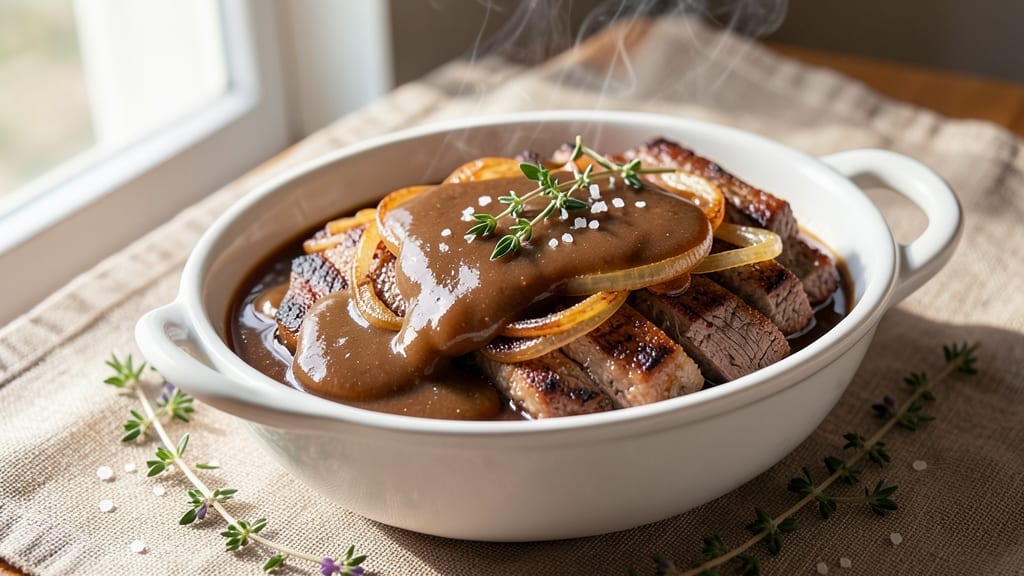
This beef and onion gravy recipe transforms simple pan drippings into a velvety, restaurant-worthy sauce that elevates any meal. The secret lies in building layers of flavor through a rich roux and slow caramelization of onions—creating depth that store-bought versions can’t match.
What starts as a humble collection of browned bits becomes a luscious, golden sauce with just the right balance of savory and sweet notes.
The foundation is a proper roux—equal parts fat and flour cooked until nutty brown—then deglazed with wine or broth to lift those flavorful browned bits from the pan. Caramelizing onions until deep amber adds natural sweetness that rounds out the richness, while aromatics like thyme and bay leaf infuse warmth.
The result? A gravy so smooth it clings to every bite of roasted chicken, mashed potatoes, or dumplings, turning ordinary dishes into something extraordinary.
What makes this gravy truly special is its versatility—it’s rich enough for Sunday dinner but simple enough for a weeknight. The key is patience: letting the sauce simmer until thickened properly ensures it coats without being gluey.
Store it in the fridge for up to 5 days or freeze for months, ready to transform leftovers into a hearty meal with minimal effort.
Whether you're finishing a roast or drizzling over biscuits, this gravy delivers deep, complex flavor that feels indulgent yet balanced. The technique is straightforward, but the reward—a sauce that tastes homemade and loved—is unmatched. Let’s get started on creating yours.
Ingredients for beef and onion gravy
Transform humble pan drippings into a velvety sauce with these ten essential ingredients.
| Ingredient | Amount | Notes |
|---|---|---|
| Pan Drippings (Beef Fat) 🍖 | 2 tbsp | From roasted beef, rendered fat |
| All-Purpose Flour 🌾 | ¼ cup | White flour, sifted for smooth texture |
| Yellow Onions 🧅 | 1 ½ lb | Yellow or sweet, thinly sliced |
| Dry Red Wine 🍷 | ½ cup | Bold Cabernet or Merlot preferred |
| Beef Broth 💧 | 1 ½ cups | Homemade or quality low-sodium |
| Fresh Thyme 🌿 | 1 tbsp | Leaves only, finely chopped |
| Bay Leaves 🍃 | 2 whole | Dried or fresh, removed before serving |
| Black Peppercorns 🌶️ | ½ tsp | Freshly cracked for intensity |
| Unsalted Butter 🧈 | 2 tbsp | Cold, for finishing richness |
| Diamond Crystal Kosher Salt 🧂 | 1 tsp | Adjust to taste at the end |
The foundation begins with pan drippings—collect those golden brown bits after roasting beef, as they hold concentrated flavor. For onions, yellow or sweet varieties caramelize best, yielding deep amber sweetness. Dry red wine like Cabernet or Merlot adds complexity, while homemade beef broth ensures depth (store-bought works in a pinch). Fresh thyme and bay leaves infuse subtle herbal warmth—remove bay leaves before serving to avoid bitterness. For flour, all-purpose white creates the perfect roux texture, though some chefs swear by pastry flour for extra silkiness.
No red wine? Dry sherry or extra beef broth works equally well, though wine adds nuanced acidity. Substitute fresh thyme with one-third the amount of dried, but fresh is ideal for authentic flavor. If your onions brown too quickly, cover the pan partially to slow caramelization. For a richer finish, add an extra tablespoon of butter at the end. The roux must cook until nutty brown—rushing this step results in a floury, rather than velvety, gravy. Diamond Crystal kosher salt dissolves evenly, but adjust to taste at the very end.
Store finished gravy in an airtight container in the fridge for up to 5 days or freeze for 3 months. For best texture, reheat gently on low heat, stirring occasionally. Portion into ice cube trays before freezing—thaw and use as needed to revive dried-out roasts. Gravy thickens as it cools, so thin with warm water or broth if needed. This sauce keeps beautifully, making it perfect for meal prep—simply reheat and drizzle over roasted vegetables, mashed potatoes, or dumplings.
Why You'll Love This Recipe
- Uses Leftover Magic: I swear by this trick—just a splash of red wine and those golden pan drippings turn scraps into something ridiculously good. No waste, no fuss, just pure flavor from what’s already in your pan.
- One-Pot Wonder: Honestly, this is the kind of recipe where you don’t even need to wash an extra bowl. Flour, onions, wine—stir, simmer, done. The beef fat in those drippings does half the work for you.
- Rich Without Effort: That caramelized onion base? Deep. The wine adds a little brightness, the broth rounds it out—it’s the kind of gravy that makes mashed potatoes or steak taste like a restaurant dish. (Yes, even on a Tuesday night.)
- Budget Booster: Between us, this is my go-to when I’m stretching a protein. A little goes a long way, and it freezes like a dream for those lazy days when you just want comfort without the grocery haul.
Step-by-step instructions for beef and onion gravy
Transform simple pan drippings into a velvety, flavor-packed gravy using this precise technique.
Bloom the Flour in Beef Fat
Heat the 2 tablespoons pan drippings (beef fat) in a medium saucepan over medium heat until the fat shimmers but doesn't smoke. Add the ¼ cup all-purpose flour all at once and whisk vigorously for 1-2 minutes until the mixture turns a deep golden brown. This process, called blooming, develops nutty flavors and creates the gravy's thickening power.
Watch the color carefully—it should transform from pale to a rich caramel hue. If the flour burns before reaching this color, reduce the heat slightly. This step forms the foundation of your gravy, so don't rush it. The bloomed flour will eventually emulsify with the liquids to create that signature silky texture.
Cook the Onions Until Soft and Sweet
Add the 1.5 pounds yellow onions, sliced into thin half-moons, to the saucepan. Stir to coat the onions completely in the flour mixture. Cook over medium-low heat for 10-12 minutes, stirring occasionally, until the onions are completely softened and their edges begin to caramelize slightly. You'll notice the mixture releases moisture as the onions cook down.
This slow cooking transforms the onions into a sweet, jammy base that carries deep flavor. If the mixture starts to stick, add 1-2 tablespoons beef broth to deglaze and keep everything moving. The onions should be tender enough to mash between your fingers when they're ready. This step builds the gravy's rich, complex flavor profile.
Deglaze with Wine and Reduce
Pour in the ½ cup dry red wine, scraping up any browned bits from the bottom of the pan with a wooden spoon. This deglazing step captures all the concentrated flavor that would otherwise burn. Let the wine simmer for 3-4 minutes until it reduces by about half and the alcohol aroma disappears. You'll see the liquid transform from a deep ruby to a richer amber color.
Here's the thing—don't walk away. The wine needs constant attention as it reduces quickly. If you notice any scorching, immediately add 1 tablespoon beef broth to cool the pan. The reduced wine will form the aromatic backbone of your gravy, so this reduction step is crucial for developing depth of flavor.
Build the Gravy with Broth and Aromatics
Add the 1.5 cups beef broth, 1 tablespoon fresh thyme, 2 whole bay leaves, and ½ teaspoon black peppercorns to the saucepan. Bring to a gentle simmer over medium heat and let cook for 10-12 minutes until the mixture thickens slightly. Stir occasionally, especially as it begins to bubble—this prevents scorching at the bottom.
The gravy should coat the back of a spoon when you lift it. If it's too thick, whisk in 1 tablespoon beef broth at a time until you reach a velvety consistency. The aromatics infuse the liquid with their flavors during this time, so don't skip them. Strain the gravy through a fine-mesh sieve into a clean saucepan to remove the thyme, bay leaves, and peppercorns, pressing on the solids to extract every bit of flavor.
Finish with Butter and Season
Return the strained gravy to the saucepan and reduce heat to low. Stir in the 2 tablespoons cold unsalted butter until completely melted and incorporated. This final step adds richness and helps create a glossy finish. Taste and adjust seasoning with the 1 teaspoon diamond crystal kosher salt, adding more as needed—remember, the salt content of your broth may vary.
For the perfect gravy, it should be thick enough to coat the back of a spoon but still flow smoothly. If you prefer it slightly thinner, whisk in more beef broth 1 tablespoon at a time until you reach your desired consistency. Serve immediately over roasted beef or mashed potatoes while still warm for maximum flavor impact.
Pro Tips For Making Beef And Onion Gravy
- Sear the Onions First: Don’t just toss raw onions into the pan—sauté them in the beef fat until they’re soft and translucent, about 8-10 minutes. This melts their sharpness and builds flavor before the flour even hits the pan. (Yes, it takes longer, but the gravy won’t taste like you skipped a step.)
- Deglaze with Wine, Then Wait: Pour in the red wine and let it bubble away for 2 full minutes before adding flour. Rushing this step means the alcohol burns off too fast, and you lose that bright acidity that cuts through the richness. (I used to skip this—now I don’t.)
- Whisk Like You Mean It: When combining flour and broth, use a whisk and stir constantly over medium heat. Lumps are the enemy here, and they’ll turn your gravy into glue. If it thickens too fast, just add a splash of broth—no shame in it.
- Strain for Smoothness: After simmering, strain the gravy through a fine-mesh sieve to remove onion bits. It’s not mandatory, but it makes the texture velvety, especially if you’re serving it over mashed potatoes or roasted veggies. (I know, it’s extra work—but trust me.)
Creative variations of this dish
Mushroom-Infused Twist
Swap half the onions for 8 oz sliced cremini mushrooms (about 1 cup) for an earthy depth. Sauté them with the onions until golden, then proceed with the wine and broth.
The mushrooms add umami richness that pairs perfectly with beef. I like to use Button mushrooms for milder flavor or shiitake for extra intensity. 🍄
Herb-Forward Variations
Boost the aromatic profile by doubling the thyme to 2 tbsp and adding 1 tsp fresh rosemary or ½ tsp smoked paprika. For a French bistro touch, stir in 1 tsp Dijon mustard at the end—it brightens the sauce beautifully.
Fresh herbs add freshness that cuts through the richness, making each spoonful more vibrant.
Creamy Upgrade
For a luxurious finish, whisk in ¼ cup heavy cream or ½ cup whole milk with the final butter. This creates a velvety texture while keeping the gravy's signature depth.
I recommend warming the dairy first to avoid curdling. The cream adds a subtle sweetness that balances the savory notes perfectly. 🥛
Spicy Kick Option
Add ½ tsp cayenne pepper or 1 tsp hot paprika when blooming the flour for a subtle heat. For more pronounced spice, stir in 1 tbsp chipotle paste with the wine.
The heat complements the rich flavors without overpowering them. This works especially well with beef dishes that need a little fire. 🌶️
Vegetarian Adaptation
Replace beef drippings with 2 tbsp olive oil and use vegetable broth instead of beef broth. For umami depth, add 1 tbsp soy sauce or 1 tsp mushroom powder when building the gravy. The onions and caramelized flour still create a rich base, making this version surprisingly hearty for vegetarians.
Nutrition facts
Frequently asked questions about beef and onion gravy
Can I make this gravy without red wine?
Replace the ½ cup dry red wine with an equal amount of beef broth or dry sherry for similar depth. The wine adds acidity that brightens the sauce, but broth works perfectly for a simpler version. Just reduce the liquid by half to concentrate the flavor.
How do I fix gravy that's too thick or too thin?
For thick gravy, whisk in 1 tablespoon warm beef broth at a time until smooth. For thin gravy, simmer uncovered for 3-5 minutes to reduce the liquid. The ideal consistency coats the back of a spoon but still flows freely—this ensures it clings beautifully to dishes.
Can I make this gravy ahead of time?
Yes! Store finished gravy in an airtight container in the fridge for up to 5 days or freeze for 3 months. Reheat gently on low heat, stirring occasionally. For best texture, thaw overnight in the fridge—never microwave it directly, as this can make it grainy.
What's the best way to use up leftover gravy?
Freeze portions in ice cube trays for easy reheating later. Thaw and use to revive dried-out roasts or drizzle over mashed potatoes, dumplings, or roasted vegetables. It also makes a fantastic base for beef stroganoff or pot roast—just warm and stir in a splash of sour cream for extra richness.
Why did my gravy turn lumpy?
Lumpy gravy usually means the roux wasn't cooked long enough or the flour wasn't whisked properly. For next time, cook the flour and fat until it's a deep golden brown (about 2 minutes) and whisk constantly. If it happens, strain the gravy through a fine-mesh sieve to smooth it out.