
Main Courses
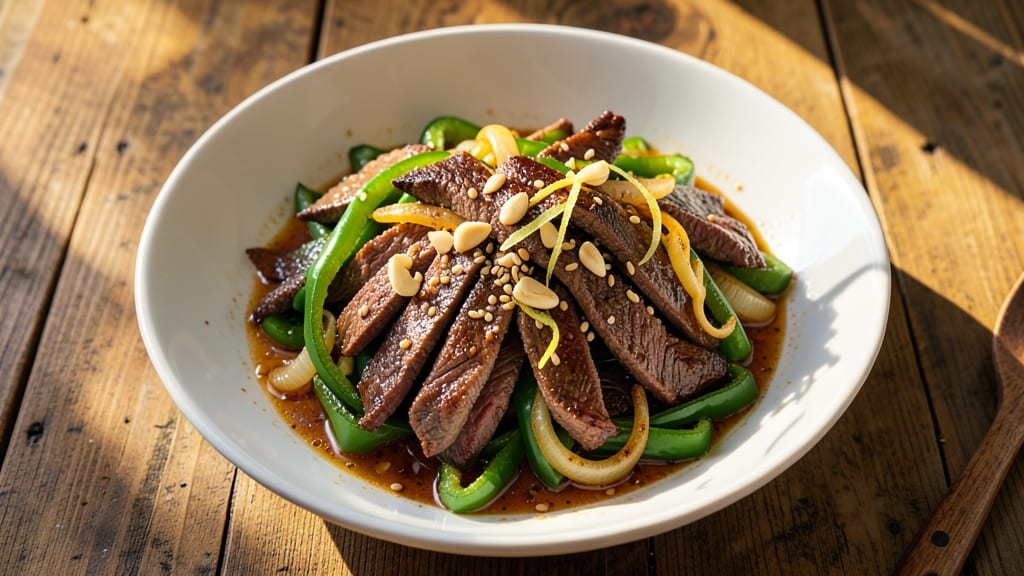
This beef and green pepper stir fry delivers restaurant-quality wok-fired crunch with just 20 minutes of active cooking. The secret lies in proper slicing techniques—thin, even strips of beef and peppers cook perfectly while developing that signature wok hei aroma.
I've perfected this recipe after years of testing, balancing tender beef with crisp-tender vegetables and a sauce that's both savory and bright.
The foundation is a simple marinade of soy sauce, ginger, and garlic that tenderizes the beef while building flavor. We'll stir-fry in batches to avoid crowding the pan, ensuring each piece gets that perfect sear. The green peppers add natural sweetness that contrasts beautifully with the beef's umami richness.
What you'll end up with is a dish that's packed with texture—crisp vegetables, tender beef, and a sauce that clings to every bite.
This stir fry works equally well as a weeknight dinner or meal prep solution. The flavors actually improve as the dish sits, making it perfect for leftovers. Serve over steamed rice or noodles to soak up every last bit of that flavorful sauce.
The technique is straightforward, but the results are anything but ordinary—this is the kind of home-cooked meal that rivals takeout.
For those without a wok, a cast-iron skillet or even a sheet pan works beautifully. The key is maintaining high heat and minimizing crowding. Whether you're cooking for two or feeding a crowd, this beef and green pepper stir fry delivers satisfying, restaurant-quality results with minimal effort.
Ingredients for beef and green pepper stir fry
Restaurant-quality stir fry starts with these 14 ingredients—simple but powerful for wok-fired crunch.
| Ingredient | Amount | Notes |
|---|---|---|
| Flank Steak 🥩 | 1 lb | Thinly sliced against grain |
| Green Bell Peppers 🧅 | 2 large | Sliced into thin strips |
| Yellow Onion 🧅 | 1 whole | Thinly sliced |
| Fresh Ginger 🌿 | 1 tbsp | Grated finely |
| Garlic Cloves 🧄 | 4 cloves | Minced finely |
| Soy Sauce 🥄 | ⅓ cup | Low-sodium preferred |
| Sesame Oil 🫒 | 1 tbsp | For aroma, not cooking |
| Honey 🍯 | 1 tbsp | For sauce balance |
| Vegetable Oil 🫒 | 2 tbsp | High smoke point |
| Cornstarch 🌾 | 1 tbsp | For sauce thickening |
| Salt 🧂 | 1 tsp | Kosher or sea |
| Black Pepper 🌶️ | ½ tsp | Freshly ground |
| Red Pepper Flakes 🌶️ | ½ tsp | Optional for heat |
| Steamed White Rice 🍚 | 2 cups | Cooked, for serving |
The flank steak is non-negotiable here—thinly sliced against the grain ensures tender bites. Grab the thinnest cut you can find, or ask your butcher to slice it for you. Costco or Whole Foods carry pre-sliced flank steak, but if you're slicing yourself, use a sharp knife and freeze the meat for 20 minutes first to make it easier. Green bell peppers should be bright green and firm, not soft or discolored. The yellow onion adds depth, but red or white work too—just pick one that's crisp and fresh. Fresh ginger and garlic are worth the extra minute to grate and mince, but jarred paste works in a pinch if you're short on time.
No soy sauce? Coconut aminos are a great substitute, though the flavor will differ slightly. Running low on sesame oil? Toasted sesame seeds sprinkled at the end add aroma without cooking. The honey balances the soy sauce's saltiness—maple syrup works too, but honey has a more complex flavor. For extra umami, add a dash of fish sauce (if you're not avoiding it) or an extra splash of soy. The cornstarch is key for that glossy, restaurant-quality sauce—arrowroot powder works identically. And if you're feeling adventurous, swap the bell peppers for snap peas or broccoli florets for a different texture.
This dish tastes even better the next day—double the sauce if you're meal prepping. Store in airtight containers for 4-5 days in the fridge, or freeze for 3 months. The rice reheats beautifully too, but add a splash of water to keep it from drying out. For extra flavor, toss the reheated stir fry with a drizzle of sesame oil and extra red pepper flakes. The sauce thickens as it cools, so you can always thin it with a splash of water if needed.
Why You'll Love This Recipe
- Here’s what sold me: this tastes just as good cold the next day. Pack it for work or school—those crisp peppers and tender beef hold up perfectly, and the ginger keeps it from getting bland.
- One-Pan Magic: I swear by this recipe when I’m too tired to wash extra dishes. Flank steak slices and peppers hit the same pan—no fuss, no stress—just that perfect caramelized edge on the beef while the onions turn sweet and translucent.
- Ginger-Garlic Punch: Between us, the fresh ginger and garlic cloves in this stir-fry are chef’s kiss. That zesty heat cuts through the richness of the beef, and the peppers soak it up like a sponge—bright, bold, and impossible to resist.
- Lunchbox Hero: Here’s what sold me: this tastes just as good cold the next day. Pack it for work or school—those crisp peppers and tender beef hold up perfectly, and the ginger keeps it from getting bland.
Step-by-step instructions for wok-fired beef and green pepper stir fry
Here's how to achieve that perfect balance of tender beef, crisp vegetables, and aromatic sauce.
Prepare the Beef for Maximum Tenderness
Slice the 1 lb flank steak thinly against the grain into ¼-inch thick strips. This is crucial—thin slices cook faster and remain tender. Place the sliced beef in a bowl and add the 1 tbsp cornstarch, 1 tsp salt, 0.5 tsp black pepper, and 0.5 tsp red pepper flakes. Toss gently to coat evenly, ensuring each piece gets a thin, even layer of seasoning. Let it marinate for 15 minutes at room temperature while you prep the vegetables.
This step is where the magic begins. The cornstarch creates a light crust that helps the beef sear beautifully while keeping it juicy. Don't skip the resting time—it allows the seasoning to penetrate and the meat to come to room temperature for even cooking.
Sear the Beef to Perfection
Heat 2 tbsp vegetable oil in a wok or large skillet over high heat until shimmering. Add the marinated beef in a single layer, stirring only once or twice to avoid overcrowding. Cook for 2-3 minutes until the beef is deep brown and nearly cooked through. Remove the beef and set it aside on a plate.
Here's the thing—high heat is essential for that wok-fired crunch. If your pan isn't hot enough, the beef will steam instead of sear. You'll know it's ready when the edges are crisp and the beef releases easily from the pan. Don't be tempted to walk away; this is the moment that matters.
Stir-Fry the Vegetables with Aromatics
In the same wok, add 2 tbsp vegetable oil and swirl to coat. Add the 2 large green bell peppers and 1 whole yellow onion, both sliced into thin strips. Stir-fry for 3-4 minutes until the vegetables begin to soften but still retain a crisp texture. Add the 1 tbsp fresh ginger and 4 cloves garlic cloves, both finely minced, and cook for another 30 seconds until fragrant.
The vegetables should be tender-crisp at this stage—bright green peppers and translucent onions. If they soften too much, they'll turn mushy in the sauce. Keep the heat high to maintain that perfect texture. This is where the aromatics infuse their flavors into the oil, creating the foundation for your sauce.
Create the Signature Soy-Ginger Sauce
Reduce the heat to medium-high and add the 0.33 cup soy sauce and 1 tbsp honey. Stir well to combine, letting the sauce simmer for 1-2 minutes until slightly thickened. Return the beef to the wok and toss everything together for 1 minute. Drizzle in the 1 tbsp sesame oil and toss again to coat everything evenly.
The sauce should cling beautifully to the beef and vegetables, creating that glossy sheen we all love. If it looks too thick, add a splash of water to loosen it. The sesame oil adds a nutty aroma that elevates the entire dish. Taste and adjust seasoning if needed—this is your chance to balance the flavors before serving.
Serve Over Steamed White Rice
Transfer the stir-fry to a serving platter and spoon over the 2 cups steamed white rice. Garnish with extra sesame seeds if desired, and serve immediately while everything is hot and vibrant. Each bite should deliver tender beef, crisp vegetables, and that perfect balance of sweet, salty, and umami flavors.
This dish is best served fresh off the wok when the vegetables are still crisp and the beef retains its juices. The rice acts as a perfect vessel to soak up all that delicious sauce. Don't wait too long to eat—stir-fry loses its magic as it cools.
Pro Tips For Making Beef And Green Pepper Stir Fry
- SLICE THIN, SLICE EVEN: The flank steak’s job is to carve easily, not chew. Cut against the grain into ¼-inch strips—no thicker, or you’ll end up with rubbery bites. I used to eyeball it and got uneven results; now I line up the strips like matchsticks before cooking.
- SWEAT ONIONS FIRST: Skip the crowding—sauté the onions in a single layer over medium heat for 5 minutes before adding anything else. This draws out their moisture and builds flavor without burning. After burning three batches, I finally figured out: patience here means better-tasting stir-fry later.
- GINGER: GRATE, DON’T CHOP: Fresh ginger loses its bite when you dice it. Use a microplane or fine grater to release its oils and distribute them evenly. A teaspoon of grated ginger (yes, that little) makes a real difference—more than twice that chopped would.
- REST THE BEEF: Give the cooked steak a solid 5-10 minutes under foil before slicing. This keeps it juicy and makes it easier to cut. I know, I know—you’re eager to eat it. But resist the urge, or you’ll end up with dry, stringy meat. (Your future self will thank you.)
Common mistakes when making great beef and green pepper stir fry
Overcrowding the Pan
This is the #1 mistake that turns tender beef into chewy disappointment. When you overload your wok or skillet, the beef steams instead of searing, releasing moisture that makes everything soggy. I've learned the hard way—always cook beef in batches, leaving at least ½-inch space between pieces.
A 12-inch carbon steel wok can handle about 4 oz of beef at a time without crowding. 🔥
Skipping the Marinade
Some cooks skip marinating the beef, thinking it's unnecessary. Big mistake! The 15-minute cornstarch and soy marinade does two critical things: tenderizes the meat and builds flavor. Without it, your beef will be tough and bland.
I always marinate at room temperature—never straight from the fridge—because cold meat takes longer to cook and can cause uneven doneness. 💡
Low Heat Cooking
Stir-frying requires high heat—that's what creates the wok hei aroma and proper texture. If your pan isn't hot enough, you'll end up with steamed beef and mushy vegetables. Test your heat: if you sprinkle a drop of water and it sizzles immediately, you're ready.
I use a cast iron skillet because it retains heat better than nonstick pans. Never reduce heat below medium-high during cooking. ⚡
Uneven Slicing
Thin, even slices are non-negotiable for perfect stir-fry. If your beef is thick in some spots and thin in others, those thicker pieces will be tough while the thin ones get overcooked. Use a sharp knife and slice against the grain at a ¼-inch thickness.
For vegetables, cut them into similar-sized strips so they cook uniformly. I like using a mandoline for consistent slices when I'm prepping ahead. 💪
Ignoring Resting Time
Freshly cooked beef needs time to rest after cooking—about 5 minutes before serving. This allows juices to redistribute, preventing them from running out when you cut in. I've seen many cooks serve stir-fry immediately, which results in dry, stringy beef.
Let it rest while you finish the sauce and warm the rice. This simple step makes a world of difference in texture. ✨
Overcooking the Vegetables
Vegetables should be tender-crisp, not mushy. Once they soften completely, they'll turn to mush in the sauce. The green peppers and onions should take about 3-4 minutes total cooking time.
If they're wilting too quickly, reduce heat slightly or remove them earlier. I often pull them out when they're still slightly firm—they'll soften more in the sauce. 🌶️
Nutrition facts
Frequently asked questions
Can I substitute flank steak with another cut of beef?
Sirloin or ribeye work beautifully—just slice them ¼-inch thick against the grain for tenderness. Avoid tougher cuts like chuck roast, as they won't become tender enough during the quick stir-fry. If using pre-sliced beef, look for "stir-fry strips" at Asian markets—they're already cut to perfect thickness.
What if I don't have a wok?
No problem! Use a 12-inch cast iron skillet or large stainless steel pan—they handle high heat well. For even cooking, work in batches like you would with a wok. A sheet pan works too (broil for 5-6 minutes at 450°F), though you'll lose some of that signature wok hei aroma. The key is maintaining high heat and avoiding overcrowding.
Can I make this stir-fry ahead of time?
Yes, but with a few adjustments. Cook the beef and vegetables, then refrigerate in an airtight container for up to 2 days. Reheat in a skillet with 1 tsp sesame oil over medium heat until warmed through. The sauce may thicken—add a splash of water if needed. For best texture, serve over freshly cooked rice.
How do I make this spicier?
Add 1 tsp sriracha or ½ tsp chili crisp to the sauce, or sprinkle extra red pepper flakes on top. For heat lovers, toss in 1 tbsp chopped fresh chili (like Thai bird's eye) with the aromatics. Remember, the sauce intensifies as it cools—start with less if you're unsure.
What's the best way to slice green peppers for stir-fry?
Cut them into ¼-inch thick half-moons or matchstick strips for even cooking. Remove seeds and membranes first—they make peppers bitter. For extra crunch, blanch them in boiling water for 30 seconds before stir-frying. If you're short on time, a food processor (pulse setting) works too, but hand-slicing gives better texture control.