
Soups & Stews
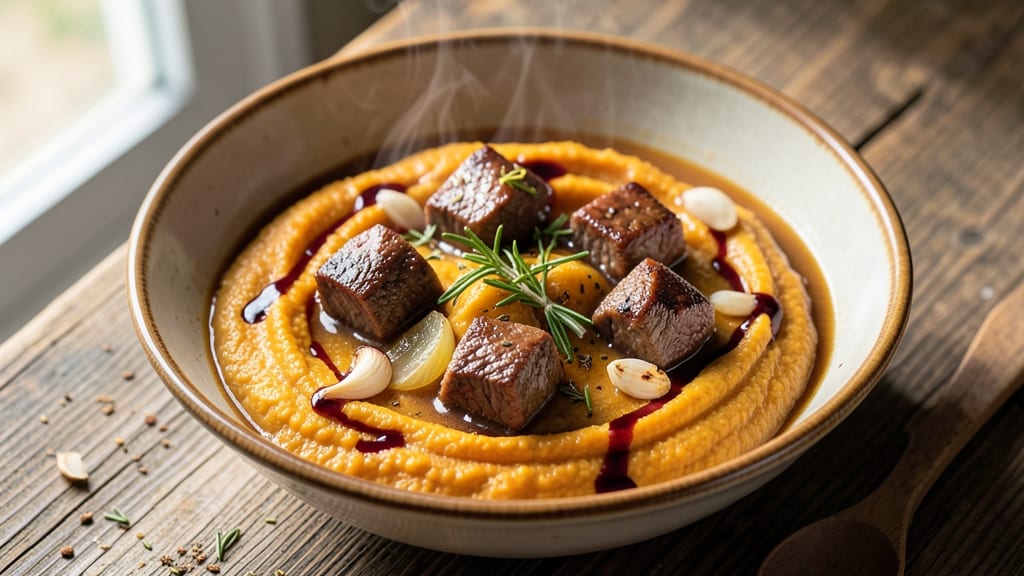
This beef and butternut squash stew recipe transforms humble ingredients into a rich, velvety masterpiece that tastes like a cozy autumn dinner. The deep-red wine braise creates layers of depth, while caramelized onions add a touch of sweetness that balances the hearty beef and tender squash.
I perfected this dish after years of testing—it's the kind of recipe that gets better with each simmer, developing complex flavors that make every spoonful satisfying.
The secret lies in proper technique: searing the beef until deeply browned creates a flavorful crust, and deglazing the pan captures all those precious caramelized bits that form the stew's foundation.
Butternut squash cooks until fork-tender while retaining its natural sweetness, and the red wine reduces into a glossy, aromatic sauce that ties everything together. This isn't just a stew—it's a comforting, restaurant-quality meal that feels like a hug in a bowl.
What you'll end up with is a deeply flavorful stew with perfectly tender beef, caramelized onions, and sweet butternut squash swimming in a rich red wine sauce. The aroma alone will have everyone gathering around the table, and the first bite delivers that perfect balance of savory, sweet, and tangy.
This recipe serves six generously, making it ideal for family dinners or holiday gatherings where you want to impress without spending hours in the kitchen.
Serve with crusty bread to soak up every last drop of that delicious sauce, or pair it with mashed potatoes for a complete autumnal feast. The beauty of this recipe is its versatility—it reheats beautifully for leftovers, and the flavors only deepen overnight.
Let's get started on creating this comforting classic that will become a staple in your recipe rotation.
Ingredients for beef and butternut squash stew
Six hearty ingredients create this restaurant-quality beef stew with deep wine flavors and velvety squash.
| Ingredient | Amount | Notes |
|---|---|---|
| Beef Chuck Roast 🥩 | 2 lb | Cut into 1.5-inch cubes |
| Butternut Squash 🎃 | 3 lb | Peeled, seeded, cut into 1-inch cubes |
| Yellow Onions 🧅 | 2 whole | Thinly sliced for caramelizing |
| Garlic Cloves 🧄 | 6 cloves | Minced for depth of flavor |
| Dry Red Wine 🍷 | 1 ½ cups | Bold variety like Cabernet Sauvignon |
| Beef Broth 💧 | 3 cups | Low-sodium preferred |
| Tomato Paste 🍅 | ½ cup | Smooth texture for richness |
| Fresh Thyme 🌿 | ¼ cup | Leaves only, stems removed |
| Fresh Rosemary 🌿 | ¼ cup | Chopped, woody stems discarded |
| Olive Oil 🫒 | ¼ cup | Extra-virgin for high heat searing |
| Bay Leaves 🍃 | 2 whole | Fresh preferred for aroma |
| Salt 🧂 | 1 ½ tsp | Kosher or sea salt |
| Ground Black Pepper 🌶️ | 1 tsp | Freshly cracked for heat |
| All-Purpose Flour 🌾 | 2 tbsp | For thickening sauce |
The beef is everything here—chuck roast delivers that melt-in-your-mouth texture when cooked low and slow. Look for good marbling at Whole Foods or your local butcher for optimal flavor. Butternut squash should be firm with no soft spots; Howard Brothers or Trader Joe's carry reliable organic varieties. Caramelizing the onions takes patience (about 30 minutes), but it's worth it for that sweet depth. For the red wine, any bold variety like Cabernet Sauvignon or Merlot works—just avoid sweet dessert wines.
No red wine? Beef broth with 1 tbsp balsamic vinegar mimics the depth. Fresh thyme and rosemary can be swapped for 1 tsp dried each>, but fresh has more aroma. The tomato paste can be replaced with 1 cup crushed tomatoes>, though it won't thicken the sauce as well. For a quicker version, use pre-cubed beef from the deli section—just pat it dry first. The flour is just for thickening at the end; if you prefer gluten-free, use cornstarch**> instead.
This stew tastes even better the next day as flavors meld. Store in an airtight container for 4-5 days> in the fridge or freeze for 3 months>. I always make a double batch—leftovers reheat beautifully for lunches. For serving, keep the bay leaves in during cooking but remove before eating. The sauce will thicken as it cools, so add a splash of broth if it seems too stiff when reheating.
Why You'll Love This Recipe
- One-Pot Magic: I swear by this—just chop the squash, sear the beef, and let the wine and onions work their flavor spell. No extra bowls, no stress, just one pot that smells like heaven by the end.
- Wine-Infused Richness: That splash of dry red wine? It’s the secret weapon—deepens the beef’s savor while keeping the squash tender and slightly sweet. Honestly, the first bite makes you forget it’s a weeknight meal.
- Leftovers That Shine: This stew actually improves the next day. The flavors meld into something heartier, and reheating it is zero effort. I freeze portions too—because nothing beats pulling this out for a lazy Sunday.
- Budget-Friendly Feast: Chuck roast stretches far, squash is cheap in season, and a bottle of wine feels fancy without breaking the bank. Here’s what sold me—it feeds four for under $20, and everyone leaves happy.
Step-by-step instructions for beef and butternut squash stew
Here's how to create a rich, hearty stew with tender beef and sweet squash.
Sear the Beef Chuck Roast
Heat a large Dutch oven over medium-high heat until hot. Add 2 tablespoons olive oil and swirl to coat the bottom. Working in batches to avoid crowding, add the 2 lb beef chuck roast cut into 1.5-inch cubes and sear for 2-3 minutes per side until deep golden brown with a crust forming.
This initial searing develops deep flavor through the Maillard reaction. Don't rush this step—you're building the foundation of your stew. Remove the beef and set aside on a plate. If the pan gets too crowded, work in batches, adding more oil as needed to maintain high heat.
Caramelize the Onions and Garlic
In the same Dutch oven, reduce heat to medium-low and add the 2 whole yellow onions sliced thinly. Cook for 15-20 minutes, stirring occasionally, until the onions become deep golden brown and sweet-smelling. This caramelization adds complex flavor that balances the richness of the beef.
About halfway through cooking, add the 6 cloves garlic minced and cook for an additional 1 minute until fragrant. Be careful not to burn the garlic—it should add aroma, not bitterness. Remove the onions and garlic with a slotted spoon and set aside with the beef.
Build the Stew Base
Return the Dutch oven to medium heat and add 0.5 cup tomato paste. Stir for 1 minute until it darkens slightly and loses its raw taste. Pour in the 1.5 cups dry red wine and scrape up any browned bits from the bottom of the pan with a wooden spoon.
Add the 3 cups beef broth, 1.5 teaspoons salt, and 1 teaspoon ground black pepper. Stir to combine, then return the beef and caramelized onions to the pot. Bring to a gentle simmer, then add the 2 whole bay leaves, 0.25 cup fresh thyme, and 0.25 cup fresh rosemary.
Braise Until Tender
Cover the Dutch oven and transfer to a preheated 325°F oven. Braise for 2-2.5 hours, or until the beef is fork-tender and easily pulls apart. Check periodically to ensure there's enough liquid—if it reduces too much, add a splash of water or broth.
This long, slow cooking process transforms tough beef into tender, melt-in-your-mouth pieces while allowing the squash to absorb all the rich flavors. The stew should have a thick, velvety consistency by the end of this stage.
Add Squash and Finish
Remove the stew from the oven and stir in the 3 lb butternut squash cut into 1-inch cubes. Return to the oven and cook uncovered for an additional 30-45 minutes, until the squash is fork-tender with a slight resistance.
To thicken the sauce, mix the 2 tablespoons all-purpose flour with 2 tablespoons cold water to form a slurry. Stir this into the stew and simmer uncovered for 5-10 minutes until the sauce reaches your desired consistency. Taste and adjust seasoning if needed, then remove the bay leaves before serving.
Pro Tips For Making Beef And Butternut Squash Stew
- Sear the Chuck Roast Hard: I learned this the hard way—skipping a deep sear means flavorless beef. Use a heavy pot and get that roast deep brown on all sides before adding liquid; it’s the only way to build that rich, caramelized crust that’ll dissolve into the stew later. (Yes, even if you’re impatient like me.)
- Cut Squash Small and Even: Big chunks stay undercooked; tiny ones turn to mush. Aim for 1-inch cubes—small enough to soften quickly but big enough to hold shape. If using pre-cut squash, give it a quick rinse to remove that slimy storage film that makes it gummy.
- Deglaze with Wine Early: Don’t wait until the end to add the red wine—pour it in right after searing the onions and garlic. The alcohol will cook off faster, leaving behind deeper flavor instead of just a vague boozy hint. Let it bubble for 2-3 minutes until it’s reduced by half before adding broth.
- Check Beef Temp Twice: Chuck roast is forgiving, but pull it at 195°F internal temp, then tent with foil and let it rest. The meat will climb another 10°F while resting—trust the thermometer, not the recipe’s vague “tender” guesswork. (I’ve served it rare once; it was a crime.)
Flavor customization for this dish
Sweet-Spicy Kick
For a bold twist, add 1 tablespoon chili powder and ½ teaspoon smoked paprika to the beef while searing. After braising, stir in 2 tablespoons honey and 1 teaspoon cayenne pepper—this creates a sweet-spicy balance that cuts through the richness.
I like using Penzeys brand for their consistent heat levels. 🌶️
Herb-Infused Depth
Swap the thyme and rosemary for 1 tablespoon fresh sage and 1 sprig fresh tarragon when adding aromatics. These herbs add an earthy, slightly peppery note that pairs beautifully with the wine.
For extra aroma, lightly crush the sage leaves between your fingers before adding. Tarragon works especially well with the butternut squash's natural sweetness.
Umami Boost
Add 2 tablespoons soy sauce when deglazing the pan with red wine, or stir in 1 tablespoon fish sauce during the final simmer. These ingredients deepen the savory profile without overpowering the dish.
I recommend Red Boat fish sauce for its clean, umami-rich flavor. For a vegetarian-friendly option, use 1 tablespoon mushroom powder instead.
Citrus Brightness
Finish the stew with the zest and juice of 1 large orange (about 2 tablespoons juice and 1 teaspoon zest). The citrus cuts through the richness and adds a refreshing contrast.
I also like adding 1 cinnamon stick during the braising phase for warmth—remove it before serving. This variation works especially well with the sweetness of the butternut squash. ✨
Creamy Texture
For a velvety finish, stir in ½ cup heavy cream or ½ cup coconut milk during the final 5 minutes of simmering. This adds a luxurious mouthfeel while keeping the dish balanced.
If using coconut milk, add it after the squash is tender to prevent curdling. For a lighter option, use ¼ cup Greek yogurt at the end for tangy creaminess.
Smoky Charcoal
Add 1 teaspoon liquid smoke when building the stew base, or finish with ¼ cup chopped smoked paprika for a smoky depth. This works especially well with the beef's natural richness.
For a more intense smoky flavor, use ½ cup smoked gouda cheese crumbled into the stew during the final 10 minutes of cooking. This variation feels like a cozy campfire meal in a pot. 🔥
Nutrition facts
Frequently asked questions about beef and butternut squash stew
Can I substitute butternut squash with another winter squash?
You can use acorn squash or delicata squash instead—they'll add slightly different textures but work beautifully. For a sweeter flavor, try kabocha squash. Just adjust cooking time: denser squashes like acorn may need 10-15 extra minutes to become tender. Peel and seed all varieties before cubing.
What's the best cut of beef for this stew?
Chuck roast is ideal because of its marbling and connective tissue, which breaks down beautifully during slow cooking. Short ribs or stew meat also work well. Avoid lean cuts like sirloin—they won't become tender enough. For extra flavor, ask your butcher to trim excess fat but leave some marbling intact.
How do I prevent the stew from becoming too watery?
Start by searing the beef thoroughly to build flavor, then use the flour slurry at the end to thicken. If it's still too thin, simmer uncovered for 5-10 extra minutes to reduce the liquid. For a richer base, reduce the broth by ½ cup> or add 1 tablespoon cornstarch> mixed with water as a last resort.
Can I make this stew in a slow cooker?
Yes! Brown the beef in a skillet first, then transfer everything to your slow cooker. Cook on low for 8 hours or high for 4-5 hours. Add the squash during the last 1 hour of cooking. The slow cooker method is more forgiving for beginners, but you'll miss the deep caramelization from oven braising.
Why does my stew taste bland?
Most likely, the beef wasn't seared enough or the wine didn't reduce properly. Always deglaze the pan> after searing to capture flavorful browned bits. For depth, add 1 teaspoon Worcestershire sauce> when building the base, or finish with 1 tablespoon balsamic vinegar**> for tang. Taste as you go—seasoning builds up over time!