
Soups & Stews
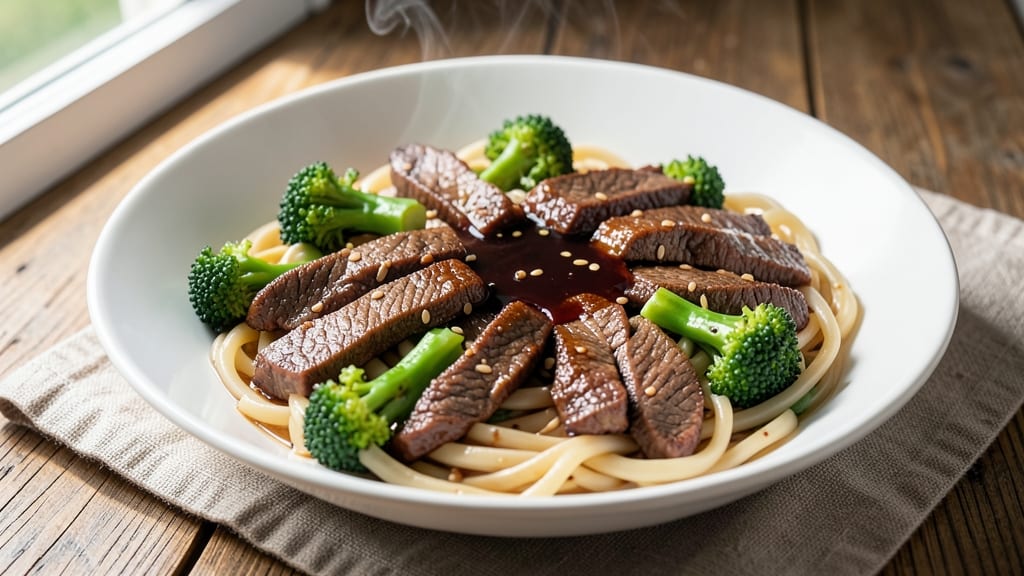
This beef and broccoli udon stir fry delivers restaurant-quality wok searing and silky noodles in under 30 minutes. The secret lies in high-heat searing of beef strips for deep umami flavor, followed by quick stir-frying of crisp-tender broccoli florets.
I developed this recipe after craving the perfect balance between traditional Japanese techniques and modern convenience—no takeout required.
What sets this udon stir fry apart is the sauce: a savory-sweet blend of soy, mirin, and a touch of honey that caramelizes beautifully while cooking. The udon noodles cook just until al dente, then toss immediately with the beef and broccoli to absorb all that wok-hei flavor.
This isn't your typical stir fry—it's a complete, satisfying meal with protein, vegetables, and perfectly textured noodles in every bite.
The result is a dish where tender beef strips maintain their shape while developing a caramelized crust, broccoli stays vibrant yet crisp, and the udon noodles achieve that signature silky texture. The sauce ties everything together with its perfect balance of salty, sweet, and umami notes.
Serve immediately for the best texture, or garnish with toasted sesame seeds and sliced green onions for added freshness and crunch.
This recipe works equally well as a weeknight dinner or impressive takeout alternative. The technique is straightforward but yields professional-quality results—ideal for anyone looking to elevate their home cooking without complicated steps. Let's get started on creating this umami-packed udon stir fry.
Ingredients for beef and broccoli udon stir fry
Restaurant-quality wok searing meets silky udon noodles with this umami-packed stir fry—just 14 ingredients for bold flavors.
| Ingredient | Amount | Notes |
|---|---|---|
| Flank Steak 🥩 | 1 lb | Thinly sliced against grain |
| Udon Noodles 🍜 | 8 oz | Fresh or dried, cut into 6-inch pieces |
| Broccoli Florets 🥦 | 2 cups | Cut into bite-sized pieces |
| Sesame Oil 🫒 | 1 tbsp | For aroma and flavor |
| Vegetable Oil 🫒 | 2 tbsp | High smoke point for searing |
| Soy Sauce 🥫 | 3 tbsp | Light or regular preferred |
| Mirin 🍶 | 1 tbsp | Sweet rice wine for balance |
| Honey 🍯 | 1 tbsp | For caramelized depth |
| Garlic Cloves 🧄 | 4 cloves | Minced for sauce |
| Fresh Ginger 🌿 | 1 tbsp | Grated finely for zing |
| Green Onions 🧅 | 3 whole | Sliced for garnish |
| Toasted Sesame Seeds 🌰 | 1 tbsp | For crunchy texture |
| Salt 🧂 | ½ tsp | Kosher or sea salt |
| White Pepper 🌶️ | ¼ tsp | Freshly ground preferred |
The flank steak is your secret weapon here—thinly sliced against the grain for tender, chewy bites that caramelize beautifully. Grab the thickest cut you can find at Whole Foods or your local butcher, and ask for it to be sliced professionally if possible. Costco often carries pre-sliced flank steak, but check the packaging for thinness—aim for ⅛-inch slices or less. Fresh ginger and garlic? Asian markets have the best selection, but the grocery store works too—just look for plump, firm bulbs with no soft spots. The udon noodles should be either fresh (found in the refrigerated section) or high-quality dried (like Nissin or Maruchan brands).
No mirin? Dry sherry plus a pinch of sugar works in a pinch, though true mirin adds that unmistakable sweetness. Subbing honey for agave? Go for it, but reduce the amount slightly since agave is sweeter. The broccoli can be pre-cut from the freezer section—just thaw and pat dry before cooking. Want extra umami? Add 1 tsp fish sauce to the sauce (though skip if avoiding fish products). For the sesame oil, use the toasted variety if available—it's got a deeper, nuttier flavor that shines in this dish. And if you can't find fresh udon, rice noodles work in a bind, though they'll be slightly firmer.
Prep the sauce first—it's the heart of this dish. Store it in a small jar in the fridge for up to 1 week, though it's best used fresh. The beef and broccoli cook in minutes, so keep everything prepped and within reach. Udon noodles reheat beautifully—just toss with a splash of water and microwave for 30 seconds. For leftovers, store the components separately: sauce in one container, beef/broccoli in another, and noodles in a third. Reheat everything separately and toss together before serving. Freeze the beef and sauce for up to 3 months—just thaw overnight before cooking.
Why You'll Love This Recipe
- One-Pan Magic: I swear, this dish is the closest I get to a "dump and stir" miracle. Flank steak slices, broccoli florets, and udon noodles all hit the same pan—no chopping boards, no extra bowls. The only real prep is slicing the beef thin (which takes two minutes with a sharp knife), and boom, you’re cooking.
- Umami Bomb: That first bite? The sesame oil hits the pan with a nutty aroma, then the beef—still slightly pink inside—absorbs the garlic and soy sauce while the broccoli crisps just enough. It’s not fancy, but it’s ridiculously good—like takeout, but with half the guilt and all the flavor.
- Lunchbox Hero: Between us, this is my go-to for meal prep. Cook a big batch on Sunday, and you’ve got three days of easy lunches. The udon holds up better than you’d think, and the beef stays tender if you slice it against the grain. Pack it cold or reheat it—either way, it’s a win.
- Budget Flex: Flank steak is affordable, udon noodles are a steal, and broccoli? Always on sale. I make this for date nights, lazy Sundays, or when my roommate’s "I’m not hungry" phase hits. It’s filling, satisfying, and won’t break the bank—plus, leftovers taste just as good the next day.
Step-by-step instructions for beef and broccoli udon stir fry
Here's how to create a restaurant-quality stir fry with perfectly seared beef and silky udon noodles.
Prepare the Flank Steak for Maximum Tenderness
Slice the 1 lb flank steak thinly against the grain into ¼-inch strips. This cut is crucial—it ensures each bite is tender rather than chewy. Lay the strips on a plate and season immediately with 0.5 tsp salt and 0.25 tsp white pepper, massaging the seasoning into the meat so it adheres evenly.
Let the seasoned beef rest for 10 minutes at room temperature. This step prevents uneven cooking when you hit the hot wok. While it rests, prepare the udon noodles by boiling them according to package instructions (usually 2-3 minutes for dried, 1 minute for fresh) until just tender. Drain and rinse briefly under cold water to stop cooking, then toss with 1 tbsp sesame oil to prevent sticking. Keep them covered until ready to use.
Build the Umami-Packed Sauce Base
Heat 2 tbsp vegetable oil in a wok or large skillet over high heat until shimmering. Add the 4 cloves minced garlic and 1 tbsp grated fresh ginger, stirring constantly for 30 seconds until fragrant but not browned. This quick cook preserves their bright flavors without bitterness.
Pour in the 3 tbsp soy sauce, 1 tbsp mirin, and 1 tbsp honey, stirring vigorously to combine. Let the sauce simmer for 1-2 minutes until slightly reduced and syrupy. Here's the thing—this sauce should coat the back of a spoon. If it's too thin, simmer another 30 seconds to concentrate the flavors. Remove from heat and set aside temporarily.
Wok-Sear the Beef for Perfect Texture
Return the wok to high heat and add the seasoned beef in a single layer. Let it sear undisturbed for 1-2 minutes until the edges turn deep golden brown. This initial sear creates that beautiful caramelized crust we're after. Now stir the beef, breaking it into smaller pieces as it cooks, and continue cooking for another 2-3 minutes until it's 80% cooked through but still slightly pink in the center.
Remove the beef to a plate and set aside. Add the 2 cups broccoli florets to the wok and stir-fry for 2-3 minutes until bright green and just tender-crisp. The broccoli should retain its vibrant color and slight bite—overcooking turns it mushy. Here's where it gets fun—toss in the cooked udon noodles and the prepared sauce, mixing everything together until the noodles are evenly coated.
Finish with Aromatics and Garnish
Return the beef to the wok and stir everything together for 1-2 minutes until heated through. The residual heat will finish cooking the beef while allowing all the flavors to meld. Taste and adjust seasoning if needed—you might want to add a splash of water or more soy sauce for balance.
Divide the stir fry among four plates and garnish each serving with 3 sliced green onions and 1 tbsp toasted sesame seeds. The sesame seeds add a delightful crunch that contrasts beautifully with the silky noodles. Serve immediately while the beef is still juicy and the broccoli retains its vibrant color. This dish tastes even better when served right away, so don't let it sit!
Pro Tips For Making Beef And Broccoli Udon Stir Fry
- Slice Against the Grain: Flank steak’s fibers run long—cutting perpendicular to them turns tough chews into tender bites. Use a sharp knife and work in one motion; no sawing. (I used to ignore this and wondered why my beef felt like shoe leather.)
- Blanch Broccoli First: Toss florets in boiling water for 30 seconds, then ice bath. This keeps them bright green and prevents soggy noodles later. Skip this, and your stir-fry will look like a sad salad.
- High Heat, Then Low: Sear the beef at max heat for 1-2 minutes until crust forms, then pull it out. Finish the stir-fry on medium-low—high heat after adding noodles turns them mushy. (Yes, even if you’re impatient like me.)
- Toast Udon Dry: Drain cooked udon, toss with 1 teaspoon sesame oil, and spread on a tray. Broil for 2-3 minutes until edges crisp. This adds texture and prevents a gummy mess. (Your future self will thank you.)
Common mistakes when making great beef and broccoli udon stir fry
Overcrowding the Wok
This is the #1 mistake I see—trying to cook everything at once in the wok. When you overcrowd, the beef steams instead of searing, and the broccoli turns soggy from the released moisture. The solution?
Cook in batches. Sear the beef first in a single layer, then remove it before adding broccoli. If your wok is full, reduce the recipe by half or use a larger pan. 🔥
Skipping the Rest Time
Letting the beef rest for 10 minutes before cooking seems like a small thing, but it's critical. Cold meat releases moisture unevenly when hit with high heat, creating steam instead of a proper sear.
I've ruined many a stir fry by skipping this step—trust me, the difference is night and day. Set a timer and let it rest while you prep the sauce.
Undercooking the Beef
Many people pull beef out of the wok when it's still raw inside, thinking it'll finish cooking later. Wrong! The beef needs to reach 145°F internal temperature during the searing process. Use an instant-read thermometer to check—insert it into the thickest piece.
If it's still pink, cook another 30 seconds to 1 minute. The residual heat from the noodles won't finish it properly.
Overcooking the Broccoli
Broccoli should be bright green and just tender-crisp, not mushy. The moment it turns olive-green and soft, it's overdone. Stir-fry for exactly 2-3 minutes over high heat. If your wok isn't hot enough, the broccoli will steam instead of getting that perfect wok-hei texture.
I like to add broccoli last, right before tossing with the sauce and noodles.
Using the Wrong Oil
Vegetable oil has a high smoke point, making it perfect for wok searing, but many people default to olive oil or sesame oil for the initial sear. Olive oil burns at high heat, creating bitter flavors, while sesame oil is better for finishing.
Stick with neutral oils like vegetable, canola, or peanut oil for searing. Save the sesame oil for tossing at the end.
Ignoring the Sauce Reduction
The sauce needs to be slightly reduced to coat the noodles properly, not pool at the bottom. If you skip this step, the dish will taste watery. Simmer the sauce for 1-2 minutes until it thickens enough to coat the back of a spoon.
Pro tip: If your sauce is too thin, remove the wok from heat and let it reduce naturally—adding more heat can burn the garlic and ginger.
Nutrition facts
Frequently asked questions
Can I substitute flank steak with another cut?
Yes! Sirloin or ribeye work well—just slice them thinly against the grain. For leaner options, try top round, but marinate it for 20 minutes first to prevent dryness. Avoid tough cuts like chuck roast, as they won't tenderize properly in this quick cook time.
How do I make this dish spicier?
Add ½ tsp red pepper flakes or 1 tbsp sriracha to the sauce for heat. For extra kick, stir-fry 1 tbsp chopped chili paste (like sambal oelek) with the garlic and ginger. Balance the spice with a touch more honey to prevent overpowering the umami flavors.
Can I use dried udon noodles instead of fresh?
Dried udon works perfectly—just cook it for 2-3 minutes until al dente, then rinse briefly under cold water to stop cooking. The key is to keep them separate until the very end to maintain texture. Fresh udon cooks faster (1 minute), but dried adds a satisfying chew.
Why is my sauce too thin?
Sauce consistency is crucial! Simmer it uncovered for 1-2 extra minutes until it coats the back of a spoon. If it's still too thin, remove the wok from heat and let it reduce naturally—adding more heat can burn the garlic. For a thicker sauce, add ½ tsp cornstarch mixed with 1 tsp water and stir in at the end.
How can I make this vegetarian?
Swap the beef for extra-firm tofu or shiitake mushrooms. Press tofu for 15 minutes to remove moisture, then cube and pan-fry until crispy. For mushrooms, slice 8 oz shiitake and sear until golden. Boost umami with 1 tsp soy sauce in the tofu/mushroom marinade. The broccoli and udon will carry the dish perfectly!